

EUR/USD Drivers Remain Scarce as Markets Likely to Take its Cue from PCE Data
In the week just gone, the lack of high-profile US data led to lower volatility that favoured the dollar and treasury yields. During periods of lower volatility markets tend to follow the path of least resistance, more specifically, the FX market tends to favor higher yielding currencies over lower yielding currencies. With US PCE data only due at the end of the week, we could see a similar trading environment whereby the dollar continues to build on marginal gains until the big data point at the end of the week.
Better than expected survey data out of the University of Michigan consumer sentiment report on Friday revealed a step back in inflation expectations which spurred on temporary dollar weakness and a move higher for EUR/USD. The late partial recovery in EUR/USD provides a potential launchpad for EUR/USD bears at the start of the coming week.
Should inflation within the eurozone continue to weaken, starting with figures out of Germany, the euro may come under some pressure midweek. The pair may continue to ease into the June ECB meeting as a strong majority of ECB officials have communicated a preference for a 25 basis point cut next month. In contrast, the FOMC minutes from the May Fed meeting communicated a more hawkish approach and lack of confidence that inflation will move swiftly to the Feds 2% target – prolonging the ‘higher for longer’ narrative which naturally supports a stronger US dollar and US yields.
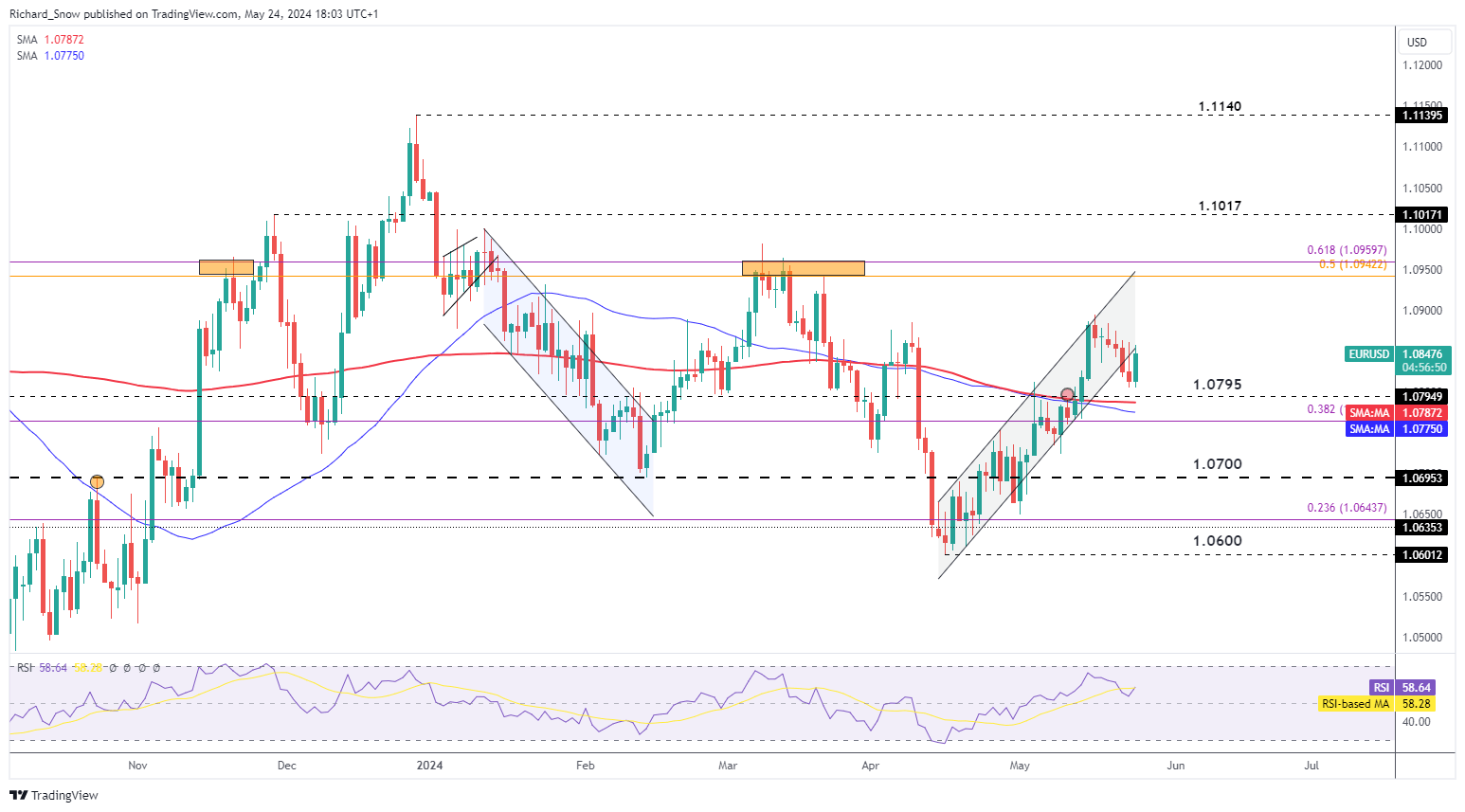
Lower German an EU inflation next week could see the pair trade lower, something that may be amplified by an underwhelming PCE print (stubborn inflation). Failure to make a new swing high at the start of the week opens up the rest of the week for a bearish move should the data comply. 1.0800 is the tripwire for a sell-off and the recent high of 1,0895 would need to be overcome on a daily closing basis to suggest a bullish continuation.
EUR/USD Daily Chart
EUR/USD is one of the most liquid currency pairs in the world, offering short-term trades with a cost effective and convenient market to trade. Discover the real benefits of trading liquid pairs and which pairs qualify:

USD/JPY Uptrend Remains Intact after Weaker Japanese Inflation Data
During a week with fewer high-profile US economic data releases, the dollar was widely anticipated to recover, catering to the market’s inclination towards higher-yielding currencies in periods of reduced volatility.
USD/JPY Weekly Chart
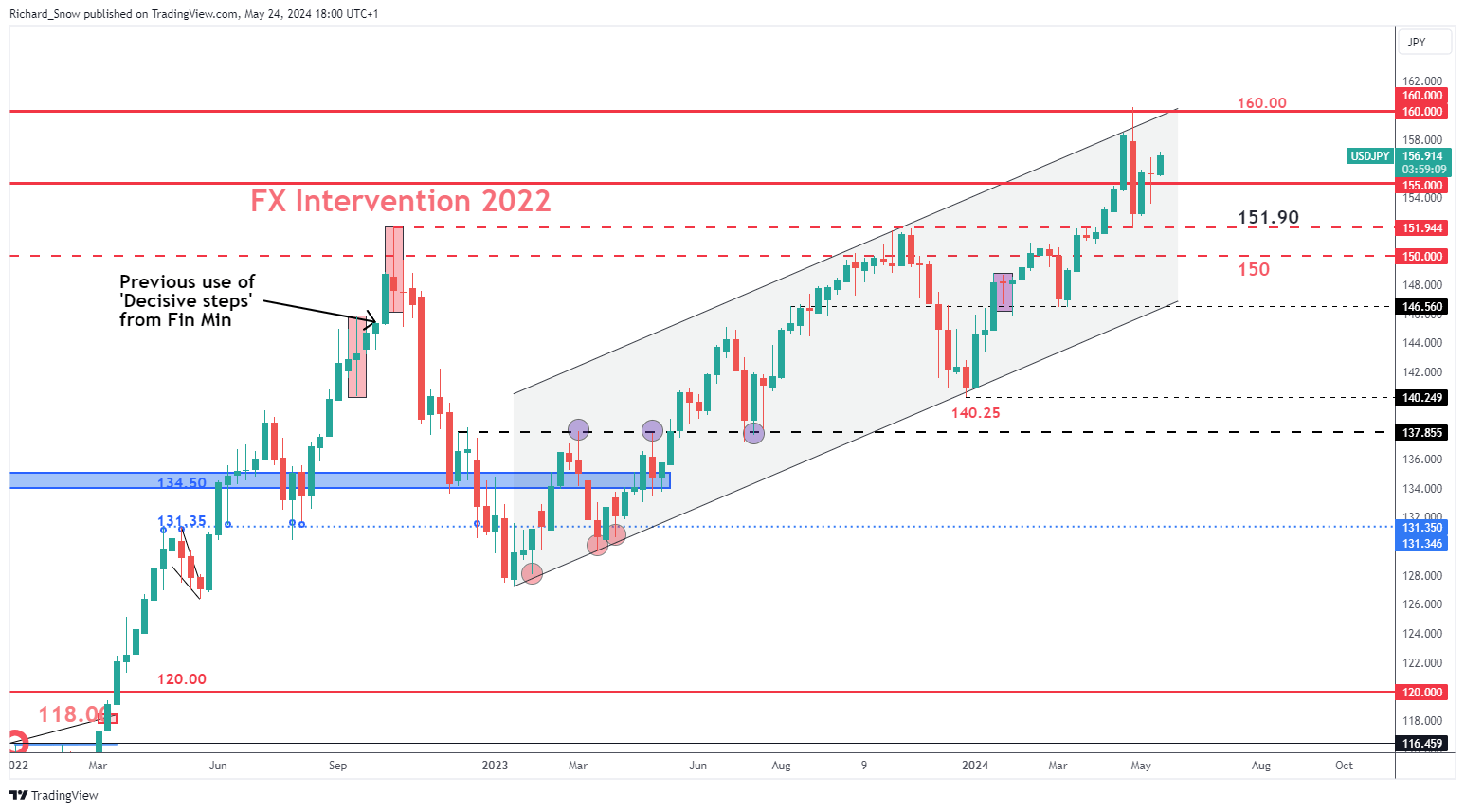
Less than a month since Japanese officials were believed to have intervened in the foreign exchange market, the USD/JPY exchange rate has once again approached the 160 level, which initially triggered their response. However, the upward movement has been more gradual this time, lacking the volatility that prompted Japanese officials to take action.
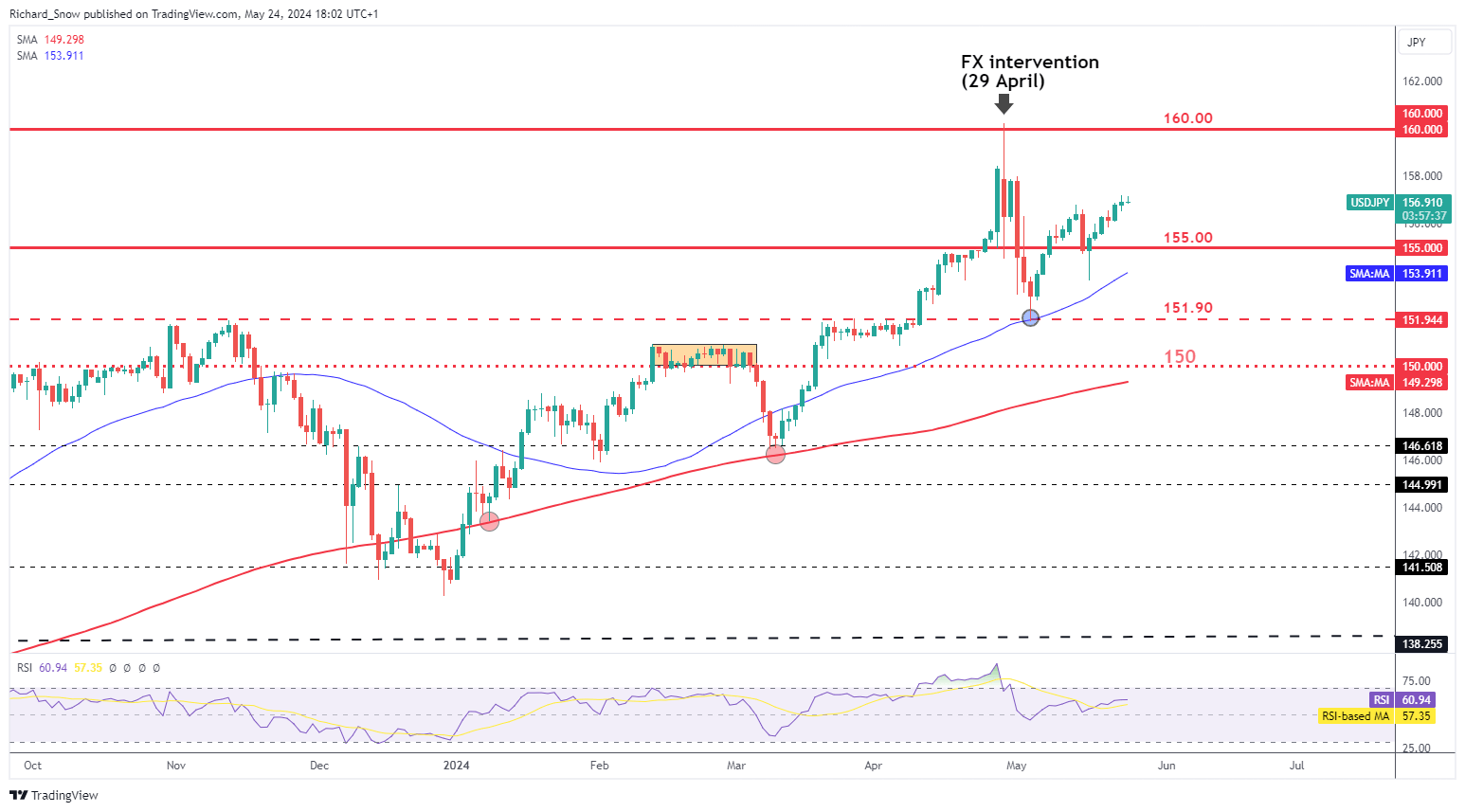
The USD/JPY pair is currently trading above 157.00, having rebounded strongly off the 50-day simple moving average (SMA) in early May and subsequently surpassing the 155.00 level. The issue of Japanese yen weakness is likely to persist as long as the significant interest rate differential between the United States and Japan remains intact. The carry trade continues to exhibit strength.
USD/JPY Daily Chart
 Chat now!
Add a Comment