
German Factory Orders Surprise to the Upside
On Thursday, September 5, the German economy faced increased scrutiny following the recent private sector PMI reports.
Factory orders unexpectedly surged by 2.9% in July, following an increase of 4.6% in June.
Experts trade the markets with IC Markets
According to data from Destatis,
- New orders in other vehicle construction (aircraft, ships, trains, military vehicles) surged 86.5% in July.
- Orders for the manufacture of electrical equipment jumped 18.6%.
- However, orders across the mechanical engineering sector slid by 6.1%.
- Excluding large orders, incoming orders were down 0.4%.
Looking at the broader sectors of the German economy:
- Orders across the capital goods sector increased by 3.5% in July, while the intermediate goods sector saw orders up 4.4%.
- The consumer goods sector reported a 5.8% fall in new orders.
- Orders from overseas advanced by 5.1%, with orders from within the Eurozone increasing by 5.9%.
- New orders from outside the Eurozone rose by 4.6%.
- However, domestic orders remained unchanged.
- From May to July 2024, factory orders were 1.0% higher than in the previous three months.
The July increase in factory orders contrasted with weaker new order trends in the Manufacturing PMI surveys, easing recession risks. According to August’s HCOB Manufacturing PMI survey, inflows of new work fell at the sharpest rate since November 2023, with new export orders also falling markedly. The Manufacturing PMI fell from 43.2 in July to 42.4 in August.
German Factory Orders and the ECB Rate Path
Survey-based economic indicators from Germany suggested an increasing risk of a deep economic recession.
However, the factory order figures paint a rosier picture of the German economy. The upbeat factory order data may ease fears of a lengthy German recession. Nonetheless, the numbers are unlikely to influence the ECB rate path. The ECB remains primarily focused on the services sector and inflation.
EUR/USD Reaction to the Factory Order Slide
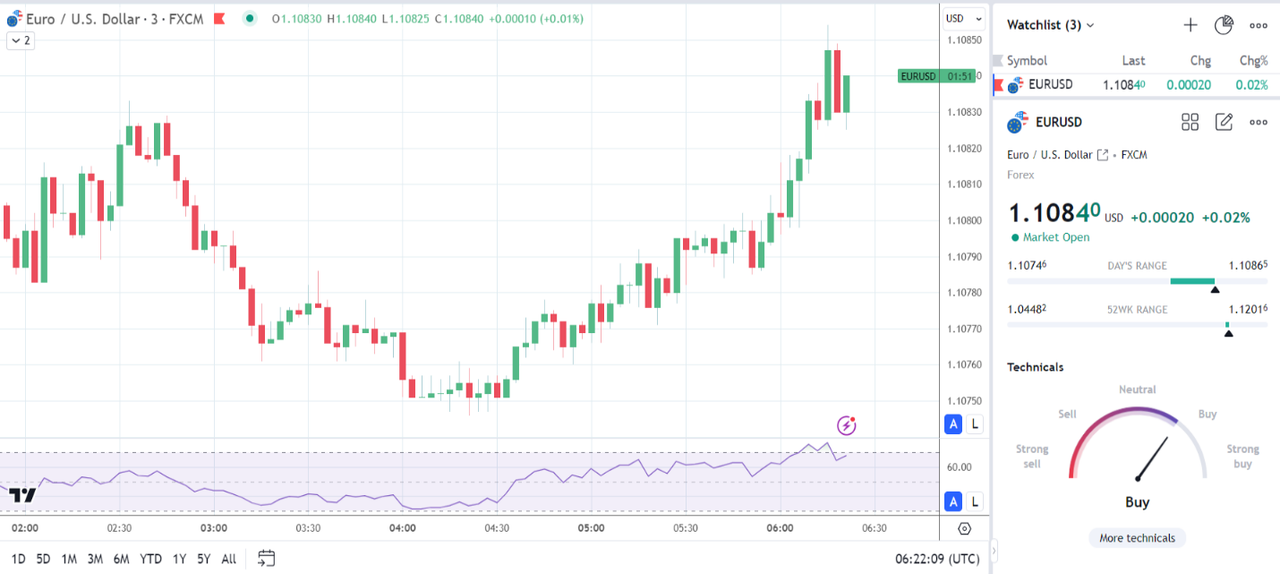
Before the factory order report, the EUR/USD climbed to a high of $1.10865 before falling to a low of $1.10746.
In response to the factory order figures, the EUR/USD dipped to a low of $1.10796 before rising to a high of $1.10854.
On Thursday, the EUR/USD was up 0.02% to $1.10840.

Looking Ahead
Later in the session on Thursday, the US labor market and services sector will draw investor interest.
Economists expect the ADP to report an increase in employment of 145k in August, following a 122k rise in July. Tighter labor market conditions could boost wages, supporting consumer spending that contributes over 60% to the US economy.
Furthermore, economists forecast the US ISM Services PMI to slip from 51.4 in July to 51.1 in August. An unexpected pickup in services sector activity could further ease US recession fears as it accounts for over 70% of the US economy. Easing fears of a US recession and expectations of a September Fed rate cut could boost demand for riskier assets.
 Chat now!
Add a Comment