

It was another testy start to the day for the Asian markets. After the disappointing trade data from China, consumer price inflation and producer price index figures from China drew interest this morning.
Consumer prices fell by 0.3% year-over-year in July after stalling in June. Economists forecast a 0.4% decline, signaling weak consumer demand. However, consumer prices increased by 0.2% in July, reversing a 0.2% decline in June. Economists forecast a 0.1% increase.
Producer price index figures also influenced market risk sentiment. On Tuesday, trade data from China highlighted the weak demand environment suggesting further downward pressure on producer prices.
However, the producer price index fell by 4.4% year-over-year, following a 5.4% decline in June. Economists forecast a 4.1% decline.
While the producer price index declined at a less marked pace in July, the 4.4% fall reflected the ongoing weakness in global demand, aligned with the July Caixin manufacturing PMI and the latest import and export figures. Nonetheless, a possible bottoming out and a pickup in consumer prices should provide some comfort.
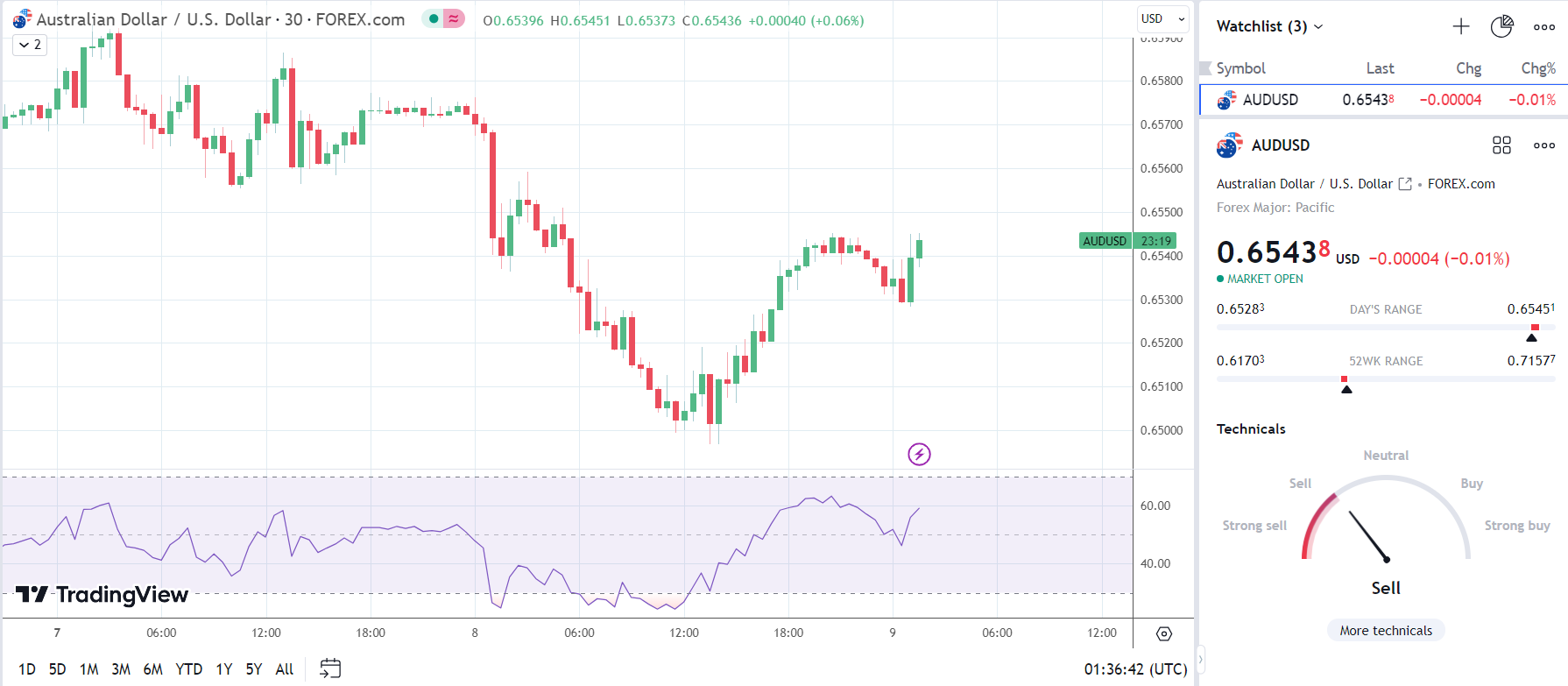
AUD/USD Reaction to the China Inflation Numbers
Before the China inflation numbers, the AUD/USD fell to an early low of $0.65283 before rising to a pre-stat high of $0.65449.
However, in response to the inflation figures, the AUD/USD fell to a post-stat low of $0.65373 before rising to a high of $0.65451.
This morning, the AUD/USD was down 0.01% to $0.65438.
 Chat now!
Add a Comment