

Quarter-on-quarter, the Chinese economy grew by 1.6% after expanding by 1.0% in Q4. Economists forecast the economy to grow by 0.9%.
The first quarter figures were significant after Beijing set a growth target of 5.0% for 2024.
Other economic indicators sent mixed signals.
Industrial production increased by 4.5% year-on-year in March after rising 7.0% in February. Retail sales advanced by 3.1% after advancing by 5.5% in February. Economists forecast industrial production and retail sales to increase 5.4% and 4.5%, respectively. The figures signaled a loss of momentum at the end of the first quarter.
However, fixed asset investment and unemployment figures suggested a possible shift in momentum. Fixed asset investment increased 4.5% year-on-year, while the Chinese unemployment rate fell from 5.3% to 5.2%. Economists forecast fixed asset investments to increase 5.3% and the unemployment rate to fall to 5.2%.
The Aussie Dollar Reaction to the Numbers from China
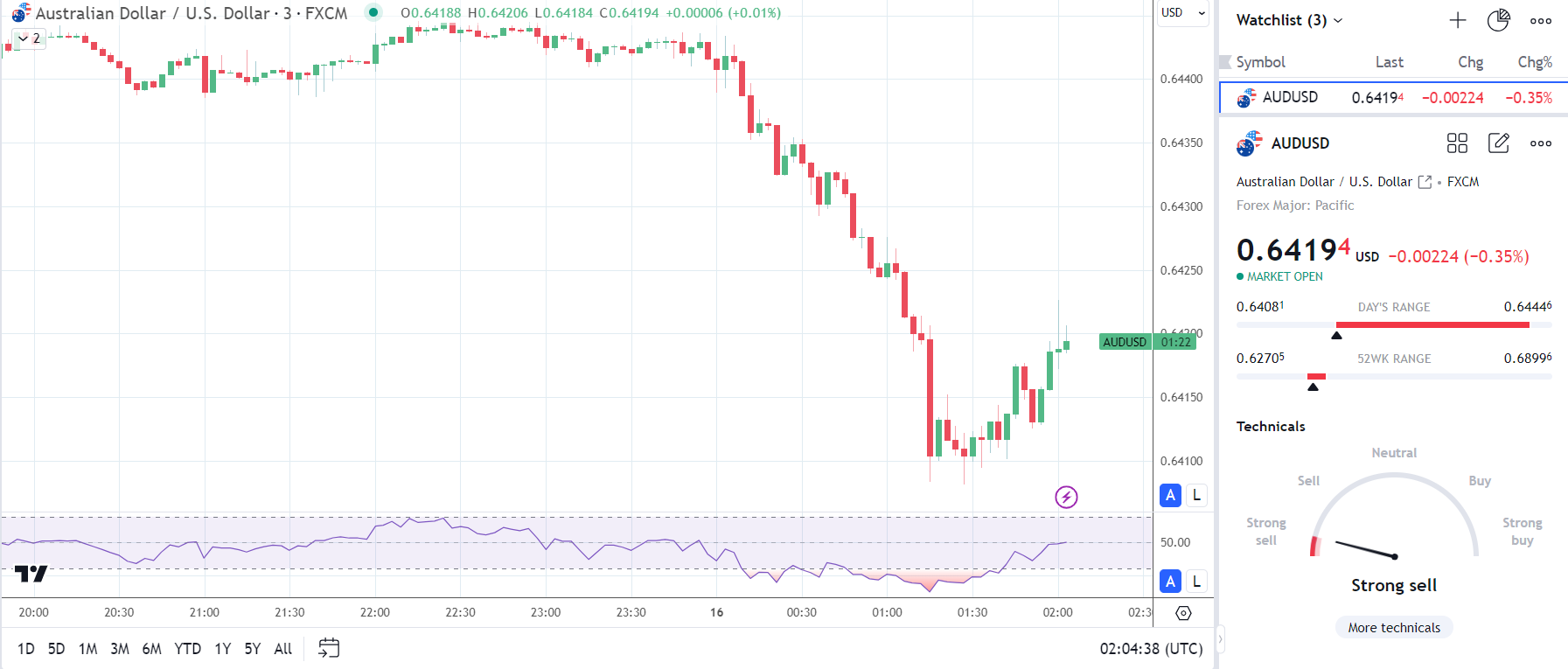
Before the economic indicators from China, the AUD/USD rose to a high of $0.64446 before falling to a low of $0.64081.
However, in response to the stats from China, the Aussie dollar rose to a high of $0.64226 before falling to a low of $0.64172.
On Tuesday, the AUD/USD was down 0.35% to $0.64194.
Housing sector data could influence the Fed rate path. FOMC member Austan Goolsbee recently spoke about the effects of housing services inflation on headline inflation. Improving housing sector conditions could fuel housing services inflationary pressures.
In addition to the housing sector numbers, US industrial production figures for March will also draw interest. Economists forecast industrial production to advance by 0.2% month-on-month in March. Nevertheless, the housing sector data will likely influence the Fed rate path more.
Beyond the numbers, investors should track FOMC member commentary and news updates from the Middle East
 Chat now!
Add a Comment