
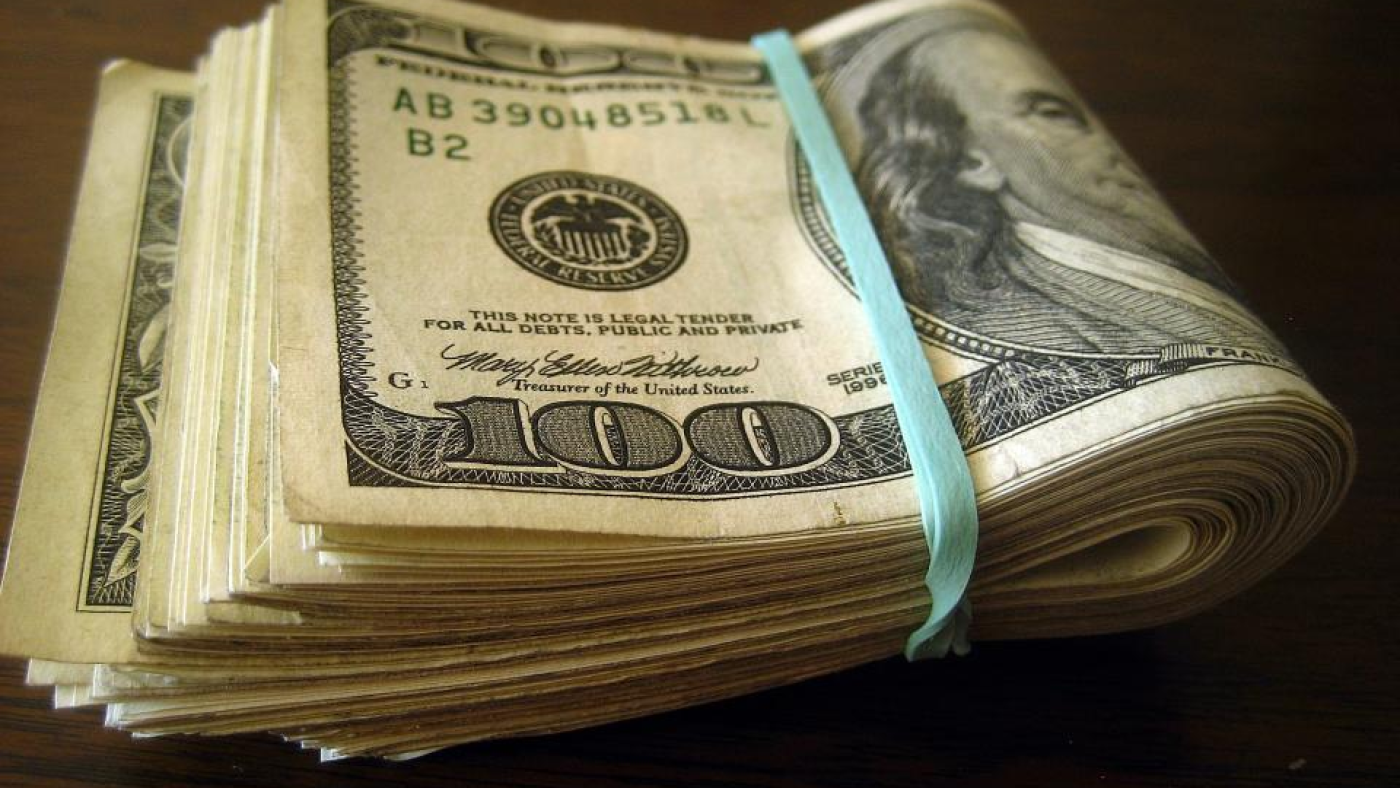
The US dollar fluctuated in European trading on Friday, November 20, against a basket of major currencies, remaining near its highest level in 19 months and on course for its fourth consecutive weekly gain.
The American currency continues to benefit from strong expectations of further US monetary tightening, alongside increased demand for safe-haven assets following heavy losses across global stock markets.
Price Overview
The US dollar index fell 0.06% to 103.89 points, from an opening level of 103.93 points, after recording a session high of 103.96 points and a low of 103.71 points.
The index ended Thursday’s trading near its highest level since April 2025, having gained nearly 2% since the beginning of November.
US interest rates
Stronger-than-expected US inflation figures and increasingly hawkish remarks from Federal Reserve officials have prompted a significant reassessment of American monetary policy expectations.
Money markets estimate a 94% probability of a 25-basis-point interest rate increase in December, compared with a 6% probability of a larger 50-basis-point increase.
Federal Reserve Governor Christopher Waller has advocated a more aggressive monetary policy response to persistent inflationary pressures.
Safe-haven demand
Global stock markets continued to suffer heavy losses on Friday, following renewed selling pressure across Wall Street despite Anthropic’s historic stock market debut on Thursday.
The S&P 500 has lost approximately 5% so far this week, amid growing concerns about excessive artificial intelligence valuations and the sustainability of infrastructure expenditure.
The deterioration in global risk appetite has increased demand for the US dollar, particularly against commodity-linked currencies.
US economic data
Investors are awaiting fresh US consumer confidence and inflation expectations figures at 15:00 GMT, alongside further remarks from Federal Reserve officials.
Attention will subsequently turn to next week’s personal consumption expenditure inflation figures, which could help determine the size of the anticipated December interest rate increase.
 Chat now!
Add a Comment