
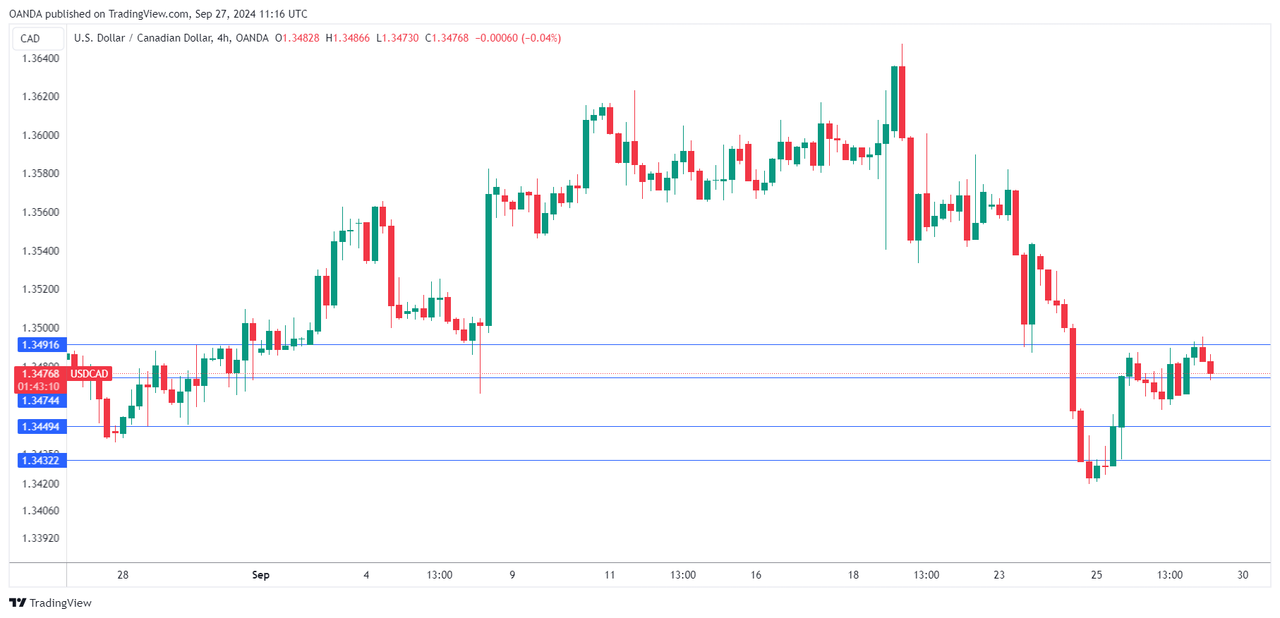
The USD/CAD pair pulls back from its three-month high of 1.3929, recorded in the previous session, trading around 1.3910 during Wednesday’s European session. The Canadian Dollar (CAD), tied to commodities, benefits from stronger Oil prices, as Canada remains the largest crude supplier to the United States (US).
West Texas Intermediate (WTI) Oil price rebounds after two days of losses, trading around $67.70 at the time of writing. Crude Oil prices are bolstered by an unexpected decline in US crude inventories. API US weekly crude Oil stockpiles fell by 0.573 million barrels in the week ending October 25, contrary to expectations of a 2.3 million-barrel increase. Investors now await the EIA crude Oil stockpiles report, due Wednesday.
On Monday, Bank of Canada Governor Tiff Macklem provided more insight into last week’s substantial interest rate cut, describing it as justified following years of sharp rate increases aimed at curbing inflation. Macklem is expected to appear before the House of Commons Finance Committee on Wednesday to discuss the bank’s monetary policy.
The decline of the USD/CAD pair could also be attributed to a weaker US Dollar (USD), driven by lower Treasury yields. The US Dollar Index (DXY), which measures the value of the US Dollar against six other major currencies, trades around 104.10 with 2-year and 10-year yields on US Treasury bonds standing at 4.07% and 4.22%, respectively, at the time of writing.
Traders will likely watch the upcoming release of preliminary US Q3 Gross Domestic Product (GDP) figures and October’s ADP Employment Change, as these could offer important insights into the timing and pace of the Federal Reserve’s (Fed) expected rate cuts. Additionally, US PCE inflation and Nonfarm Payrolls (NFP) will be closely monitored on Thursday and Friday, respectively.
 Chat now!
Add a Comment