EUR/USD stays depressed below 1.1100 amid cautious mood

EUR/USD stays depressed below 1.1100 amid cautious mood

EUR/USD is trading on the back foot below 1.1100 in the European session on Tuesday. The pair stays on a slippery slope, courtesy of the sustained US Dollar recovery, a cautious mood and uncertainty around the ECB’s rate outlook. US ISM Manufacturing PMI awaited.

EUR/USD retreated below the 100-period Simple Moving Average, currently located at 1.1070, on the 4-hour chart and closed the last two candles below this level. Additionally, the Relative Strength Index (RSI) indicator stays below 40, reflecting a lack of buyer interest.

EUR/USD could face immediate support at 1.1040 (Fibonacci 38.2% retracement of the latest uptrend) ahead of 1.1000 (psychological level, Fibonacci 50% retracement) and 1.0970 (200-period SMA).

On the upside, resistances are located at 1.1070 (100-period SMA), 1.1100 (Fibonacci 23.6% retracement) and 1.1160 (static level).

EUR/USD managed to register small daily gains on Monday but failed to gather recovery momentum. The pair stays on the back foot in the European morning on Tuesday and trades near 1.1050.

Thin trading conditions amid the Labor Day holiday in the US made it difficult for EUR/USD to make a decisive move in either direction at the start of the week. The cautious market stance helps the US Dollar (USD) hold its ground early Tuesday and makes it difficult for the pair to gain traction.

In the second half of the day, the ISM will release Manufacturing PMI data for August. The headline PMI is forecast to rise to 47.5 from 46.8 in July. In case this data comes in above 50 and shows an expansion in the manufacturing sector’s activity, the immediate market reaction could help the USD gather further strength.

If the headline PMI arrives near the market expectation, investors could react to the change in the Employment Index of the survey. In July, the Employment Index dropped to its lowest level in four years at 43.4. A significant recovery in this data could ease fears over loosening conditions in the labor market and provide a boost to the USD. On the other hand, a reading below 45, which would show an ongoing decline in the number of employed in the manufacturing sector, could weigh on the currency and open the door for a rebound in EUR/USD.

3 Things I Wish I Knew When I Started Trading Forex

3 Things I Wish I Knew When I Started Trading Forex

Everyone comes to the forex market for a reason, ranging between solely for entertainment to becoming a professional trader. I started out aspiring to be a full-time, self-sufficient forex trader. I had been taught the ‘perfect’ strategy. I spent months testing it and backtests showed how I could make $25,000-$35,000 a year off of a $10,000 account. My plan was to trade forex for a living and let my account compound until I was so well off, I wouldn’t have to work again in my life. I was dedicated and I committed myself to the plan 100%.

Sparing you the details, my plan failed. It turns out that trading 300k lots on a $10,000 account is not very forgiving. I lost 20% of my account in three weeks. I didn’t know what hit me. Something was wrong. Luckily, I stopped trading at that point and was fortunate enough to land a job with a forex broker. I spent the next couple of years working with traders around the world and continued to educate myself about the forex market. It played a huge role in my development to be the trader I am today. Three years of profitable trading later, it’s been my pleasure to join the team at DailyFX and help people become successful or more successful traders.

The point of me telling this story is because I think many traders can relate to starting off in this market, not seeing the results that they expected and not understanding why. These are the three things I wish I knew when I started trading Forex.

1) Forex is not a get rick quick opportunity

Contrary to what you’ve read on many websites across the web, Forex trading is not going to take your $10,000 account and turn it into $1 million. The amount we can earn is determined more by the amount of money we are risking rather than how good our strategy is. The old saying “It takes money to make money” is an accurate one, Forex trading included.

But that doesn’t mean it is not a worthwhile endeavor; after all, there are many successful Forex traders out there that trade for a living. The difference is that they have slowly developed over time and increased their account to a level that can create sustainable income.

I hear about traders all the time targeting 50%, 60% or 100% profit per year, or even per month, but the risk they are taking on is going to be pretty similar to the profit they are targeting. In other words, in order to attempt to make 60% profit in a year, it’s not unreasonable to see a loss of around 60% of your account in a given year.

“But Rob, I am trading with an edge, so I am not risking as much as I could potentially earn” you might say. That’s a true statement if you have a strategy with a trading edge. Your expected return should be positive, but without leverage, it is going to be a relatively tiny amount. And during times of bad luck, we can still have losing streaks. When we throw leverage into the mix, that’s how traders attempt to target those excessive gains. Which in turn is how traders can produce excessive losses. Leverage is beneficial up to point, but not when it can turn a winning strategy into a loser.

2) Leverage can be a winning strategy to lose money

This is a lesson I wish I had learned earlier. Excessive leverage can ruin an otherwise profitable strategy.

Let’s say I had a coin that when heads was hit, you would earn $2, but when tails was hit, you would lose $1. Would you flip that coin? My guess is absolutely you would flip that coin. You’d want to flip it over and over. When you have a 50/50 chance between making $2 or losing $1, it’s a no-brainer opportunity that you’d accept.

Now let’s say I have the same coin, but this time if heads is hit, you would triple your net worth; but when tails was hit, you would lose every possession you own. Would you flip that coin? My guess is you would not because one bad flip of the coin would ruin your life. Even though you have the exact same percentage advantage in this example as the example above, no one in their right mind would flip this coin.

The second example is how many Forex traders view their trading account. They go “all-in” on one or two trades and end up losing their entire account. Even if their trades had an edge like our coin flipping example, it only takes one or two unlucky trades to wipe them out completely. This is how leverage can cause a winning strategy to lose money.

3) Using sentiment as a guide can tilt the odds in your favor

The 3rd lesson I’ve learned should come as no surprise to those that follow my articles… using the IG client sentiment tool (IGCS). I’ve written many articles about this topic. It’s the best tool I’ve ever used and is still a part of almost every trading strategy I am using, present day.

IGCS is a free tool that tells us how many traders are long compared to how many traders are short each major currency pair. It’s meant to be used as a contrarian index where we want to do the opposite of what everyone else is doing. Using it as a direction filter for my trades has turned my trading career completely around.

How to Create a Trading Plan in 7 Steps

How to Create a Trading Plan in 7 Steps

What is a Trading Plan?

A trading plan is essentially a framework that guides traders through the entire trading process. It sets the conditions under which a trader enters trades, identifies markets, exits trades and manages risks along the way. The trading plan ensures accountability and keeps traders focused on their personal strategy.

How to Create a Trading Plan

1) Choose Your Analytical Approach

The analytical approach answers the question, “how do you identify trade set-ups?”. It could be a combination of price support and resistance, trend lines, chart patterns, Fibonacci levels, moving averages, Ichimoku Clouds, Elliott Wave Theory, sentiment or the use of fundamentals etc.

This initial step of the trading plan helps traders to narrow their focus on a handful of scenarios that the trader is comfortable with. Thereafter, traders can look for opportunities to trade based on preferred trade set ups.

2) Select Your Favourite Trade Set Ups

The trade setup is at the core of the trading process. But first, think of the analytical approach as the event that triggers the trade setup. An example of this would be viewing a consolidation pattern (listed in the analytical approach as a chart pattern) which then gives rise to subsequent action from the trader, i.e. the trader will decide to trade the breakout or wait for a pullback or combine breakouts with pullbacks only after the chart pattern has successfully played out.

Set ups are based on a number of factors that collectively lead to higher probability trades. If you are new to forex trading, this process may take some time to figure out but it is essential for traders to find a trade setup that works best for them.

3) Limit the Markets to Focus on

When starting out, it is important for traders to limit the number of markets in focus. No market is the same and limiting the scope of markets can assist traders to understand the nuances of the market in question. Traders can even focus on specific time frames in a single market to familiarize themselves with its characteristics and movements.

4) Think About Your Holding Period

Time frames will depend on the type of trader. Traders that focus on short-term trades (trades opened and closed on the same day) include scalpers and day traders. Medium-term traders usually hold trades for a few hours up to a few days and are referred to as swing traders. Long-term trading involves time frames ranging from a number of days, weeks, months and in some cases, years.

5) Know Your Risk Tolerance

Each step in the trading plan is important, however, if risk management is missing, the whole plan will fall apart. In this step, traders will need to discover their personal risk tolerance which corresponds with how far a trader is willing to set stop losses when limiting downside risk.

At DailyFX, we researched over 30 million live trades to discover that traders with a minimum risk to reward ratio of 1:1 were three times more likely to turn a profit than traders without any defined risk-to-reward. This and other information all traders should know can be found in our Traits of Successful Traders report.

6) Plan How You Will Handle Adversity (and Success)

All traders will eventually experience the dreaded drawdown, so it is important for traders to set a few rules to follow once this happens in order to manage emotions. An effective way to do this is to quantify an amount, or percentage loss, that would force the trader to take a step back and evaluate what went wrong/ is going wrong. Do not fall into the trap of setting this figure along the way, rather quantify this upfront.

Now the good news – what to do when trades are successful. Confidence is good, but overconfidence can quickly turn winning trades into losing trades. If the market moves favorably it is not unusual to increase risk/exposure however, this should be kept to a minimum.

7) Have a Routine For Staying on Track

Traders should set aside time to reflect on the week’s events and analyze individual trades. It’s a good idea to regularly review the trading plan and make tweaks if necessary. Periodical trade review and journaling are excellent ways to ensure you are following the process outlined in the trading plan. Make a note or save charts relating to successful/unsuccessful trade set ups that can be reviewed later on.

Trading plans should be rigid to begin with but should become a little more malleable as the trader becomes more familiar with the market in focus. The purpose of a trading plan is to give you a strong foundation and boundaries to operate within.

IG Client Sentiment Report: GBP/USD, AUD/USD Reveal a Common Flaw

IG Client Sentiment Report: GBP/USD, AUD/USD Reveal a Common Flaw

Retail traders as a collective tend to be trend fighters, which is not optimal when markets are trending. The trend is your friend, as the saying goes, and this forms the basis of why it is often useful to adopt a contrarian approach to client sentiment positioning.

Retail trader data for AUD/USD shows a sizeable shift towards short positions over the past week. While long positions have decreased, short positions have increased notably. This change in sentiment, with traders becoming more net-short, suggests that AUD/USD prices may continue to rise based on contrarian analysis. The combination of current positioning and recent changes strengthens a bullish outlook for AUD/USD.

GBP/USD Overview:

For GBP/USD, retail trader data reveals an even more pronounced short bias. The number of traders going long has decreased both daily and weekly, while short positions have increased significantly. This growing net-short sentiment typically indicates that GBP/USD prices may continue to rise. The current positioning, combined with recent trend changes, reinforces a bullish contrarian trading bias for GBP/USD.

10 Trading Mistakes to Avoid in Forex Trading

10 Trading Mistakes to Avoid in Forex Trading

Mistake 1: No trading plan

Traders without a trading plan tend to be haphazard in their approach because there is no consistency in strategy. Trading strategies have predefined guidelines and approaches to every trade. This prevents traders from making irrational decisions due to adverse movements. Devoting to a trading strategy is key because veering away may lead to traders plunging themselves into unchartered territory with regard to trading style. This eventually results in trading mistakes due to unfamiliarity. Trading strategies should be tested on a demo account. Once traders are comfortable and understand the strategy, this can be translated to a live account.

Mistake 2: Over-leveraging

Margin/leverage refers to the use of loaned money to open forex positions. While this feature requires less personal capital per trade, the possibility of enhanced loss is real. The use of leverage magnifies gains and losses, so managing the amount of leverage is key. Learn more on what is leverage in the forex market.

Brokers play an important role in protecting their customers. Many brokers offer unnecessarily large leverage levels such as 1000:1 which puts novice and experienced traders at significant risk. Regulated brokers will cap leverage to appropriate levels guided by respected financial authorities. This should be taken into consideration when selecting a fitting broker.

Mistake 3: Lack of time horizon

Time investment works hand in hand with the trading strategy being implemented. Each trading approach aligns itself to varying time horizons, therefore understanding the strategy will lead to gauging the estimated time frame used per trade. For example, a scalper will target shorter time frames whilst position traders favour longer time frames. Explore the forex strategies for varying time horizons.

Mistake 4: Minimal research

Forex traders are required to invest in proper research to employ and execute a specific trading strategy. Studying the market as it should be, will bring light to market trends, the timing of entry/exit points, and fundamental influences as well. The more time dedicated to the market, the greater the understanding of the product itself. Within the forex market, there are subtle nuances between the different pairs and how they work. These differences need a thorough examination to succeed in the market of choice.

Reacting to media and baseless advice should be avoided without verification from the employed strategy and analysis. This is a common occurrence with traders. This does not mean these tips and media releases should not be considered but rather investigated systematically before acting on the information.

Mistake 5: Poor risk-to-reward ratios

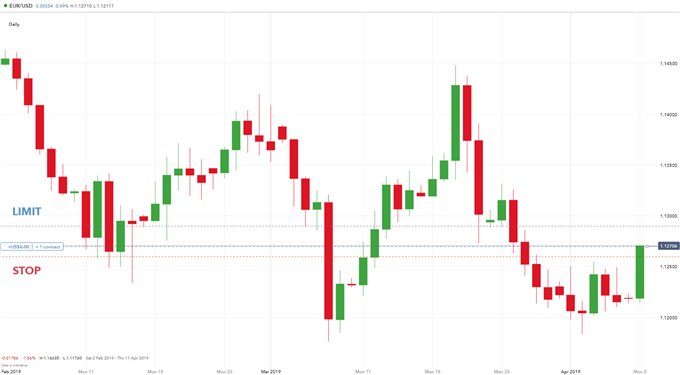
Positive risk-to-reward ratios are often overlooked by traders which can result in poor risk management. A positive risk-to-reward ratio such as 1:2 refers to potential profit being double the potential loss on the trade. The chart below shows a long EUR/USD trade with a 1:2 risk-to-reward ratio. The trade was opened at a level of 1.12698 with a stop at 1.12598 (10 pips) and a limit of 1.12898 (20 pips). An effective indicator to help identify stop and limit levels in forex is the Average True Range (ATR) which uses market volatility to base entry and exit points.

Having a ratio in mind helps to manage expectations of traders, this is important because, after much research by DailyFX, improper risk management has proven to be the number one mistake made by traders.

EUR/USD 1:2 risk-to-reward ratio:

EUR/USD risk-t-reward ratio

Mistake 6: Emotion based trading

Emotional trading often leads to irrational and unsuccessful trading. Traders frequently open additional positions after losing trades to compensate for the previous loss. These trades usually have no educational backing either technically or fundamentally. Trading plans are there to avoid this type of trading therefore, the plan must be followed closely.

Mistake 7: Inconsistent trading size

Trading size is crucial to every trading strategy. Many traders trade unsuitable sizes in relation to their account size. Risk then increases and could potentially erase account balances. DailyFX recommends risking a maximum of 2% of the total account size. For example, if the account contains $10,000 then a maximum of $200 of risk is suggested per trade. If traders observe this general rule, the pressure of overexposing the account will be removed. The inherent risk of overexposing the account on a particular market is extremely dangerous.

Mistake 8: Trading on numerous markets

Trading on a few markets lets traders gain the necessary experience to become proficient at these markets without scratching the surface of a few markets. Many novice forex traders look to trade on multiple markets without success due to a lack of understanding. This is something that should be done on a demo account if need be. Noise trading (irrational trading) often leads traders to place trades without the proper fundamental/technical justification on varying markets. For example, the Bitcoin craze of 2018 sucked in a lot of noise traders at the wrong time. Unfortunately, many traders entered at the ‘FOMO or Euphoria’ stage of the market cycle which resulted in significant losses.

Mistake 9: Not reviewing trades

Frequent use of a trading journal will allow traders to identify possible strategic flaws along with successful facets. This will enhance the trader’s overall understanding of the market and strategy for future. Reviewing trades not only highlights errors but beneficial aspects as well which must be reinforced constantly.

Mistake 10: Selecting an unsuitable broker

There are numerous CFD brokers globally, so choosing the right one can be difficult. Financial stability and proper regulation are essential before opening an account with a broker. This information should be readily available on the broker’s website. Many brokers are regulated in countries where guidelines are weak, to circumvent regulations in stricter jurisdictions such as the US (Commodity Exchange Act) and the UK (FCA).

Safety is the primary focus; however, a comfortable platform and ease of execution is also central to choosing a broker. Becoming accustomed with the platform and costing should be given ample time prior to trading with live funds.

3 Things I Wish I Knew When I Started Trading Forex

3 Things I Wish I Knew When I Started Trading Forex

Everyone comes to the forex market for a reason, ranging between solely for entertainment to becoming a professional trader. I started out aspiring to be a full-time, self-sufficient forex trader. I had been taught the ‘perfect’ strategy. I spent months testing it and backtests showed how I could make $25,000-$35,000 a year off of a $10,000 account. My plan was to trade forex for a living and let my account compound until I was so well off, I wouldn’t have to work again in my life. I was dedicated and I committed myself to the plan 100%.

Sparing you the details, my plan failed. It turns out that trading 300k lots on a $10,000 account is not very forgiving. I lost 20% of my account in three weeks. I didn’t know what hit me. Something was wrong. Luckily, I stopped trading at that point and was fortunate enough to land a job with a forex broker. I spent the next couple of years working with traders around the world and continued to educate myself about the forex market. It played a huge role in my development to be the trader I am today. Three years of profitable trading later, it’s been my pleasure to join the team at DailyFX and help people become successful or more successful traders.

The point of me telling this story is because I think many traders can relate to starting off in this market, not seeing the results that they expected and not understanding why. These are the three things I wish I knew when I started trading Forex.

1) Forex is not a get rick quick opportunity

Contrary to what you’ve read on many websites across the web, Forex trading is not going to take your $10,000 account and turn it into $1 million. The amount we can earn is determined more by the amount of money we are risking rather than how good our strategy is. The old saying “It takes money to make money” is an accurate one, Forex trading included.

But that doesn’t mean it is not a worthwhile endeavor; after all, there are many successful Forex traders out there that trade for a living. The difference is that they have slowly developed over time and increased their account to a level that can create sustainable income.

I hear about traders all the time targeting 50%, 60% or 100% profit per year, or even per month, but the risk they are taking on is going to be pretty similar to the profit they are targeting. In other words, in order to attempt to make 60% profit in a year, it’s not unreasonable to see a loss of around 60% of your account in a given year.

“But Rob, I am trading with an edge, so I am not risking as much as I could potentially earn” you might say. That’s a true statement if you have a strategy with a trading edge. Your expected return should be positive, but without leverage, it is going to be a relatively tiny amount. And during times of bad luck, we can still have losing streaks. When we throw leverage into the mix, that’s how traders attempt to target those excessive gains. Which in turn is how traders can produce excessive losses. Leverage is beneficial up to point, but not when it can turn a winning strategy into a loser.

2) Leverage can be a winning strategy to lose money

This is a lesson I wish I had learned earlier. Excessive leverage can ruin an otherwise profitable strategy.

Let’s say I had a coin that when heads was hit, you would earn $2, but when tails was hit, you would lose $1. Would you flip that coin? My guess is absolutely you would flip that coin. You’d want to flip it over and over. When you have a 50/50 chance between making $2 or losing $1, it’s a no-brainer opportunity that you’d accept.

Now let’s say I have the same coin, but this time if heads is hit, you would triple your net worth; but when tails was hit, you would lose every possession you own. Would you flip that coin? My guess is you would not because one bad flip of the coin would ruin your life. Even though you have the exact same percentage advantage in this example as the example above, no one in their right mind would flip this coin.

The second example is how many Forex traders view their trading account. They go “all-in” on one or two trades and end up losing their entire account. Even if their trades had an edge like our coin flipping example, it only takes one or two unlucky trades to wipe them out completely. This is how leverage can cause a winning strategy to lose money.

So how can we fix this? A good start is by using no more than 10x effective leverage.

3) Using sentiment as a guide can tilt the odds in your favor

The 3rd lesson I’ve learned should come as no surprise to those that follow my articles… using the IG client sentiment tool (IGCS). I’ve written many articles about this topic. It’s the best tool I’ve ever used and is still a part of almost every trading strategy I am using, present day.

IGCS is a free tool that tells us how many traders are long compared to how many traders are short each major currency pair. It’s meant to be used as a contrarian index where we want to do the opposite of what everyone else is doing. Using it as a direction filter for my trades has turned my trading career completely around.

Learn from my mistakes

If I could tell my younger self three things before I began trading forex, this would be the list I would give. Utlimately though, if you are just starting out in the forex market, the best thing you can do is take time to learn as much as you can, starting with the basics. Read guides, keep up to date with the latest news and follow market analysts on social media.

Forex Trading Tips FAQs

How much money can you make trading forex?

Due to the availability of leverage, forex traders can make a return on a single trade that is multiples of the margin they used to open the trade. However, leverage is a double edged sword in that big gains can also mean big losses. Therefore, reliance on excessive leverage as a strategy typically leads to destruction of your account capital over the long run. This is because it only takes one adverse market move to drive the market far enough and trigger substantial losses.

Your expectations on a return on investment is a critical element. When traders expect too much from their account, they rely on excessive leverage and that typically triggers a losing account over time. View forex like you would any other market and expect normal returns by using conservative amounts of no leverage.

Since forex is a 24 hour market, the convenience of trading based on your availability makes it popular among day traders, swing traders, and part time traders. Regardless of your style, use small (if any) amounts of leverage.

If you were to expand the list to a fourth thing learned when starting to trade FX, what would it be?

I touched on leverage above. We researched millions of live trades and compiled our results in a Traits of Successful Traders guide. In the guide we touch on risk to reward ratios and how it is important. With humans being human, we also touch on the psychological element that goes along with trading and why we may still make poor choices even if we know what is right. Sometimes our biggest obstacle is between our ears.

How to Create a Trading Plan in 7 Steps

How to Create a Trading Plan in 7 Steps

Trading Plan – Main Talking Points

  • What is a trading plan?
  • How to create a trading plan
  • Trading plans: A Summary

What is a Trading Plan?

A trading plan is essentially a framework that guides traders through the entire trading process. It sets the conditions under which a trader enters trades, identifies markets, exits trades and manages risks along the way. The trading plan ensures accountability and keeps traders focused on their personal strategy.

trading plan on the wall

How to Create a Trading Plan

1) Choose Your Analytical Approach

The analytical approach answers the question, “how do you identify trade set-ups?”. It could be a combination of price support and resistance, trend lines, chart patterns, Fibonacci levels, moving averages, Ichimoku Clouds, Elliott Wave Theory, sentiment or the use of fundamentals etc.

This initial step of the trading plan helps traders to narrow their focus on a handful of scenarios that the trader is comfortable with. Thereafter, traders can look for opportunities to trade based on preferred trade set ups.

2) Select Your Favourite Trade Set Ups

The trade setup is at the core of the trading process. But first, think of the analytical approach as the event that triggers the trade setup. An example of this would be viewing a consolidation pattern (listed in the analytical approach as a chart pattern) which then gives rise to subsequent action from the trader, i.e. the trader will decide to trade the breakout or wait for a pullback or combine breakouts with pullbacks only after the chart pattern has successfully played out.

Set ups are based on a number of factors that collectively lead to higher probability trades. If you are new to forex trading, this process may take some time to figure out but it is essential for traders to find a trade setup that works best for them.

3) Limit the Markets to Focus on

When starting out, it is important for traders to limit the number of markets in focus. No market is the same and limiting the scope of markets can assist traders to understand the nuances of the market in question. Traders can even focus on specific time frames in a single market to familiarize themselves with its characteristics and movements.

4) Think About Your Holding Period

Time frames will depend on the type of trader. Traders that focus on short-term trades (trades opened and closed on the same day) include scalpers and day traders. Medium-term traders usually hold trades for a few hours up to a few days and are referred to as swing traders. Long-term trading involves time frames ranging from a number of days, weeks, months and in some cases, years.

Planning is essential to any trading plan

5) Know Your Risk Tolerance

Each step in the trading plan is important, however, if risk management is missing, the whole plan will fall apart. In this step, traders will need to discover their personal risk tolerance which corresponds with how far a trader is willing to set stop losses when limiting downside risk.

At DailyFX, we researched over 30 million live trades to discover that traders with a minimum risk to reward ratio of 1:1 were three times more likely to turn a profit than traders without any defined risk-to-reward. This and other information all traders should know can be found in our Traits of Successful Traders report.

6) Plan How You Will Handle Adversity (and Success)

All traders will eventually experience the dreaded drawdown, so it is important for traders to set a few rules to follow once this happens in order to manage emotions. An effective way to do this is to quantify an amount, or percentage loss, that would force the trader to take a step back and evaluate what went wrong/ is going wrong. Do not fall into the trap of setting this figure along the way, rather quantify this upfront.

Now the good news – what to do when trades are successful. Confidence is good, but overconfidence can quickly turn winning trades into losing trades. If the market moves favorably it is not unusual to increase risk/exposure however, this should be kept to a minimum.

7) Have a Routine For Staying on Track

Traders should set aside time to reflect on the week’s events and analyze individual trades. It’s a good idea to regularly review the trading plan and make tweaks if necessary. Periodical trade review and journaling are excellent ways to ensure you are following the process outlined in the trading plan. Make a note or save charts relating to successful/unsuccessful trade set ups that can be reviewed later on.

Trading plans should be rigid to begin with but should become a little more malleable as the trader becomes more familiar with the market in focus. The purpose of a trading plan is to give you a strong foundation and boundaries to operate within.

10 Trading Mistakes to Avoid in Forex Trading

10 Trading Mistakes to Avoid in Forex Trading

Human error in the forex market is common and often leads to familiar trading mistakes. These trading mistakes crop up particularly with novice traders regularly. Being aware of these errors can help traders become more efficient in their forex trading. Although all traders make trading mistakes regardless of experience, understanding the logic behind these mistakes may limit the snowball effect of trading impediments. This article will outline the top ten trading mistakes and ways to overcome them. These mistakes are part of a constant learning process whereby traders need to habitually familiarise themselves with them to avoid repeat wrongdoings.

The video included highlights six trading mistakes, however, there will be more covered in the article below. It is important to note that trading comes with the inevitability of loss, but these may be minimized with the exclusion of human error/mistakes.

Before committing to forex trading, consider these 10 widespread trading mistakes you must evade as they contribute to a large proportion of unsuccessful trades.

trading mistakes

Mistake 1: No trading plan

Traders without a trading plan tend to be haphazard in their approach because there is no consistency in strategy. Trading strategies have predefined guidelines and approaches to every trade. This prevents traders from making irrational decisions due to adverse movements. Devoting to a trading strategy is key because veering away may lead to traders plunging themselves into unchartered territory with regard to trading style. This eventually results in trading mistakes due to unfamiliarity. Trading strategies should be tested on a demo account. Once traders are comfortable and understand the strategy, this can be translated to a live account.

Mistake 2: Over-leveraging

Margin/leverage refers to the use of loaned money to open forex positions. While this feature requires less personal capital per trade, the possibility of enhanced loss is real. The use of leverage magnifies gains and losses, so managing the amount of leverage is key. Learn more on what is leverage in the forex market.

Brokers play an important role in protecting their customers. Many brokers offer unnecessarily large leverage levels such as 1000:1 which puts novice and experienced traders at significant risk. Regulated brokers will cap leverage to appropriate levels guided by respected financial authorities. This should be taken into consideration when selecting a fitting broker.

Mistake 3: Lack of time horizon

Time investment works hand in hand with the trading strategy being implemented. Each trading approach aligns itself to varying time horizons, therefore understanding the strategy will lead to gauging the estimated time frame used per trade. For example, a scalper will target shorter time frames whilst position traders favour longer time frames. Explore the forex strategies for varying time horizons.

Mistake 4: Minimal research

Forex traders are required to invest in proper research to employ and execute a specific trading strategy. Studying the market as it should be, will bring light to market trends, the timing of entry/exit points, and fundamental influences as well. The more time dedicated to the market, the greater the understanding of the product itself. Within the forex market, there are subtle nuances between the different pairs and how they work. These differences need a thorough examination to succeed in the market of choice.

Reacting to media and baseless advice should be avoided without verification from the employed strategy and analysis. This is a common occurrence with traders. This does not mean these tips and media releases should not be considered but rather investigated systematically before acting on the information.

Mistake 5: Poor risk-to-reward ratios

Positive risk-to-reward ratios are often overlooked by traders which can result in poor risk management. A positive risk-to-reward ratio such as 1:2 refers to potential profit being double the potential loss on the trade. The chart below shows a long EUR/USD trade with a 1:2 risk-to-reward ratio. The trade was opened at a level of 1.12698 with a stop at 1.12598 (10 pips) and a limit of 1.12898 (20 pips). An effective indicator to help identify stop and limit levels in forex is the Average True Range (ATR) which uses market volatility to base entry and exit points.

Having a ratio in mind helps to manage expectations of traders, this is important because, after much research by DailyFX, improper risk management has proven to be the number one mistake made by traders.

EUR/USD 1:2 risk-to-reward ratio:

EUR/USD risk-t-reward ratio

Mistake 6: Emotion based trading

Emotional trading often leads to irrational and unsuccessful trading. Traders frequently open additional positions after losing trades to compensate for the previous loss. These trades usually have no educational backing either technically or fundamentally. Trading plans are there to avoid this type of trading therefore, the plan must be followed closely.

Mistake 7: Inconsistent trading size

Trading size is crucial to every trading strategy. Many traders trade unsuitable sizes in relation to their account size. Risk then increases and could potentially erase account balances. DailyFX recommends risking a maximum of 2% of the total account size. For example, if the account contains $10,000 then a maximum of $200 of risk is suggested per trade. If traders observe this general rule, the pressure of overexposing the account will be removed. The inherent risk of overexposing the account on a particular market is extremely dangerous.

Mistake 8: Trading on numerous markets

Trading on a few markets lets traders gain the necessary experience to become proficient at these markets without scratching the surface of a few markets. Many novice forex traders look to trade on multiple markets without success due to a lack of understanding. This is something that should be done on a demo account if need be. Noise trading (irrational trading) often leads traders to place trades without the proper fundamental/technical justification on varying markets. For example, the Bitcoin craze of 2018 sucked in a lot of noise traders at the wrong time. Unfortunately, many traders entered at the ‘FOMO or Euphoria’ stage of the market cycle which resulted in significant losses.

Mistake 9: Not reviewing trades

Frequent use of a trading journal will allow traders to identify possible strategic flaws along with successful facets. This will enhance the trader’s overall understanding of the market and strategy for future. Reviewing trades not only highlights errors but beneficial aspects as well which must be reinforced constantly.

Mistake 10: Selecting an unsuitable broker

There are numerous CFD brokers globally, so choosing the right one can be difficult. Financial stability and proper regulation are essential before opening an account with a broker. This information should be readily available on the broker’s website. Many brokers are regulated in countries where guidelines are weak, to circumvent regulations in stricter jurisdictions such as the US (Commodity Exchange Act) and the UK (FCA).

Safety is the primary focus; however, a comfortable platform and ease of execution is also central to choosing a broker. Becoming accustomed with the platform and costing should be given ample time prior to trading with live funds.

USD: The activity data will now be key – ING

USD: The activity data will now be key – ING

Fed Chair Jerome Powell used his speech at the Jackson Hole symposium to pre-announce the start of the Fed’s easing cycle in September. Short-dated US rates fell about 15bp into Monday’s session and the DXY dollar index sold off around 1%. In effect, Powell declared the inflation battle won, with the attention now turning squarely to the US labour market. The latter featured heavily in Powell’s speech, ING’s FX strategist Chris Turner notes.

A US soft landing is priced

“Notably, US one-month OIS rates price two years forward remain at their lows at 3.00%. This pricing looks consistent with a soft landing and assumes some orderly – perhaps 25bp per meeting – Fed rate cuts through to autumn 2025. Arguably near 100, the DXY prices that scenario in and for DXY to break convincingly under 100, fears of a US recession will have to build. And in the middle of all this, we have US elections in early November.”

“Therefore, much lower USD levels from here require much weaker US activity data, where focus will be given to the August jobs report on 6 September. This week sees some second-tier US activity data in the form of consumer confidence (Tuesday and Friday), plus the weekly initial claims data (Thursday) and personal income and spending data (Friday). Given Powell’s speech on Friday, the release of the core PCE deflator probably takes on a less pivotal role now.”

“We note the USD is at some significant medium-term support levels. We do not think it needs to rally much from here, but equally, the catalyst for a major downside break-out may not be present this week. DXY looks set to consolidate in a 100.50-101.90 range for now.”

Major pairs hold steady as focus shifts to US Consumer Confidence data

Major pairs hold steady as focus shifts to US Consumer Confidence data

Major currency pairs continue to trade in relatively tight ranges early Tuesday after closing the first day of the week little changed. The US economic calendar will feature Housing Price Index data for June, the Conference Board’s Consumer Confidence Index and the Richmond Fed Manufacturing Index for August. Later in the American session, the US Treasury will hold a 2-year note auction.

US Dollar PRICE Last 7 days

The table below shows the percentage change of US Dollar (USD) against listed major currencies last 7 days. US Dollar was the weakest against the New Zealand Dollar.

USD EUR GBP JPY CAD AUD NZD CHF
USD -0.71% -1.59% -1.10% -1.16% -0.62% -1.93% -1.74%
EUR 0.71% -0.88% -0.39% -0.44% 0.11% -0.92% -1.04%
GBP 1.59% 0.88% 0.48% 0.45% 1.01% -0.05% -0.17%
JPY 1.10% 0.39% -0.48% -0.05% 0.49% -0.55% -0.67%
CAD 1.16% 0.44% -0.45% 0.05% 0.54% -0.48% -0.62%
AUD 0.62% -0.11% -1.01% -0.49% -0.54% -1.02% -1.18%
NZD 1.93% 0.92% 0.05% 0.55% 0.48% 1.02% -0.14%
CHF 1.74% 1.04% 0.17% 0.67% 0.62% 1.18% 0.14%

The heat map shows percentage changes of major currencies against each other. The base currency is picked from the left column, while the quote currency is picked from the top row. For example, if you pick the US Dollar from the left column and move along the horizontal line to the Japanese Yen, the percentage change displayed in the box will represent USD (base)/JPY (quote).

The upbeat Durable Goods Orders data for July and the mixed action seen in Wall Street’s main indexes helped the US Dollar (USD) stay resilient against its rivals on Monday. Following the previous week’s sharp decline, the USD Index closed in positive territory on Monday and was last seen moving sideways slightly below 101.00. Meanwhile, US stock index futures trade flat on the day in the European morning. Reuters reported earlier in the day that US Air Force General C.Q. Brown, chairman of the Joint Chiefs of Staff, said that fears of a near-term broader Middle East conflict have ebbed after Israel and Lebanon’s Hezbollah exchanged fire without further escalation.

The data from Germany showed that the GfK Consumer Confidence Index declined to -22 for September from -18.6. This reading came in worse than the market expectation of -17.5. In the meantime, Germany’s Destatis confirmed that the Gross Domestic Product (GDP) contracted 0.1% on a quarterly basis in the second quarter. EUR/USD holds steady above 1.1150 after closing marginally lower on Monday.

GBP/USD edged lower on Monday but managed to stabilize at around 1.3200 early Tuesday.

Japan’s Finance Minister Shunichi Suzuki said on Tuesday that FX rates are determined by various factors, not just monetary policies and interest rate differentials but also by geopolitical risks, market sentiment and others. After closing marginally higher on Monday, USD/JPY trades in a narrow band near 145.00 in the early European session.

Gold failed to preserve its bullish momentum after rising toward $2,530 early Monday and closed the day with small gains. Gold stays on the back foot on Tuesday and retreats toward $2,500