China’s manufacturing activity shrinks again, casting a shadow on recovery hopes

China’s manufacturing activity shrinks again, casting a shadow on recovery hopes

China’s factory activity in June contracted for a third month, while non-manufacturing activity was at its weakest since Beijing abandoned its strict “zero Covid” policy late last year.

The latest data points to a patchy recovery in the world’s second-largest economy as the growth momentum fizzles.

The official manufacturing purchasing managers’ index (PMI) came in at 49.0 in June — compared to 48.8 in May and 49.2 in April — according to data from the National Bureau of Statistics released on Friday. June’s reading was in line with the median forecast in a Reuters poll.

Friday’s figures also showed China posting its weakest official non-manufacturing PMI reading this year, coming in at 53.2 in June — compared to 54.5 in May and 56.4 in April. A PMI reading above 50 points to an expansion in activity, while a reading below that level suggests a contraction.

“Economic momentum is still quite weak in China. Recent data shows the global economy is slowing, which will likely put further pressure on external demand in the coming months,” said Zhang Zhiwei, Pinpoint Asset Management’s president and chief economist.

“On the other hand, the government’s growth target of 5% this year is quite modest given the low base last year. It is not clear if the weak economic data would push the government to launch aggressive stimulus measures soon,” he added.

U.S. dollar climbs above 145 yen, highest level in 7.5 months

U.S. dollar climbs above 145 yen, highest level in 7.5 months

The U.S. dollar briefly rose above the 145 yen line Friday in Tokyo, reaching a level not seen since last November, as the Japanese currency was sold in anticipation of a further widening in the interest rate differential with the United States. The U.S. Federal Reserve has raised key interest rates to fight stubborn inflation, in contrast to the Bank of Japan which has continued its policy of quantitative easing while keeping rates at ultralow levels.

Employment and unemployment (provisional estimates) – May 2023

Employment and unemployment (provisional estimates) – May 2023

In May 2023 the number of employed people rose, while unemployed persons decreased and inactive ones were substantially stable.

On a monthly basis, the increase of employment (+0.1%, +21 thousand) concerned men, people in the 25-34 age group and those aged 50 and over, while a decrease was recorded for women, the youngest (15-24) and those aged 35-49. Overall, the employment rate rose to 61.2% (+0.1 p.p.).

In the last month, the fall of unemployed persons (-1.7%, -34 thousand) involved men, people in the 25-34 age group and those aged 50 and over. The unemployment rate declined to 7.6% (-0.1 p.p.), the youth rate rose to 21.7% (+0.9 p.p.).

In May, the substantial stability in the number of inactive persons, aged 15 to 64, was the result of a growth among women and those aged 35 and over and of a decrease among men and those aged 25-34. The inactivity rate remained unchanged at 33.7%.

In the period March-May 2023, with respect to the previous quarter (December 2022-February 2023), employment increased (+0.5%, +120 thousand).

In the last three months, a drop was registered for both unemployed persons (-1.6%, -33 thousand) and inactive people aged 15-64 years (-0.6%, -74 thousand).

Compared with May 2022, the number of employed persons rose by 1.7% (+383 thousand), the growth concerned both genders and all age groups except 35-49 years; the employment rate showed an increase of 1.1 p.p. .

On a yearly basis, the rise of employed people was accompanied by a decrease of both unemployed (-4.8%, -98 thousand) and inactive persons aged 15-64 (-2.7%, -351 thousand).

EUR/USD remains pressured near 1.0850 ahead of Eurozone inflation data

EUR/USD remains pressured near 1.0850 ahead of Eurozone inflation data

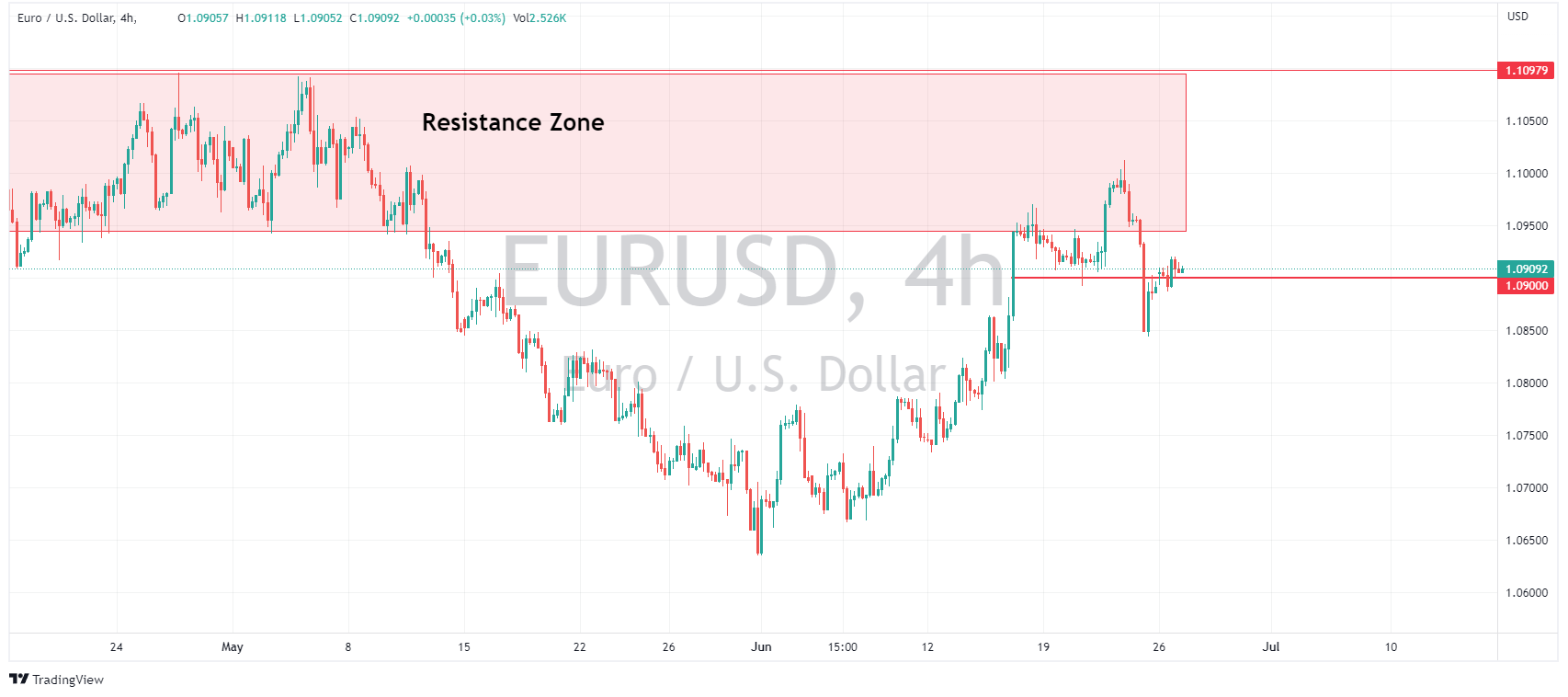
EUR/USD is holding lower ground near 1.0850, hanging at the weekly low early Friday. Economic woes act as a headwind for the Euro, though subdued USD demand lends support. Traders also seem reluctant ahead of the key inflation figures from the Eurozone and the US.

EUR/USD suffered large losses on Thursday as the US Dollar continued to gather strength against its rivals on robust macroeconomic data releases. The pair trades below 1.0900 early Friday as investors stay on the sidelines while waiting for key inflation data.

The Core Harmonized Index of Consumer Prices (HICP) in the Eurozone is forecast to rise 0.7% in June, up sharply from the 0.2% increase recorded in May. Following the hot inflation figures from Spain and Germany earlier this week, a strong HICP growth in the Eurozone shouldn’t be surprising. Hence, the Euro could continue to weaken on a smaller-than-forecast increase but could find it difficult to rebound unless there is a significant upside surprise in the monthly Core HICP.

In the second half of the day, the Personal Consumption Expenditures (PCE) Price Index, the Fed’s preferred gauge of inflation, will be featured in the US economic docket.

On Thursday, the annualized Gross Domestic Product (GDP) growth for the first quarter got revised higher to 2% from 1.3% in the US Bureau of Economic Analysis’ previous estimate. Additionally, the number of first-time applications for unemployment benefits fell nearly 30,000.

As data from the US highlight the resilience of the economy, the Federal Reserve (Fed) could continue to stay focused on taming inflation. The CME Group FedWatch Tool shows that markets are currently pricing in a less than 40% probability of the Fed raising the policy rate by a total of 50 basis points in the remainder of the year. Hence, an increase of 0.5% or higher in the monthly Core PCE Price Index could attract hawkish Fed bets and provide a boost to the USD.

It’s also worth mentioning that the market volatility could rise toward the end of the European session amid quarter-end flows. Inter-market correlations could weaken heading into the weekend, distorting the impact of the data releases on the pair.

Asia Day Ahead: Economic Resilience Well-Received in US; Key Inflation Data Looms

Asia Day Ahead: Economic Resilience Well-Received in US; Key Inflation Data Looms

A significant upward revision in the final read for US first-quarter gross domestic product (GDP) data (2.0% versus 1.4% forecast) adds to the list of positive economic surprises in the US lately, with economic resilience aiding to calm some nerves around recession concerns, at least for now. That paved the way for some catch-up performance in riskier small-cap stocks overnight, with the Russell 2000 outperforming its counterparts to close 1.2% higher.

Banking stocks also stole the limelight, with all 23 lenders acing the Federal Reserve’s (Fed) annual stress test by proving their resilience in weathering a severe recession scenario. The results provided a positive lead-up to their earnings releases in a few weeks’ time, which saw renewed market traction on the prospects of a potentially higher shareholder payout.

Thus far, the Financial Select Sector SPDR Fund has not fully recovered from its pre-SVB levels, with the index trading within a rising wedge pattern in its aftermath. The Relative Strength Index (RSI) has managed to hold above the 50 level, which kept the near-term bias to the upside. The next test for buyers will be at the 33.70-33.90 level, which marked a resistance confluence zone, particularly from its 200-day moving average (MA) and upper wedge trendline resistance. Overcoming this level may pave the way towards the 35.00 level next.
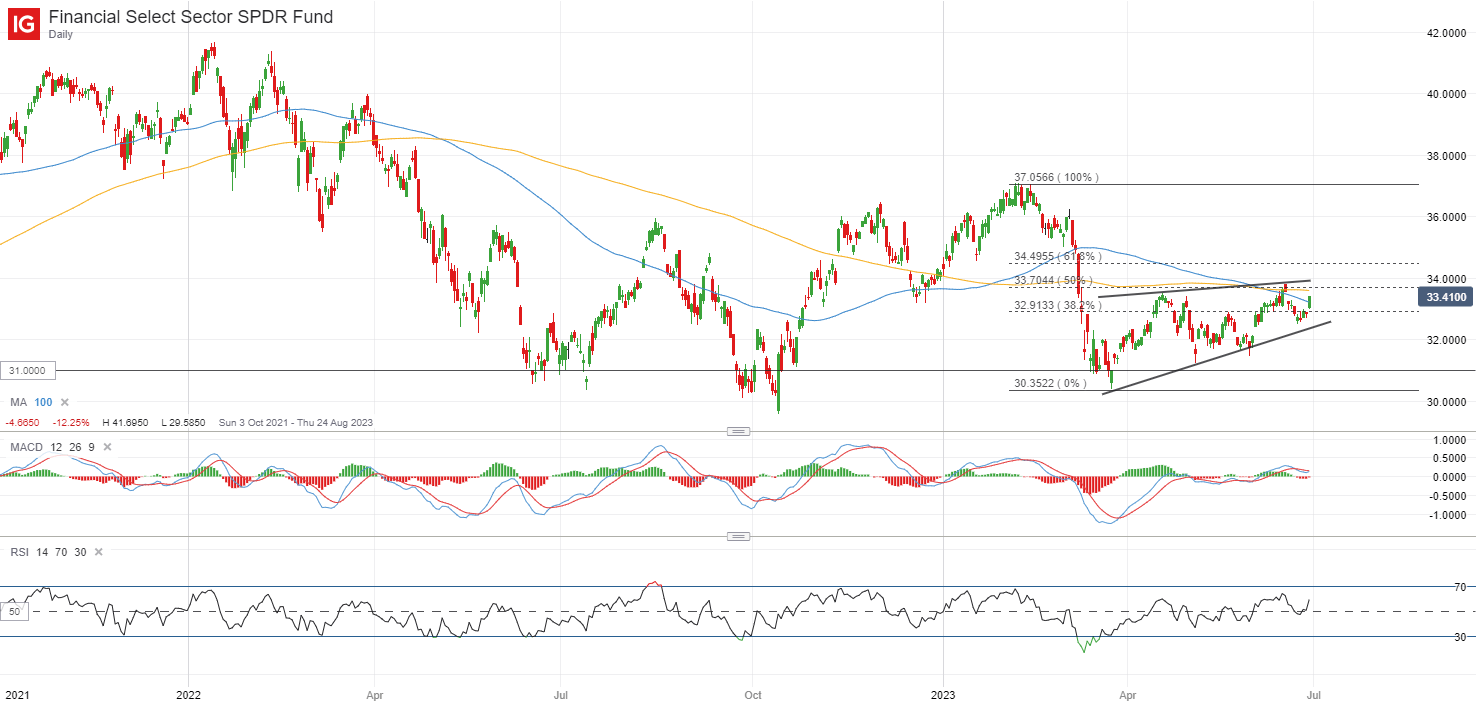
image1.png

Source: IG charts

Treasury yields jumped as rate expectations saw a hawkish recalibration in the aftermath of a brighter US economic profile. The two-year yields surged close to 15 basis-points (bp) to a new three-month high, while the 10-year also saw a similar move to retest its recent June high, keeping a lid on the rate-sensitive Nasdaq.

The day ahead will leave all eyes on the US core PCE price index release later today. Being the Fed’s preferred gauge of inflation, the inflation data has not seen much progress since the start of the year, in contrast with the US Consumer Price Index (CPI). Another set of stubborn inflation read could reinforce a high-for-longer rate outlook and push back against rate-cut prospects, further validated by indications of a stronger US economy lately.

Asia Open

Asian stocks look set for a downbeat open, with Nikkei -0.69%, ASX -0.38% and KOSPI +0.14% at the time of writing. Despite recent jawboning of currency intervention from Japanese authorities, doubts largely remain for any follow-through action as the USD/JPY continues to edge higher over the past week, alongside US dollar strength. The pair is just 0.5% away from the 145.80 level, where a softer round of yen-buying (US$19.7 billion) was conducted in September 2022, which failed to provide much conviction for markets at that time.

This morning, Tokyo’s softer-than-expected core CPI (3.2% versus 3.3% forecast) will likely reinforce the Fed-BoJ policy divergence once more and add to the downward pressure for the JPY. We may see further ramp-up of intervention talks by Japanese authorities ahead, but unless they translate to concrete action, it may seem difficult to stem the increase in the pair. Even in the event of an intervention, the 2022 attempts suggest that the amount of yen-buying matters.

The USD/JPY will face a key test of resistance at the 145.80 level, as caution may intensify on the prospects of intervention while technical conditions trend in overbought territory. But given the higher-highs-higher-lows since the start of the year anchoring an upward trend in place, any sell-off could still be looked upon as a retracement, which leave the 142.50 level on watch for immediate support.
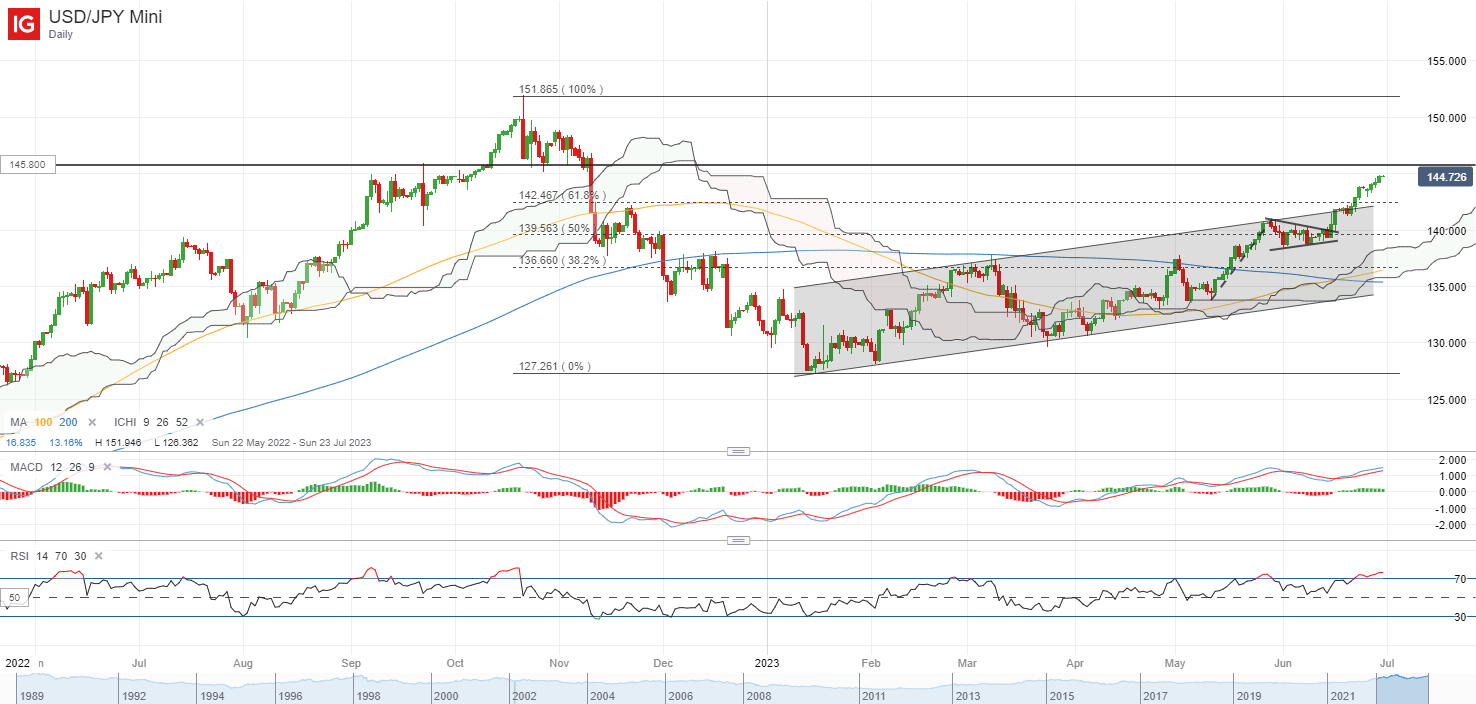
image2.png

Source: IG charts

Ahead, China’s NBS PMI figures will be on the radar. A more subdued reading in the June PMI figures remains the broad consensus (49 versus previous 48.8), which could likely reinforce views that more needs to be done. A sustained turnaround in the data will be warranted to provide greater conviction that the worst is over.

On the watchlist: US dollar on watch ahead of US core PCE price index release

The US dollar has been edging higher in the lead-up to the US PCE price index release today, tapping on some resilience in Treasury yields lately as positive economic surprises this week point to a high-for-longer rate outlook. Its 100-day MA has been reclaimed overnight, after being supported off its Ichimoku cloud on the daily chart. Buyers are also seeking to take greater control, with a bullish crossover on MACD and a move in RSI back above the 50 level, but validation will have to be sought from a more persistent set of inflation readings to further support US dollar strength.

The 103.12 level may serve as immediate resistance to overcome ahead, with a move above this level potentially paving the way to retest the 105.00 level next. On the other hand, failure to reclaim the level could leave its 2023 year-to-date lows on watch at the 100.50 level.
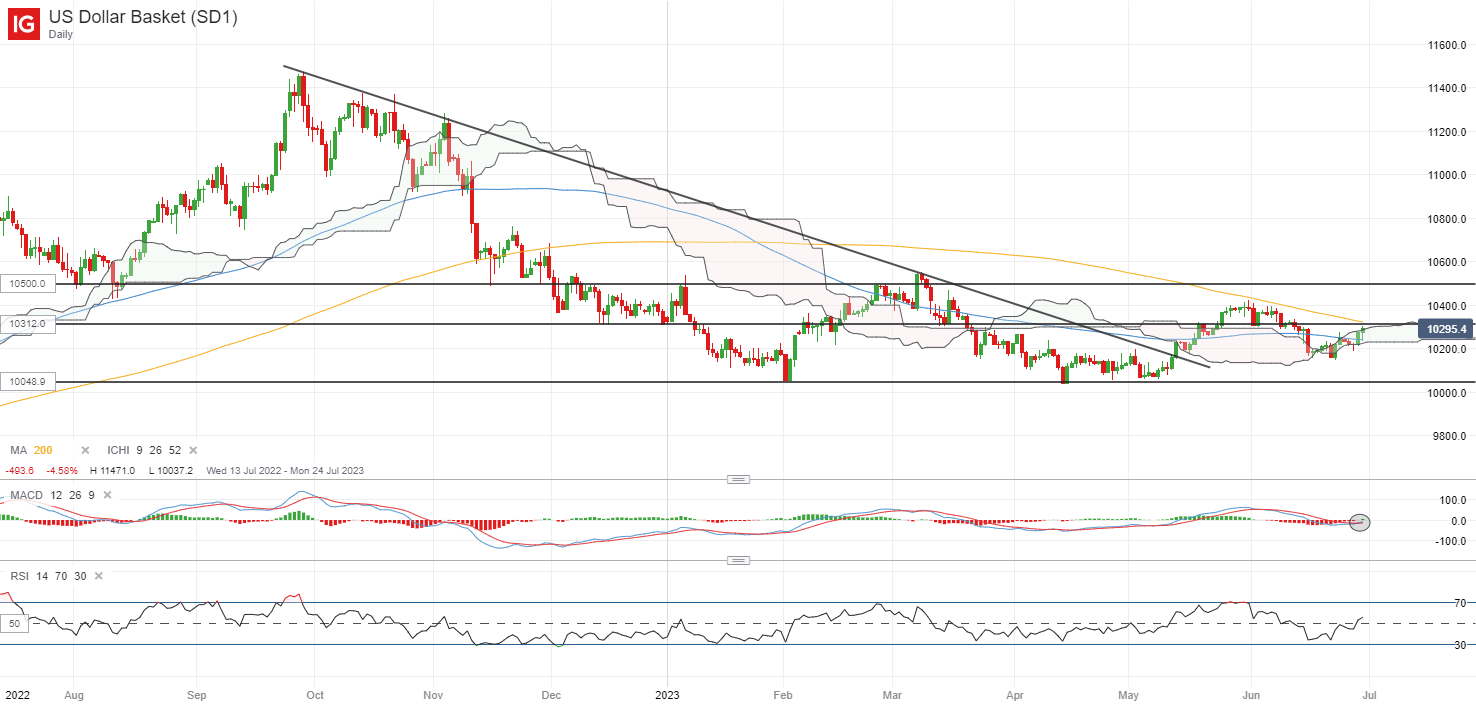
image3.png

Source: IG charts
China/Hong Kong Indices Steady After PMI Data: Hang Seng, Shanghai Composite Price Action

China/Hong Kong Indices Steady After PMI Data: Hang Seng, Shanghai Composite Price Action

China/Hong Kong equity indices were steady amid hopes of a broader stimulus after data showed manufacturing activity in China rose slightly while non-manufacturing activity softened in June.

China NBS Manufacturing PMI advanced to 49.0 in June, in line with expectations, compared with 48.8 last month. China’s NBS Non-Manufacturing PMI slipped to 53.2 in June from 54.5 last month. This follows data on Wednesday that showed annual profits at China’s industrial firms tumbled 18.8% on year in the first five months of 2023, compared with a 20.6% contraction in January-April.

China’s economic data have underwhelmed since April, raising concerns that the post-Covid economic rebound has run out of steam. The Economic Surprise Index is now back near levels before the economic reopening earlier this year. As a result, consensus economic growth forecasts for China for the current year have been downgraded in recent weeks.

Beijing has announced measures to support the economy, including cutting key lending benchmarks and a 520-billion-yuan package on new-energy vehicles. Premier Li Qiang said on Tuesday China will roll out more effective policy measures to expand domestic demand.

Hang Seng Index Daily Chart

image1.pngChart Created by Manish Jaradi Using TradingView

Hang Seng Index: Upward momentum lacking

On technical charts, the Hang Seng Index has been weighed by stiff converged resistance on the 89-day moving average and the upper edge of the Ichimoku cloud on the daily charts. Unless the index is able to clear the April high of 20865, the path of least resistance remains sideways to down. Moreover, a fresh six-month low hit at the end of last month reaffirms the near-term bearish backdrop. Initial cushion is at the end-May low of 18045, followed by the end-2022 low of 16830.

Shanghai Composite Index

image2.pngChart Created by Manish Jaradi Using TradingView

Shanghai Composite Index: Downward bias

The break last month below key support on a horizontal trendline from December confirmed that the seven-month-long uptrend is over. This week’s fall to a six-month low further reinforces the bearish bias. Immediate support is at Monday’s low of 3145, followed by 3090 (the 61.8% retracement of the October 2022-May 2023 rise). Stronger support is at the December low of 3030.

Japanese Yen is on the Slide as the Fed and Bank of Japan Return to their Corners

Japanese Yen is on the Slide as the Fed and Bank of Japan Return to their Corners

The Japanese Yen slid to its weakest level since November last year in the aftermath of the leaders from the Fed and Bank of Japan reiterating their monetary policy disparity earlier in the week.

Fed Chair Jerome Powell has been consistently crossing the wires in the last few days putting his hawkish wares on show. Conversely, Bank of Japan Governor Kazuo Ueda has made it clear that his bank will maintain its ultra-loose settings for the foreseeable future.

The jawboning from Japanese authorities has stepped up a notch going into the end of the week. Today it was Finance Minister Shunichi Suzuki’s turn to warn that the government will respond to excessive moves in currency markets. USD/JPY retreated back below 145 on the comments.

Elsewhere, Treasury yields have held onto the massive gains seen in the US session following solid jobs data. The policy-sensitive 2-year note nudged 4.89% and is almost back to levels seen before the collapse of SVB, as is the back end of the curve.

Global government bonds in developed markets followed the lead to various degrees.

APAC equity markets have been relatively subdued although China’s CSI 300 saw some gains after the NBS PMI data hit forecasts of 49.

The People’s Bank of China (PBOC) set the Yuan stronger than anticipated as it appears that Beijing may look more closely at the exchange rate.

Crude oil is steady going into Friday’s session with the WTI futures contract approaching US$ 70 bbl while the Brent contract is oscillating around US$ 74.50 bbl.

After touching US$1,900 overnight, gold has recovered to be trading near US$ 1,915 at the time of going to print.

Looking ahead, after UK GDP and European CPI data, Canada will also see GDP figures. In the US, the PCE inflation gauges will the focus as the calendar rolls into a new month, quarter and half year.

USD/JPY TECHNICAL ANALYSIS

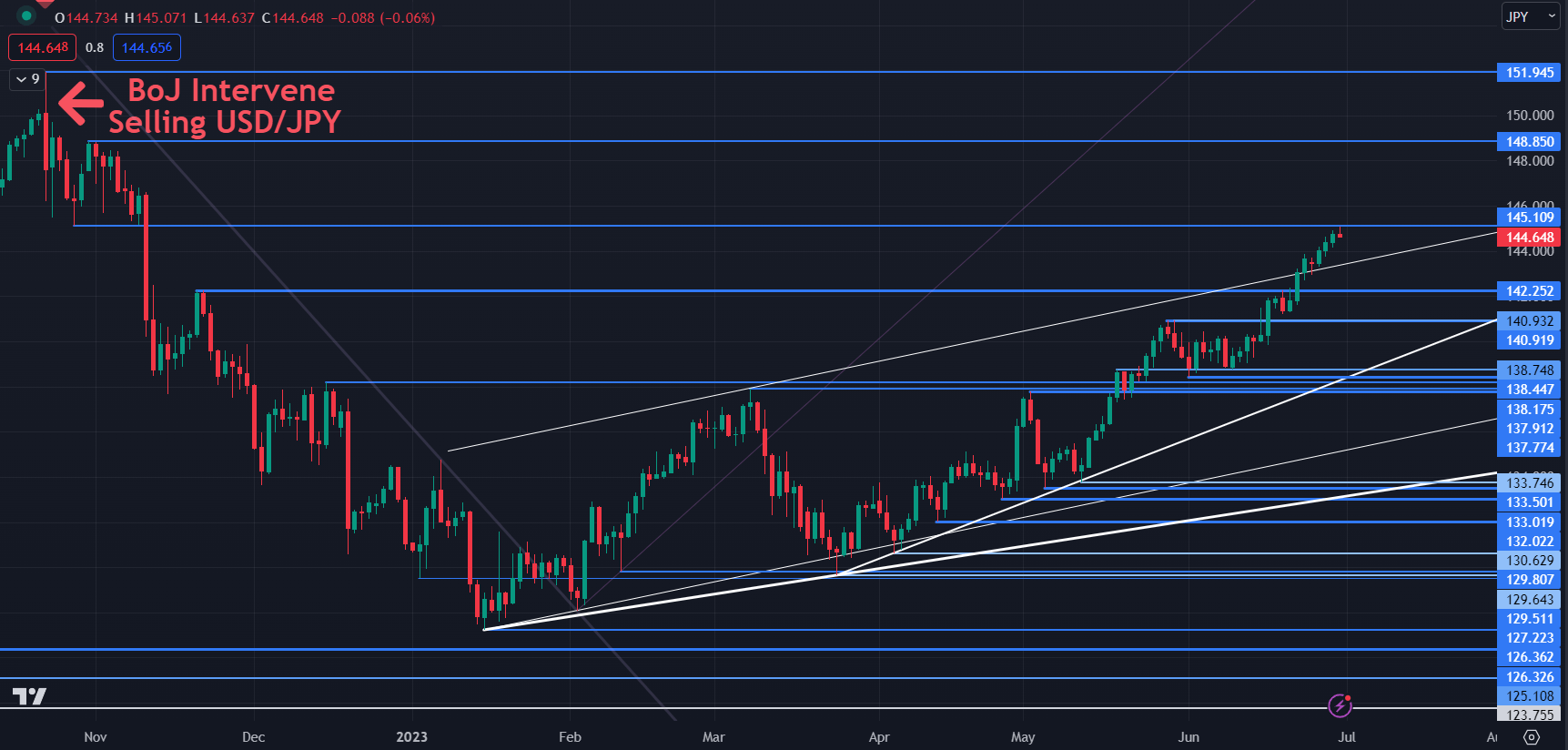
USD/JPY topped out just below a breakpoint at 145.10 today and that level might continue to offer resistance. Further up, the prior peaks at 148.85 and 151.95 may also offer resistance.

On the downside, support could be at the breakpoints of 142.25 and 140.90. Further down, there is a cluster of breakpoints and previous lows in the 137.75 – 138.85 area and this might be a support zone.

image1.png


USDJPY- Will The Bank of Japan Intervene At 145.00?

USDJPY- Will The Bank of Japan Intervene At 145.00?

USDJPY- Will The Bank of Japan Intervene At 145.00?

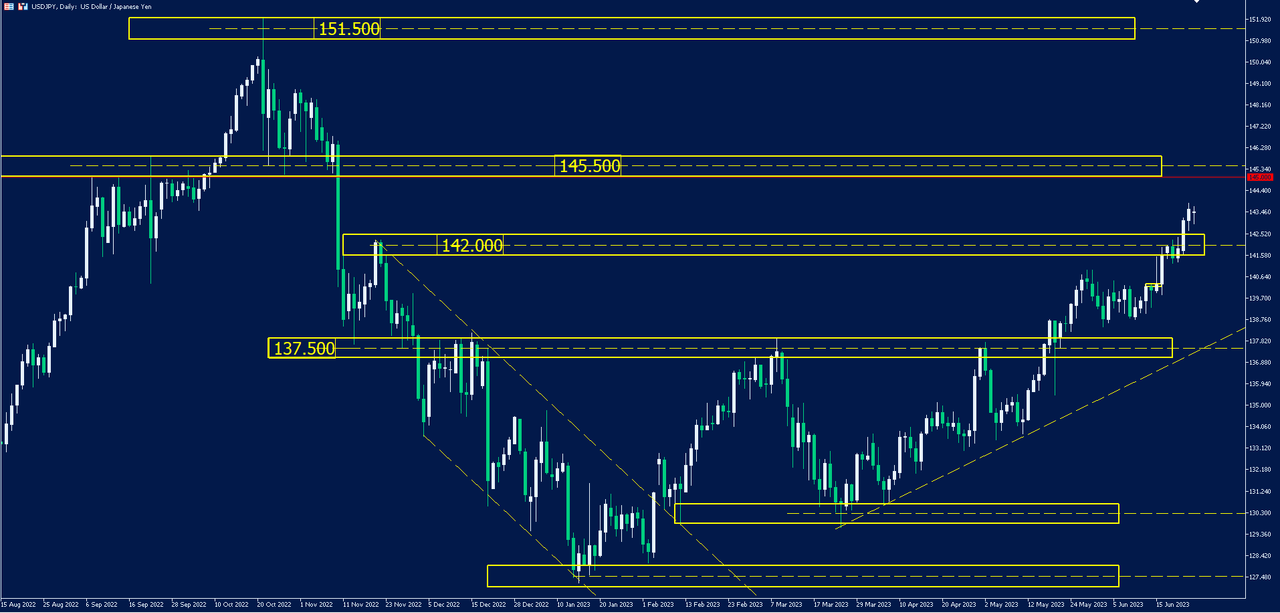
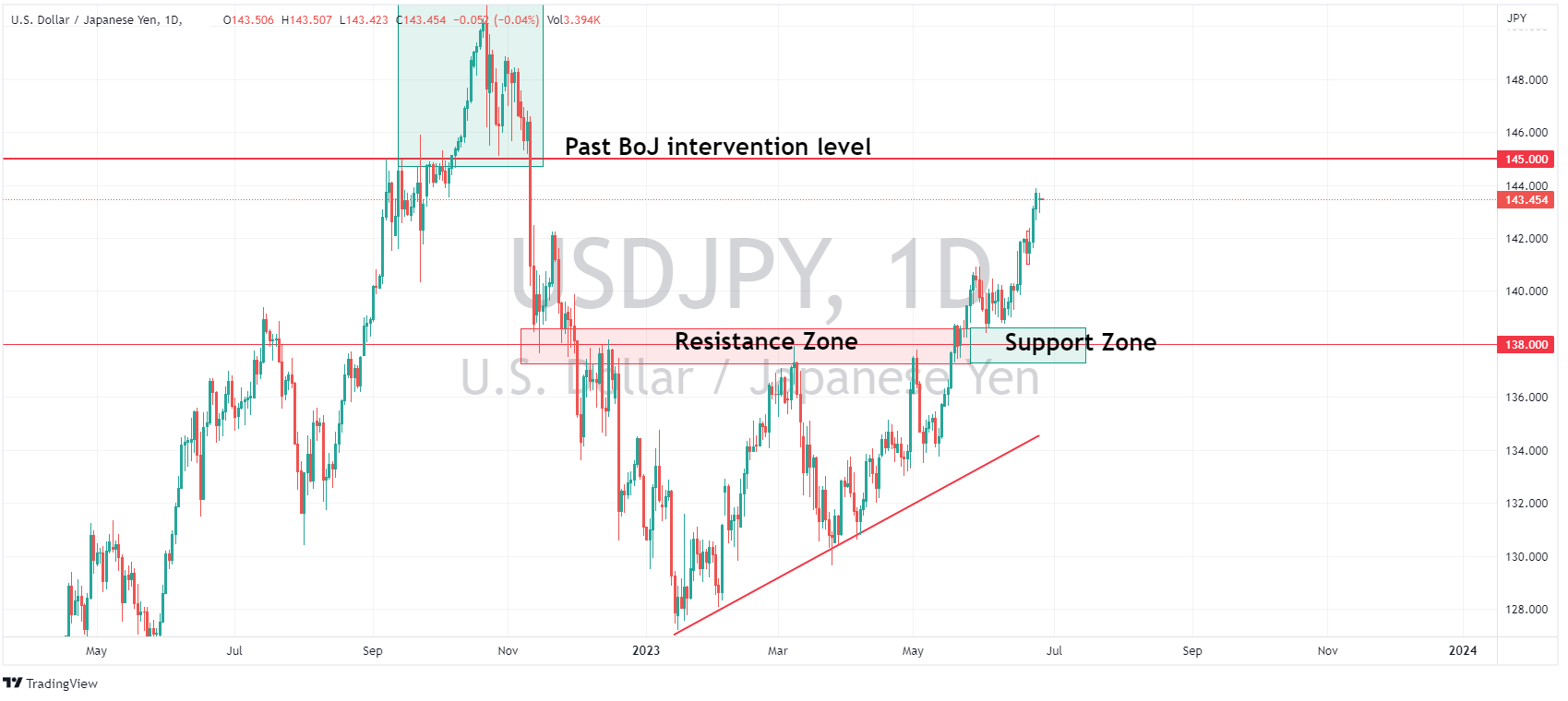
Rumors are swirling in the forex market regarding the potential intervention by the Bank of Japan (BoJ) if the USDJPY exchange rate reaches 145.00. Currently trading at 143.50, this critical level has garnered attention from traders and investors alike. In this blog post, we will explore the likelihood of intervention, taking into account historical precedents and the contrasting factors affecting the USDJPY pair.

The last time the BoJ intervened in the currency markets was when the USDJPY exchange rate soared to highs of 151.50, a level not seen since 1998. This move was prompted by the necessity to address excessive yen weakness and its potential negative impact on Japan’s export-dependent economy. It serves as a reminder of the BoJ’s willingness to take action when exchange rates become disruptive.

On the other side of the equation, the USD could continue to strengthen as the Federal Reserve Chairman has expressed intentions for further rate hikes to combat potential inflationary pressures. This divergence in monetary policy between the United States and Japan can significantly influence the USDJPY exchange rate.

As USDJPY hovers around the crucial level of 143.50, speculation about a potential intervention by the Bank of Japan at 145.00 is intensifying. The historical context of previous interventions and the contrasting factors affecting the USDJPY exchange rate warrant careful consideration. Traders and investors should monitor developments closely and assess the likelihood of intervention alongside the broader market trends and fundamental factors shaping the USDJPY pair.

USDJPY

USDJPY How To Trade Forex 26-6-23

The price on the chart has traded through multiple technical levels and some observations included:

  • Price could reach the potential intervention levels at 145.00.
  • If the BoJ intervenes here price could move lower towards the 142.00 support.
  • If however, they do not intervene and the Fed remains hawkish, USDJPY could trade as high at 151.50.

Have you watched our Week Ahead Analysis? You can see it here.

Enjoy low spreads and quick trade executions with a live account. Our highly committed customer support team will assist you with your quick account setup for any future concerns. Start trading with Blueberry Markets today.

US Markets finish mostly down in quiet session as Big Tech drags down the Nasdaq

US Markets finish mostly down in quiet session as Big Tech drags down the Nasdaq

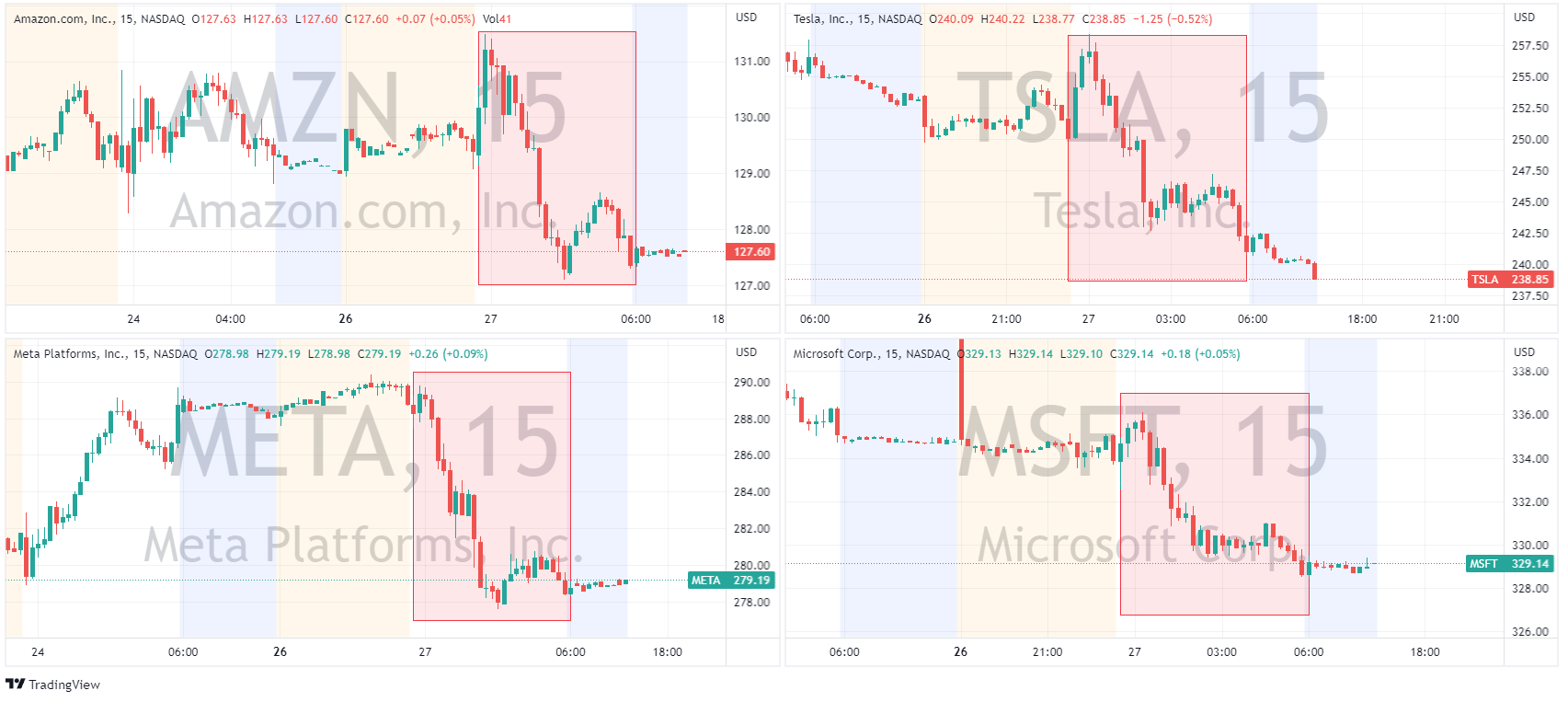
US Indices were mixed to start the week in Monday’s session in a low volatility session, Big Tech gave back some of their recent gains with a major pullback in Tesla (-6% on a Goldman Sachs downgrade) and Meta, Amazon and Microsoft all falling 2-3% saw the Nasdaq down over 1% to be the worst performing index.

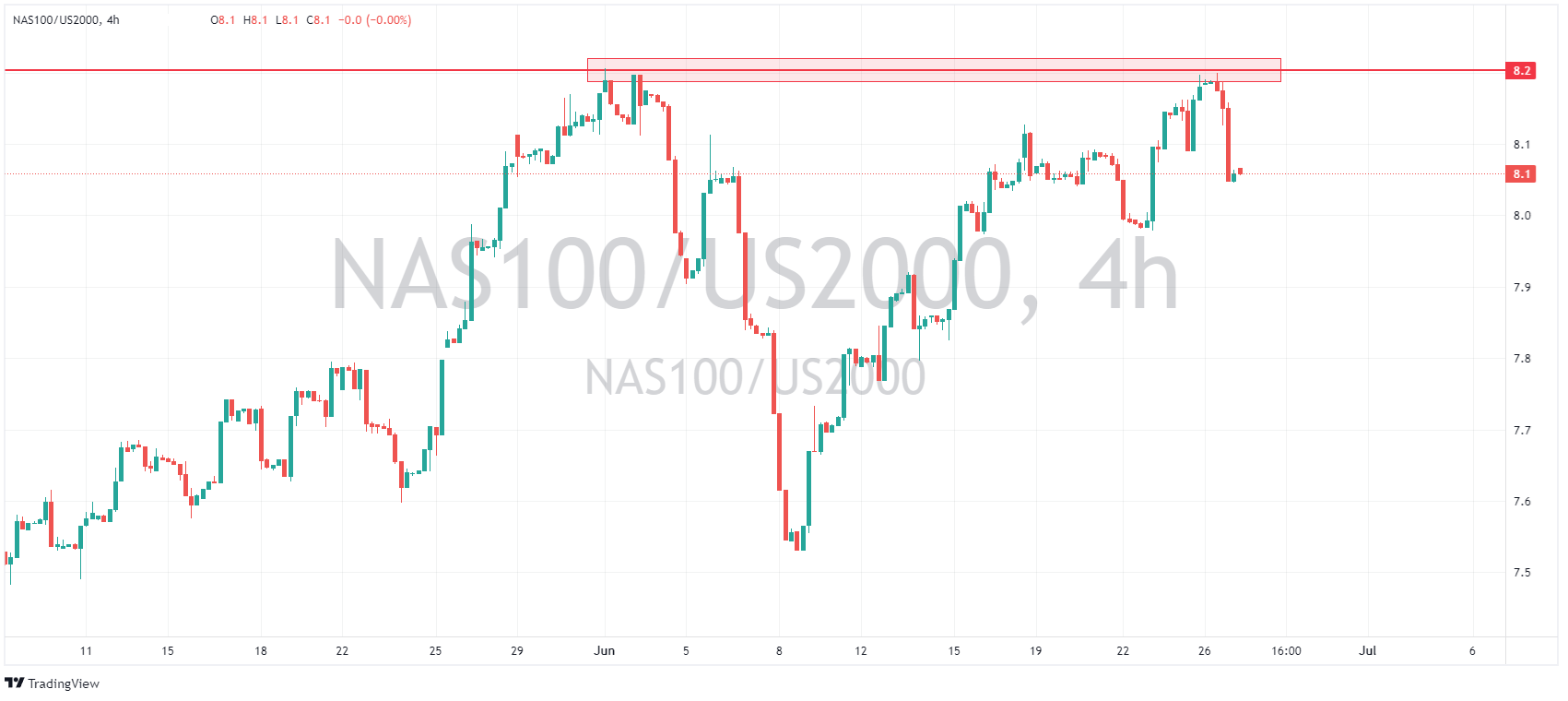
The Russell 200 was the only major index to finish in the green, with a bounce in regional banking helping to lift that index seeing the Nasdaq 100 /  Russell 2000 ratio again find stiff resistance at 8.2, a level that historically indicated Tech being overvalued to the broader market.

FX Markets

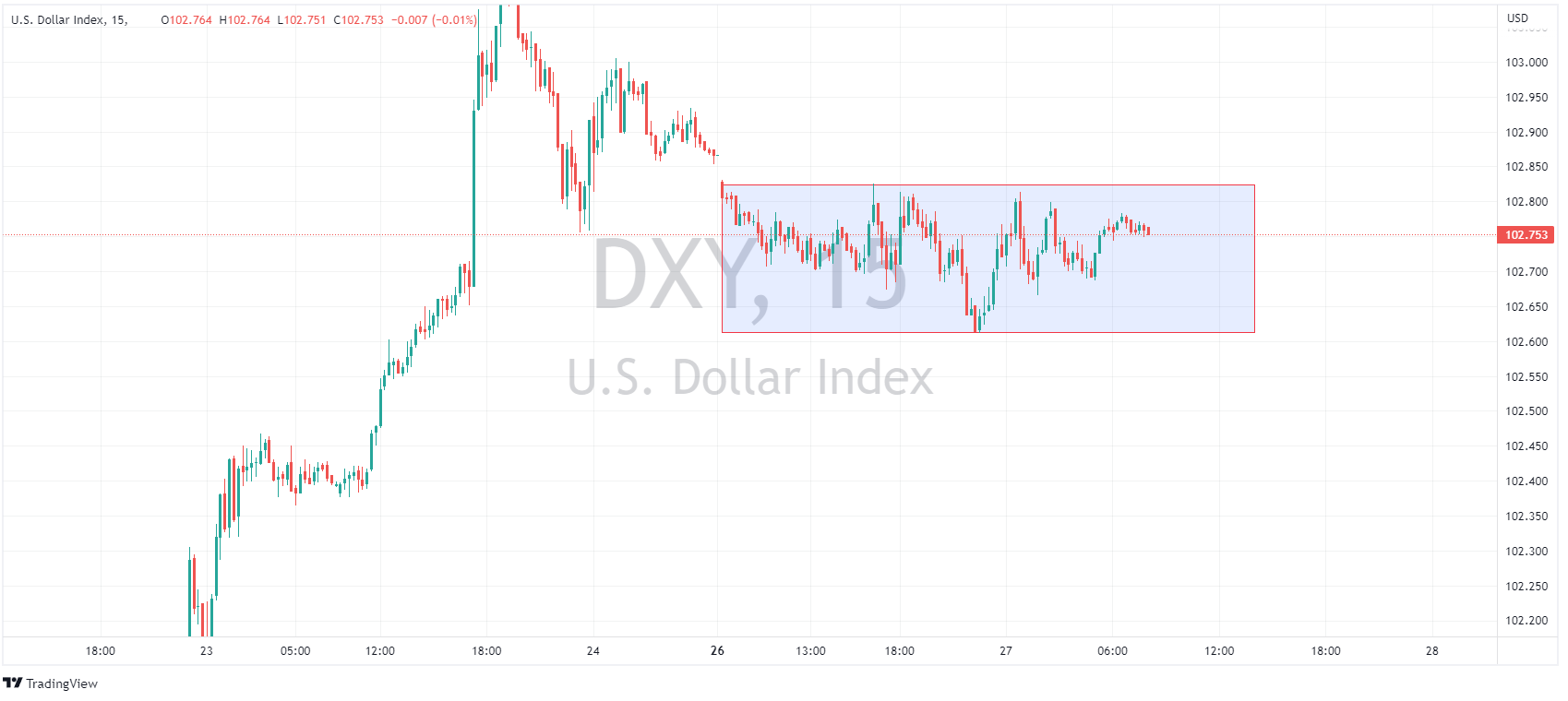
USD was flat to start the week in a thin session with a lack of any real news flow, the US Dollar index trading within a tight range, highlighted by a low of 102.610 and a high of 102.830 as traders await a slew of central bank speakers and US data in todays session which should see some more volatility.

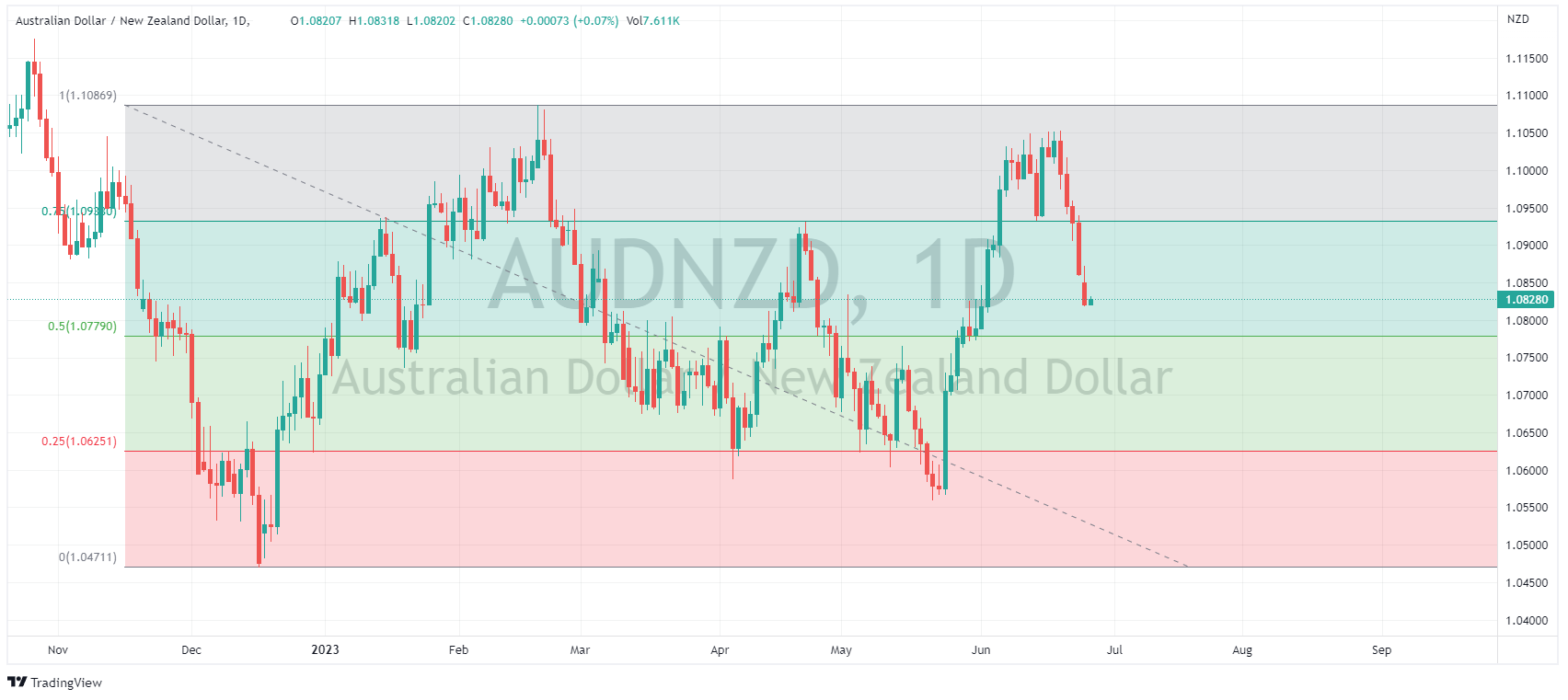
NZD was the G10 outperformer while the AUD was flat against the USD. NZD saw tailwinds after New Zealand’s Trade Minister said he had positive discussions with China on joining the Comprehensive and Progressive Agreement for Trans-Pacific Partnership (CPTPP). NZDUSD hitting a high of 0.6177 and seeing the AUDNZD take a leg down and looking to test the 1.08 level.

Safe-havens, CHF and JPY, were both marginally firmer against the USD. The recent slide towards 145 halted in USDJPY as comments from Secretary Matsuno and BoJ member Kanda regarding their displeasure at the one-sided trading of the Yen raised the specter of FX intervention (which the BoJ is no stranger to)

EUR was more-or-less flat as EURUSD traded between 1.0888-0920, with the single-currency briefly losing grip of the psychological 1.0900 level on the back of a bleak German Ifo survey and downbeat accompanying commentary. A late session rally did see EURUSD reclaim it , though as support it would be best described as precarious and is shaping to be a key level in the short term.

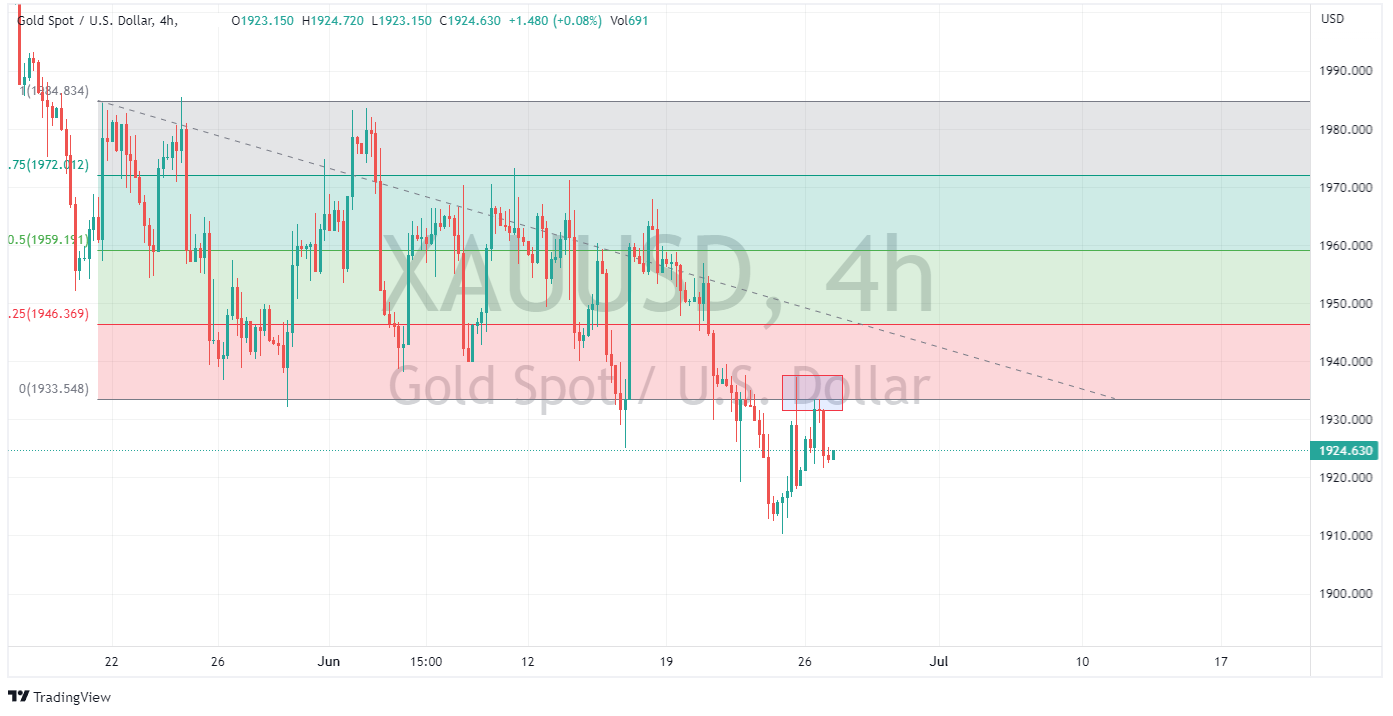
Gold tested the lower band of its recent range at 1933 to the upside in an attempt to re-enter the range. XAUUSD found some stiff resistance though, with the up move halted, and gold settling below the range where 1933 is shaping to have switched from support to resistance.

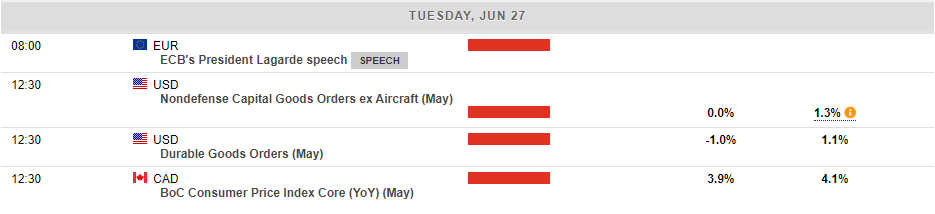
Tuesdays calendar is a little busier with Canadian CPI, US Consumer data and an appearance from ECB President Lagarde.


Disclaimer: Articles are from GO Markets analysts and contributors and are based on their independent analysis or personal experiences. Views, opinions or trading styles expressed are their own, and should not be taken as either representative of or shared by GO Markets. Advice, if any, is of a ‘general’ nature and not based on your personal objectives, financial situation or needs. Consider how appropriate the advice, if any, is to your objectives, financial situation and needs, before acting on the advice. If the advice relates to acquiring a particular financial product, you should obtain and consider the Product Disclosure Statement (PDS) and Financial Services Guide (FSG) for that product before making any decisions.