silver3

Silver Price records a new all-time high

Silver prices (SILVER) rose during recent intraday trading, breaching an expected target in our previous analysis at $115.00 resistance, recording new all-time highs, this rise comes amid clear dominance for the main bullish trend on short-term basis, with the trading alongside main and minor trend lines that support this trend.


The price is getting advantage of the positive support due to its trading above EMA50, accompanied by the emergence of positive overlapping signals on relative strength indicators, after offloading its overbought conditions, opening the way for extending its gains on near-term basis.

gbp

GBPUSD price is surrounded by positive pressures

GBPUSD rose in its last trading on intraday basis, amid the dominance of the main bullish trend on short-term basis, with the continuation of dynamic pressure due to its trading above EMA50, accompanied by the emergence of positive signals from relative strength indicators, after forming positive divergence that intensified the surrounding momentum.

eurusd

EURUSD price is recovering

The (EURUSD) price rose in its last intraday trading, supported by the stability of 1.1900 key support, gaining bullish momentum that helped it achieve these gains, amid the continuation of the main bullish trend on short-term basis, with its trading alongside supportive minor trend line for this trend.


Noticing the emergence of positive divergence by the relative strength indicators, after reaching sharp oversold levels compared to the price move, with the emergence of positive signals from there, reinforcing the chances of the rise continuation in the near period.

images

Crude oil prices keep rising

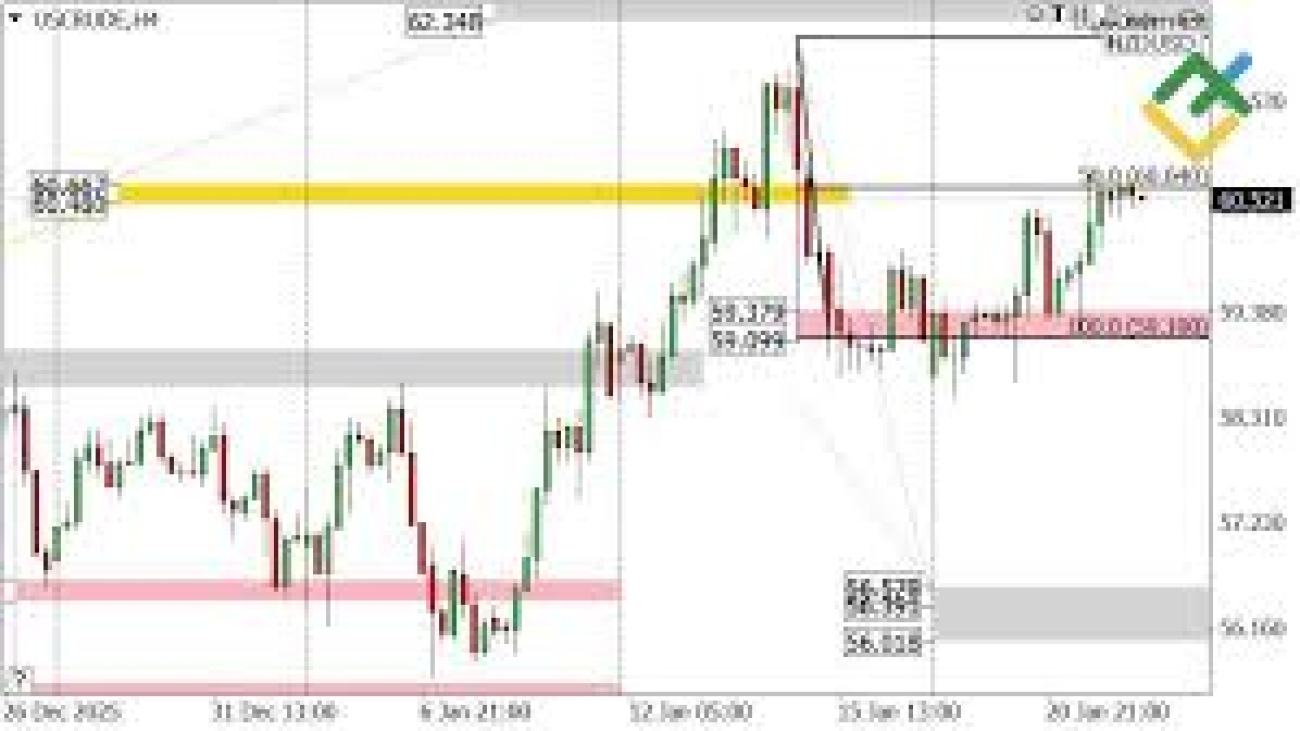
Crude oil prices kept rising in their last intraday trading, breaching our expected target at $63.00 resistance. This breach comes amid clear dominance of the main bullish trend on short-term basis, with the trading alongside supportive trend line for this trend.


The price is getting continued dynamic support due to its trading above EMA50, accompanied by the emergence of positive signals from relative strength indicators, after offloading overbought conditions, opening the way for extending its gains and achieving this intraday rise.

gold

Gold price keeps achieving new all-time highs

Gold prices (GOLD) surged high during recent intraday trading, to keep recording new record highs, after breaching the expected target in our previous analysis at $5,400 resistance, this strong performance comes amid the main bullish trend on short-term basis, with the trading alongside supportive minor trendline for this track.


Despite the negative signals emerging from relative strength indicators after reaching sharp overbought levels, the price kept its rise as clear signals for the strength of the dominant bullish momentum.

images

Gold keeps shattering records, hits $5300 for first time ever

Gold prices rose in European trading on Wednesday, extending gains for an eighth consecutive session and continuing to set new record highs after breaking above the $5,300-per-ounce level for the first time in history. The rally was driven by strong safe-haven demand, alongside a weak US dollar that is attempting to recover from a four-year low.

Later today, the Federal Reserve will conclude its first regular policy meeting of 2026 to assess the appropriate monetary stance for the world’s largest economy, with markets almost fully pricing in no change to interest rates.

Price overview

• Gold prices today: Gold rose by 2.6% to $5,311.60 per ounce, marking a new all-time high, from an opening level of $5,178.32, while the session low was recorded at $5,157.42.

• At Tuesday’s settlement, gold gained about 3.35%, marking a seventh consecutive daily advance and the largest one-day increase since August 16, driven by record safe-haven demand and a sharp drop in the US dollar following comments by Trump.

US dollar

The US dollar index rose by more than 0.4% on Wednesday, beginning to recover from a four-year low at 95.55 points, and heading for its first gain in five sessions, reflecting a rebound in the US currency against a basket of global peers.

Beyond bargain buying from depressed levels, the dollar’s recovery comes ahead of the release of decisions from the Federal Reserve’s first policy meeting of the year.

The US dollar has faced heavy pressure this month due to several factors, including policies of US President Donald Trump and concerns over the independence of the Federal Reserve.

In addition, a dispute between Republicans and Democrats over funding for the Department of Homeland Security, following the killing of a second US citizen by federal immigration officers in Minnesota, has raised fears of another US government shutdown.

Trump said on Tuesday that the dollar is “looking for its natural level,” a comment that analysts interpreted as a green light to sell the US currency.

US consumer confidence fell to its lowest level in more than 11 and a half years in January, amid growing concerns over a weakening labor market and rising prices.

Federal Reserve

The Federal Reserve will conclude later today its first policy meeting of 2026 to discuss the appropriate monetary policy path, with expectations firmly centered on keeping US interest rates unchanged at the 3.75% level.

The interest rate decision and policy statement are due at 19:00 GMT, followed by a press conference by Federal Reserve Chair Jerome Powell at 19:30 GMT.

Powell’s remarks are expected to provide clearer signals on the future path of US interest rates this year, particularly amid ongoing economic developments and mounting concerns over the independence of monetary policy in the United States.

Carol Kong, currency strategist at Commonwealth Bank of Australia, said markets are likely to focus more on questions surrounding the Federal Reserve’s independence than on interest rate expectations.

She added that if Powell were to step down as a governor after his term as Fed chair ends in May, it could reinforce the perception that he is yielding to political pressure, potentially heightening concerns over threats to the Fed’s independence and posing risks to the dollar.

US interest rates

• According to CME Group’s FedWatch tool, the probability of keeping US interest rates unchanged at the January 2026 meeting currently stands at 97%, while the odds of a 25-basis-point rate cut are priced at 3%.

• Investors are currently pricing in two US rate cuts over the coming year, while Federal Reserve projections point to a single 25-basis-point cut.

Gold outlook

Kelvin Wong, market analyst for Asia-Pacific at OANDA, said gold’s rally reflects its very strong indirect correlation with the US dollar. He added that Tuesday’s surge in US trading followed a casual comment by Trump in response to a question about the dollar, which hinted at a broad consensus within the White House in favor of a weaker dollar going forward.

Deutsche Bank said on Tuesday that gold prices could rise to $6,000 per ounce in 2026, citing sustained investment demand as central banks and investors increase allocations to non-dollar and tangible assets.

SPDR Gold Trust

Gold holdings in the SPDR Gold Trust, the world’s largest gold-backed exchange-traded fund, rose by about 0.85 metric tons on Tuesday, bringing total holdings to 1,087.38 metric tons, the highest level since May 3, 2022.


russia

Why are Russian diesel exports surging unexpectedly?

Russian diesel shifted from being the main bullish driver in global middle distillate markets in 2025 to a dominant bearish force by early 2026, reversing a year-long rally in refining margins. The European diesel crack spread rose from $16.7 per barrel in early January 2025 to $34.17 per barrel in November, as Russian supplies — structurally weak since the start of the war — tightened to acute shortage levels. That tightness has since eased, with the average crack spread falling to $21.7 per barrel in January 2026. Refinery maintenance, improving utilization rates, and the return of diesel exports — which rebounded to around 900,000 barrels per day in December — brought Russian diesel back to the market, pressuring margins, before the EU sanctions that took effect on January 21 temporarily provided renewed support. The resurgence of Russian diesel flows has once again reshaped trade routes, triggering a sharp rebound in shipments to Brazil despite earlier declines. This highlights both Russia’s growing resilience to refinery attacks and the limits of sanctions pressure when discounted fuel meets sustained demand.


The widening in diesel crack spreads through most of 2025 was driven largely by a sharp contraction in Russian exports, which fell to a five-year low of 586,000 barrels per day in September. This tightening was the result of a sudden shock rather than a gradual decline. It began in January with a Ukrainian drone strike on the Ryazan refinery — with a capacity of 13.1 million tonnes per year, accounting for roughly 5% of national refining capacity — and continued throughout the year as repeated attacks disrupted refining operations. Pressure intensified in the autumn, peaking in November with a record 14 drone strikes in a single month, including an attack on the Afipsky refinery near Krasnodar, which has a capacity of 9.1 million tonnes per year. Media reports indicate that more than 20 refineries were damaged during 2025, with some estimates suggesting that around 20% of national refining capacity was offline at various points due to strikes or maintenance. Refinery utilization fell to about 5 million barrels per day in September, prompting Russia to impose partial restrictions on diesel shipments and introduce a temporary ban on diesel exports by non-producing companies in September 2025, later extended through March 2026.


This tightness began to ease in December. As a result, diesel crack spreads declined steadily, reaching $19.89 per barrel by mid-January, as Russian refinery utilization recovered faster than expected. Average Russian diesel production reached 1.8 million barrels per day in the first half of January 2026 — the highest level since January 2025 — with ultra-low sulfur diesel (ULSD) accounting for roughly 1.75 million barrels per day. Overall refinery throughput rose from around 5 million barrels per day in September to approximately 5.5 million barrels per day in December. This recovery came despite widespread expectations that repairs would take longer, particularly given restrictions on access to Western equipment and materials needed to fix damaged refining units. Russian operators, however, appear to have restored capacity more quickly than anticipated.


The recovery has been evident not only in output but also in export flows. In December, the Tuapse refinery — heavily export-oriented — suffered significant damage from a drone strike, yet ULSD loadings resumed by mid-January. Data from Kpler show two cargoes loaded on January 10 and January 14, bound for Turkey and Libya respectively. At the Primorsk oil terminal alone, January’s loading program is set to reach 2.2 million tonnes, a 27% month-on-month increase, with volumes rising from 440,000 barrels per day in December to 528,000 barrels per day in January. This marks the highest loading level ever recorded at Primorsk, underscoring its growing importance as exporters divert additional volumes away from the Black Sea, where Ukrainian attacks on Russian oil tankers have become more frequent. Overall, Russian diesel exports rose from about 590,000 barrels per day in September to roughly 900,000 barrels per day in December, representing a full year-on-year recovery.


Higher production has also translated into rising Russian diesel inventories, which reportedly reached a three-year high of 27.6 million barrels. Against this backdrop, Russian energy authorities are actively discussing lifting the export ban on diesel shipments by non-producing companies, arguing that domestic supply is now sufficient to meet internal demand even through the winter.


While the initial recovery pressured margins, diesel crack spreads later rebounded, reaching $25.43 per barrel by January 21, supported by colder weather and seasonal demand. This recovery is likely to encourage further Russian diesel exports, particularly to price-sensitive destinations where alternative supplies remain limited.


Brazil is a clear example. Chronic constraints in domestic refining capacity leave the country heavily dependent on diesel imports, making discounted Russian barrels economically attractive. However, Brazilian purchases fell sharply in the second half of 2025 as Russian supply tightened and political risks increased. Imports from Russia dropped from 247,000 barrels per day in March — when US President Donald Trump first signaled the possibility of new sanctions on Russian oil if peace talks with Ukraine failed — to just 49,000 barrels per day in November, when those sanctions took effect. US diesel emerged as a key substitute for lost Russian volumes during the autumn of 2025. Those constraints, however, proved temporary. In December, Brazilian imports of Russian diesel rebounded to 181,000 barrels per day, suggesting that domestic supply gaps, favorable pricing, and growing fatigue with ongoing US pressure ultimately outweighed concerns about tensions with Washington. Moreover, Indian diesel exports to Brazil since November 2025 have come almost exclusively from Nayara Energy’s Vadinar refinery — a sanctioned facility partially owned by Rosneft and fully dependent on Russian crude.


Three key conclusions stand out. First, Russia has demonstrated far greater resilience to drone attacks on its refining infrastructure, with operators increasingly able to repair damage quickly. As the pace of long-range Ukrainian strikes on refineries slows, refinery utilization is likely to remain stable, while weaker post-winter diesel demand combined with steady Russian supply points to narrower crack spreads in spring 2026. Second, as refining capacity continues to recover, Russia’s need to export crude is likely to diminish, increasing the probability of lower crude oil exports in the period ahead. Third, Western efforts to curb purchases of Russian petroleum products remain structurally weak. As long as Russian diesel is offered at discounted prices and demand remains strong, economic incentives will continue to outweigh political risks — a reality that has repeatedly reasserted itself across global fuel markets.

alibaba

Alibaba price tries to garner positive momentum

Alibaba Group Holding Limited (BABA) stock price recorded a pullback in its latest intraday trading, as the stock attempts to take profits from its previous gains while trying to build positive momentum that could help it recover and move higher again. At the same time, the stock is working to unwind part of its clear overbought conditions on the RSI, especially with the emergence of a negative crossover, while continued positive support remains in place from trading above its SMA50. This comes under the dominance of the main short-term upward trend, in addition to the stock being influenced by a previously formed positive short-term technical structure in the form of a falling wedge pattern.


Therefore we expect the stock price to rise in upcoming trading, as long as the $161.70 support level holds, to target the key resistance at $192.65.


Today’s price forecast: Bullish

EURO_6_L

Euro gives up five-year peak on profit-taking

The euro fell in the European market on Wednesday against a basket of global currencies, retreating from a five-year high versus the US dollar and heading for its first loss in five sessions, amid corrective moves and profit-taking, alongside a rebound in the US currency ahead of the Federal Reserve’s monetary policy decision.

The historic trade agreement between Europe and India has reinforced positive expectations for the continent’s economic growth. Beyond securing supply chains, the deal opens access to the world’s largest consumer market for European mid-sized companies and the services sector, providing the European economy with additional resilience against global trade shocks.

Price overview

• Euro exchange rate today: The euro fell 0.55% against the dollar to $1.1975, from an opening level of $1.2039, after touching an intraday high of $1.2046.

• The euro ended Tuesday’s session up 1.35% against the dollar, marking a fourth consecutive daily gain and its largest rise since last August, after hitting a five-year high of $1.2083.

• Those gains were driven by accelerating US dollar selling following comments by Donald Trump on what he described as the “fair value” of the US currency.

US dollar

The US dollar index rose more than 0.4% on Tuesday, starting to recover from a four-year low of 95.55 points and heading for its first gain in five sessions, reflecting a rebound in the US currency against a basket of global currencies.

Beyond bargain-hunting from low levels, the dollar’s recovery comes ahead of the outcome of the Federal Reserve’s first monetary policy meeting of the year.

The Fed is widely expected to leave interest rates unchanged at around 3.75%, while stressing the need for more time to assess economic developments before taking any further policy steps.

Carol Kong, currency strategist at Commonwealth Bank of Australia, said: “I think markets are likely to focus more on questions around the Federal Reserve’s independence rather than interest rate expectations.”

Kong added: “If Powell were to choose to step down from his role as governor after his term as Fed chair ends in May, that could reinforce the perception that he is yielding to political pressure, increasing concerns about the Fed’s independence… and that would pose a risk to the dollar.”

The US dollar has faced heavy pressure this month due to factors including the policies of US President Donald Trump and concerns over the independence of the Federal Reserve.

In addition, a dispute between Republicans and Democrats over funding for the Department of Homeland Security, following the killing of a second US citizen by federal immigration officers in Minnesota, has raised fears of another US government shutdown.

Donald Trump said on Tuesday: “The dollar is searching for its natural level, and that’s fair,” prompting analysts to argue that Trump is effectively giving the green light to sell the US currency.

European economy

Supported by the trade agreement with India, markets have become more optimistic about the outlook for the European economy. This strategic partnership helps diversify supply chains and expand the role of the services sector in a vast consumer market, supporting the sustainability of European economic growth and reducing vulnerability to global trade disputes.

The European Union and India reached a historic trade agreement this week after nearly 20 years of difficult negotiations, which European Commission President Ursula von der Leyen described as “the mother of all deals.”

European interest rates

• Market pricing for a 25-basis-point interest rate cut by the European Central Bank in February remains steady at around 25%.

• Traders have recently revised their expectations from rates remaining unchanged throughout the year to at least one 25-basis-point cut.

• To reprice these expectations, investors are awaiting further economic data from the euro area, particularly on inflation, employment, and wages.

EURGBP_Bearish-2_Large

The USDJPY is attempting to recover some of its losses

The (USDJPY) rose in its last trading on the intraday levels, after breaking the our expected target at 153.00 support, attempting to recover some of its previous losses, and attempting to offload some of its clear oversold conditions on relative strength indicators, especially with the emergence of positive overlapping signals, amid the dominance of steep bearish wave on short-term basis, with the continuation of the negative pressure due to its trading below EMA50, intensifying the negative pressures.