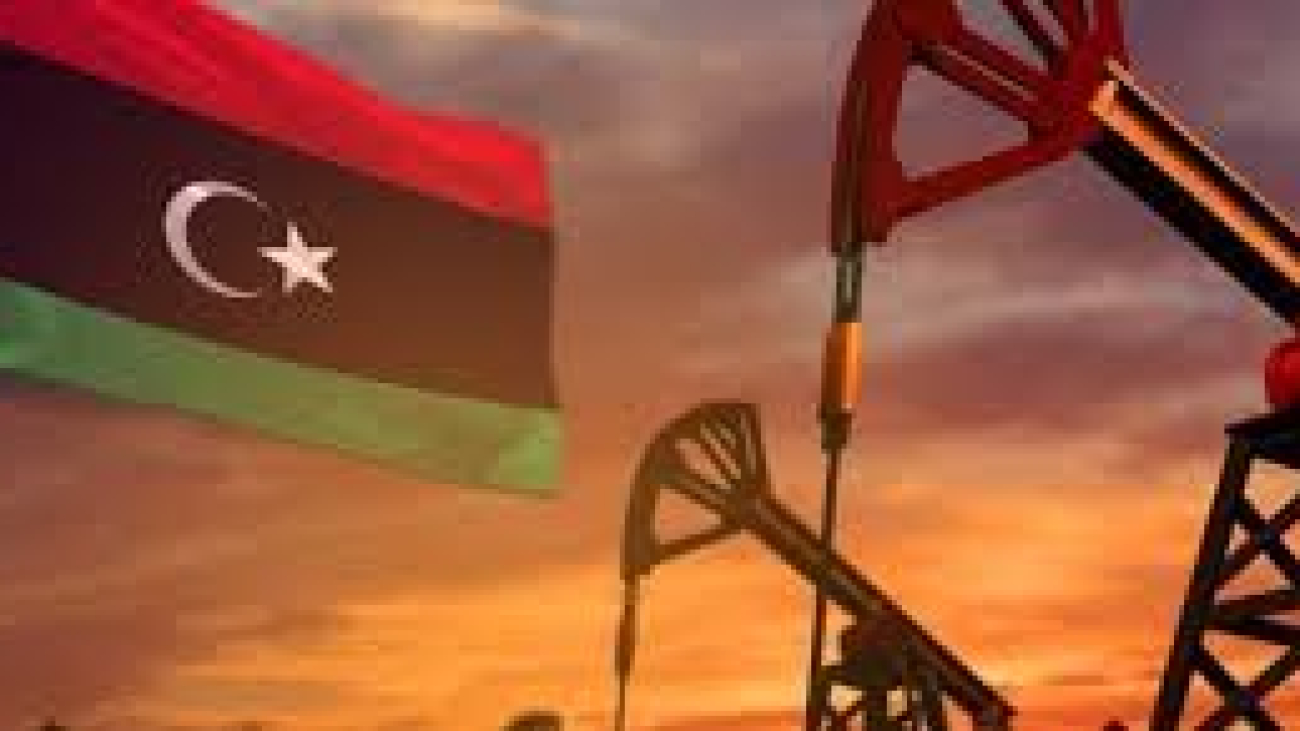
The first oil licensing round in Libya since the overthrow of the late leader Muammar Gaddafi in 2011 marked a notable return — or expansion — of major Western oil companies, in what was seen as a significant success for Tripoli. As part of the National Oil Corporation’s plan to raise production to two million barrels per day by 2028, Libya announced last year the offering of 22 onshore and offshore blocks in its first bid round.
Among the most prominent winners was US-based Chevron, which was awarded Area 106 in the oil-rich Sirte Basin, marking its return to the country after a 16-year absence. Other major Western companies secured new concessions as well, including Italy’s ENI, Spain’s Repsol, Hungary’s MOL Group, in addition to QatarEnergy. The key question, however, remains: does this signal the beginning of a new chapter for Libya, or is it merely a fleeting moment of optimism?
What fuels optimism is not only the breadth of Western companies expanding their footprint in Libya, but also the nature of these firms. The oil and gas sector occupies a unique position in global business, as companies operating abroad are often granted substantial operational autonomy — in legal terms, somewhat comparable to embassies, which are treated as sovereign territory wherever they are located.
Under international law, foreign oil and gas companies are permitted to deploy appropriate security personnel and infrastructure to protect their investments, subject to host government approval — which is typically granted. As a result, the gradual expansion of major oil companies’ presence can be one of the most effective tools for building political influence in a foreign state.
The British East India Company is frequently cited as an early and prominent example of this model. Founded in 1600, it expanded British influence across large parts of Asia over nearly 300 years, including India and Hong Kong, supported at one point by a British security force of roughly 260,000 men. Its expansion was self-financed through commercial profits — a model that some Western powers have sought to replicate in modern forms elsewhere.
In recent years, major Western oil and gas companies have led US and European efforts to rebuild influence in the Middle East, particularly after the United States unilaterally withdrew in 2018 from the Iran nuclear agreement (the Joint Comprehensive Plan of Action). That withdrawal created space for China and Russia to expand their footprint through Iran and across what is often referred to as the “Shia Crescent,” encompassing Iraq, Syria, and Lebanon, and extending toward former Western allies such as Saudi Arabia and the UAE.
During the second term of President Donald Trump, pressure on Iran intensified, indirectly targeting both China and Russia as well. Another factor has been Europe’s loss of Russian oil and gas supplies following Russia’s 2022 invasion of Ukraine, which strengthened the need for new exploration and development opportunities in the Middle East.
Leading this effort are companies such as Chevron, ConocoPhillips, and ExxonMobil from the United States; BP and Shell from the United Kingdom; TotalEnergies from France; ENI from Italy; and Repsol from Spain. QatarEnergy’s participation in a consortium with ENI in Libya highlights the country’s potential role as a key supplier of liquefied natural gas to Europe in the post-Ukraine war era, particularly given its designation as a major non-NATO ally.
Despite ongoing civil conflict since 2011, Libya retains substantial oil and gas potential. Before Gaddafi’s fall, production stood at around 1.65 million barrels per day of high-quality light crude sought after in Mediterranean and northwest European markets. The country also holds Africa’s largest proven oil reserves, estimated at roughly 48 billion barrels.
Prior to Gaddafi’s removal, production had been rising compared to approximately 1.4 million barrels per day in 2000, though still below the late-1960s peak above 3 million barrels per day. At the time, the National Oil Corporation planned to implement enhanced oil recovery techniques to boost output from mature fields, with expectations of adding about 775,000 barrels per day in capacity.
During the height of the civil war, production collapsed to around 20,000 barrels per day. Although output has since recovered to roughly 1.3 million barrels per day — its highest level since mid-2013 — politically motivated shutdowns have at times pushed production down to just above 500,000 barrels per day.
Libya also plans to expand natural gas production to become a significant supplier to Europe by the early 2030s, targeting output of approximately one billion standard cubic feet per day and beginning shale gas drilling in the second half of this year.
Some observers argue that the growing presence of major Western companies in Libya could, over time, help encourage a broader peace process, particularly as it draws greater political attention from Washington, London, Paris, and Brussels. However, the fundamental cause of repeated oil shutdowns since 2020 remains unresolved.
Field Marshal Khalifa Haftar, commander of the Libyan National Army, linked the September 18, 2020 ceasefire agreement with the UN-recognized Government of National Accord to a long-term resolution of oil revenue distribution. He proposed forming a joint technical committee to oversee oil revenues, ensure fair resource allocation, monitor implementation of the agreement, and prepare a unified budget addressing the needs of all parties, with the Central Bank of Libya required to execute approved payments without delay.
None of these arrangements, however, has been implemented, and no serious negotiations are currently underway to resolve them. While expanded Western economic interests may eventually support such reforms, Libya’s long-term stability will remain uncertain unless the underlying political and financial disputes are fundamentally addressed.





 Chat now!