
images

Gold loses 1.5% on thin trading, stronger dollar

Gold prices fell by 1.5% in the European market on Monday at the start of the week’s trading, amid thin activity due to the closure of major markets in China and the United States, and under negative pressure from a stronger US dollar.

Strong US labor market data reduced the likelihood that the Federal Reserve will cut US interest rates in March, with investors waiting for further evidence on the policy path later this year.

Price overview

•Gold prices today: Gold fell by 1.5% to ($4,964.84), from the session opening level at ($5,042.22), and recorded a high at ($5,042.22).

•At Friday’s close, gold prices rose by 2.45% after US consumer price data came in below expectations.

•The precious metal gold recorded a 1.6% gain last week, marking its second consecutive weekly advance.

Global markets

US markets are closed today for Presidents’ Day, while markets in China and several other Asian countries are closed for the Lunar New Year holiday until February 23.

The US dollar

The dollar index rose on Monday by more than 0.1%, reflecting stronger US currency levels against a basket of major and minor currencies.

As is known, a stronger US dollar makes dollar-denominated gold bullion less attractive to buyers holding other currencies.

Strong US labor market data released last week reduced the probability of a Federal Reserve rate cut in March.

US interest rates

•Chicago Federal Reserve President Austan Goolsbee said on Friday that interest rates could decline, but noted that inflation in the services sector remains elevated.

•According to the CME FedWatch tool: pricing for keeping US interest rates unchanged at the March meeting stands at 90%, while pricing for a 25 basis point cut stands at 10%.

•To reprice those expectations, investors are closely watching upcoming US economic data, in addition to comments from Federal Reserve officials.

Gold outlook

UBS analyst Giovanni Staunovo said: Gold is trading in a soft range around $5,000 per ounce this week, with liquidity reduced due to holidays.

Zain Vawda, analyst at MarketPulse by OANDA, said: I suggest lowering my medium-term gold price target from $5,500 to a range between $5,100 and $5,200 for now, but conditions remain highly volatile.

Vawda added: As a more cycle-sensitive metal, any sign of economic strength reduces silver’s appeal as a safe haven relative to gold, and strong jobs data points to less immediate need for safe-haven assets.

SPDR fund

Gold holdings at SPDR Gold Trust, the world’s largest gold-backed ETF, increased on Friday by about 0.86 metric tons, bringing the total to 1,077.04 metric tons, rebounding from 1,076.18 metric tons, which was the lowest level since January 15.
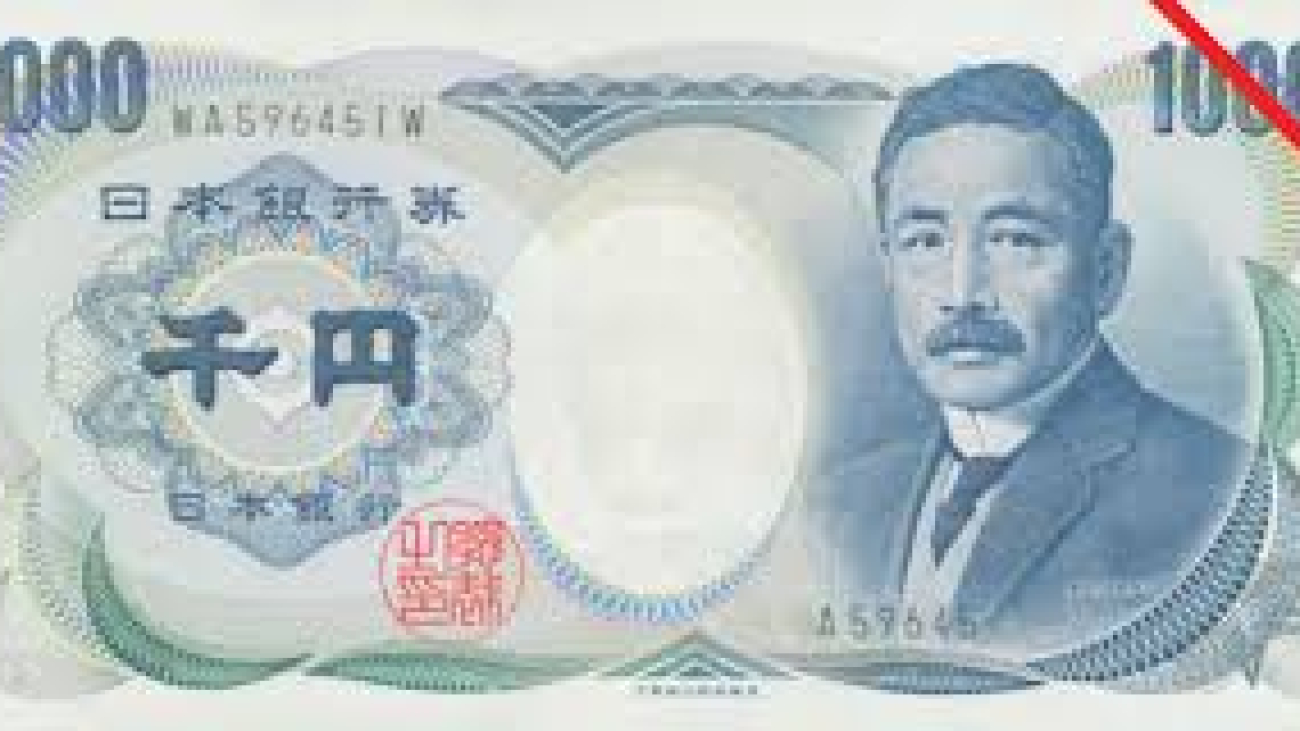

yen

Yen backs off two-week high before Takaichi-Ueda’s meeting

The Japanese yen declined in Asian trading on Monday at the start of the week against a basket of major and minor currencies, pulling back from a two-week high against the US dollar, due to correction and profit-taking activity, and after weaker-than-expected data on Japan’s economic growth in the final quarter of last year.

This decline comes ahead of an anticipated meeting between Japanese Prime Minister Sanae Takaichi and Bank of Japan Governor Kazuo Ueda to discuss the central bank’s policy direction and the outlook for interest rates.

Price Overview

• Japanese yen exchange rate today: The US dollar rose against the yen by 0.4% to ¥153.25, from today’s opening level at ¥152.66, and recorded a low of ¥152.58.

• The yen ended Friday’s session up by less than 0.1% against the dollar, marking its fifth consecutive daily gain, and recorded a two-week high at ¥152.27 in the previous session, supported by easing financial concerns in Japan.

• The Japanese yen gained 2.9% against the US dollar last week, marking its largest weekly gain since November 2024, amid a strong buying wave following the ruling party’s landslide victory in Japan.

Japanese Economy

Official data released today in Tokyo showed that the Japanese economy, the world’s fourth-largest economy, returned to growth “with difficulty,” posting figures that came in well below market expectations.

The Japanese economy grew by 0.1% in the fourth quarter of 2025, below expectations for 0.4% growth. However, this reading allowed Japan to avoid a technical recession — defined as two consecutive quarters of contraction — after a 0.7% contraction in the third quarter.

These weak figures represent the first serious economic test for the government of Sanae Takaichi following her sweeping election victory, and may strengthen the case for increased stimulus spending.

Takaichi – Ueda Meeting

The expected meeting between Prime Minister Sanae Takaichi and Bank of Japan Governor Kazuo Ueda is scheduled for today at 5:00 pm Tokyo time (08:00 GMT).

The meeting comes at a highly sensitive time for several reasons:

• First meeting after the landslide: It is their first bilateral meeting since Takaichi’s historic general election victory on February 8. Markets are watching whether she will pressure the central bank to maintain an accommodative monetary stance to support her stimulus plans.

• Weak growth data: The meeting comes hours after GDP data showed very modest growth in the final quarter of last year, potentially giving Takaichi additional justification to call for delaying any rate hike.

• Rate expectations: Markets are currently pricing roughly an 80% chance that the Bank of Japan will raise interest rates again by April, especially with inflation still above target.

• New appointments: Takaichi has the authority to fill two vacant seats on the central bank’s board this year, which could be a key topic in discussions with Ueda regarding the future path of monetary policy.

Japanese Interest Rates

• Money markets are currently pricing the probability of a quarter-point rate hike by the Bank of Japan at the March meeting at below 10%.

• To reprice those expectations, investors are awaiting more data on inflation, unemployment, and wages in Japan.

jpy

The USDJPY begins to offload its oversold conditions

The (USDJPY) rose in its last intraday trading, attempting to recover some previous losses, and attempts to offload some of its oversold conditions of relative strength indicators, especially with the emergence of positive overlapping signals, amid the dominance of the bearish trend on short-term basis, with the continuation of the negative pressure due to its trading below EMA50, intensifying the negative pressures on the pair.


silver

Silver Price is showing more negative signals

Silver prices (SILVER) declined in their recent intraday trading, to remain under the dominance of bearish corrective trend on short-term basis, with the continuation of its trading alongside minor trend line that reinforces this track, and the scene becomes darker with the stability of the price below EMA50, which might put extra negative pressure and limit the chances of sustainable recover soon.


The relative strength indicators began showing new negative overlapping signals after offloading their previous oversold conditions, opening the way for another bearish wave that might push the price to decline

gbp

GBPUSD price is gathering gains

GBPUSD declined in its last intraday trading, to gather the gains of irs previous rises, attempting to gain bullish momentum that might help it recover and rise again, and the price is attempting to offload some of its overbought conditions on relative strength indicators, especially with the beginning of negative overlapping signals emergence, which led the price to lean on EMA50’s support, amid the dominance of the main bullish trend on short-term basis, with its trading alongside supportive minor trend line for this path.

usd

EURUSD price is between trend support and indicators pressure

The (EURUSD) price continues its fluctuating trading in its last intraday trading, attempting to build bullish momentum to ease the way for regaining the upside track, getting significant support by its stability above EMA50, which reinforces the chances of the recovery on near-term basis, especially with the continuation of its trading alongside main bullish trend line that detect the short-term trend lines.


On the other hand, there are negative signals from relative strength indicators, which might limit the price rally and keep the cautiousness valid.

oil

Crude oil prices are losing the balance after breaking trend line

Crude oil prices declined in their last trading on intraday levels, affected by breaking main bullish trend line on short-term basis, which changed the technical overview and brought the negative pressures back to the forefront once again. This pressure continues with the price stability below EMA50, to form a solid barrier against any serious recovery attempts in near-term basis.


At the same time, the relative strength indicators began showing negative overlapping signals, after offloading the previous oversold conditions, opening the way for extending the bearish trading and recording extra losses in the upcoming period.

gold

Gold price struggle to breach psychological resistance

Gold prices declined in recent intraday trading, in attempt to reorganize the ranks and gain new momentum that might help it to breach the key psychological resistance at $5,000, leaning on key dynamic support due to its stability above EMA50, keeping the dominance of the minor bullish wave on short-term basis, especially with the continuation of the trading alongside supportive trend line.


On the other hand, the relative strength indicators are approaching sharp overbought levels exaggeratedly compared to the price move, indicating a likelihood of forming negative divergence that might put pressure on the upcoming trading and obstructs completing the recovery.

gold5

Gold resumes gains before US inflation data

Gold prices rose in European trading on Friday to resume gains that were temporarily paused yesterday, moving back close to trading above $5,000 per ounce, while the advance is being capped by the stronger US dollar against a basket of global currencies.

Strong US labor market data reduced the likelihood that the Federal Reserve will cut US interest rates next March. To reprice those expectations, investors are awaiting the release of key US inflation data later today.

Price overview

Gold prices today: gold rose by 1.55% to $4,997.43, from the opening level at $4,921.70, and recorded a low of $4,886.63.

At Thursday’s settlement, gold prices fell by 3.2% due to correction and profit-taking activity, after recording a two-week high the previous day at $5,119.21 per ounce.

US dollar

The dollar index rose on Friday by 0.1%, maintaining gains for the fourth consecutive session, within a recovery from two-week lows, reflecting stronger US currency levels against a basket of global currencies.

This rise followed the release of strong US labor market data, which reduced the chances of a near-term Federal Reserve interest rate cut.

US interest rate

The US economy added more jobs than expected last December, with the unemployment rate declining and average hourly earnings rising.

Following those figures, and according to the CME FedWatch tool, market pricing for keeping US interest rates unchanged at the March meeting rose from 79% to 95%, while pricing for a 25 basis point rate cut fell from 21% to 5%.

US inflation data

To reprice the above expectations, traders are awaiting later today the release of key US inflation data for January, which is expected to influence the Federal Reserve’s monetary policy path this year.

Gold outlook

Kyle Rodda, analyst at Capital.com, said the gold market will remain in an upward trend over time, but with the current sharp volatility and these elevated levels signaling market direction, large moves are clearly accelerating price action.

Rodda added that precious metal prices declined alongside equities overnight, with no major economic catalyst supporting them, noting that the heavy selling seen overnight was clearly driven by renewed concerns about the impact of artificial intelligence.

SPDR

Holdings of SPDR Gold Trust, the world’s largest gold-backed ETF, fell on Thursday by about 5.14 metric tons, bringing the total down to 1,076.18 metric tons, the lowest level since January 15.

Euro under pressure before US inflation data

Economies.com
2026-02-13 05:41AM UTC

The euro declined in European trading on Friday against a basket of global currencies, extending its losses for the fourth consecutive day versus the US dollar, due to the rebound in the US currency following the release of strong US labor market data.

European Central Bank President Christine Lagarde downplayed the impact of the euro exchange rate on the path of monetary policy, saying the recent rise in the currency has already been incorporated into current inflation projections.

Price overview

•Euro exchange rate today: the euro fell against the dollar by 0.1% to $1.1858, from today’s opening level at $1.1870, and recorded a high of $1.1873.

The euro ended Thursday’s trading down by less than 0.1% against the dollar, marking the third consecutive daily loss, after data showed a decline in US weekly jobless claims.

US dollar

The dollar index rose on Friday by 0.1%, maintaining its gains for the fourth straight session, within a recovery from two-week lows, reflecting higher levels of the US currency against a basket of global currencies.

Strong US labor market data reduced the likelihood that the Federal Reserve will cut US interest rates next March. To reprice those expectations, investors are awaiting later today the release of key US inflation data for January.

According to the CME FedWatch tool: market pricing for keeping US interest rates unchanged at the March meeting currently stands at 95%, while pricing for a 25 basis point rate cut stands at 5%.

Christine Lagarde

Following last week’s European Central Bank policy meeting, President Christine Lagarde downplayed concerns about the euro–dollar exchange rate’s impact on the bank’s monetary policy path, stressing that recent currency moves do not represent a fundamental shift requiring a policy adjustment.

Lagarde said the euro has risen recently but remains within expected ranges, and that the effects of this rise have already been factored into current inflation forecasts, emphasizing that monetary policy will remain primarily data-dependent rather than driven by exchange rate volatility alone.

Lagarde confirmed that the ECB is closely monitoring the euro exchange rate, noting that the current strength of the single currency helps contain imported inflation and could support reaching targets without the need for additional tightening.

European interest rate

•Money market pricing for the probability that the ECB will cut interest rates by 25 basis points at the March meeting remains below 30%.

•To reprice those probabilities, investors are awaiting further euro area economic data on inflation, unemployment, and wages.

Gold_Down_L_3

Dow Jones tumbles 600 points amid AI fears

US stock indexes declined on Thursday, driven by a renewed selloff in software and technology shares, while strong labor market data reduced expectations for interest rate cuts by the central bank.

Concerns about disruptions linked to artificial intelligence triggered sharp volatility on Wall Street during the current month, pressuring sectors including software, legal services, and wealth management, with the transportation sector emerging as the latest affected by those fears.

Despite that, at least one rate cut is still expected in June, though the probability that the Federal Reserve will keep borrowing costs unchanged has risen to nearly 40%, compared with 24.8% previously, following the release of jobs data on Wednesday, according to the CME Group’s FedWatch tool.

Additional economic data due this week could guide market movements, including the Consumer Price Index — a key measure of inflation — scheduled for release on Friday.

In trading, the Dow Jones Industrial Average fell by 1.2% (or 590 points) to 49,530 as of 18:07 GMT. The broader S&P 500 index declined by 1.2% (or 83 points) to 6,858, while the Nasdaq Composite dropped by 1.6% (or 375 points) to 22,690.