oil

Oil declines amid Middle East uncertainty, keeping the markets on edge

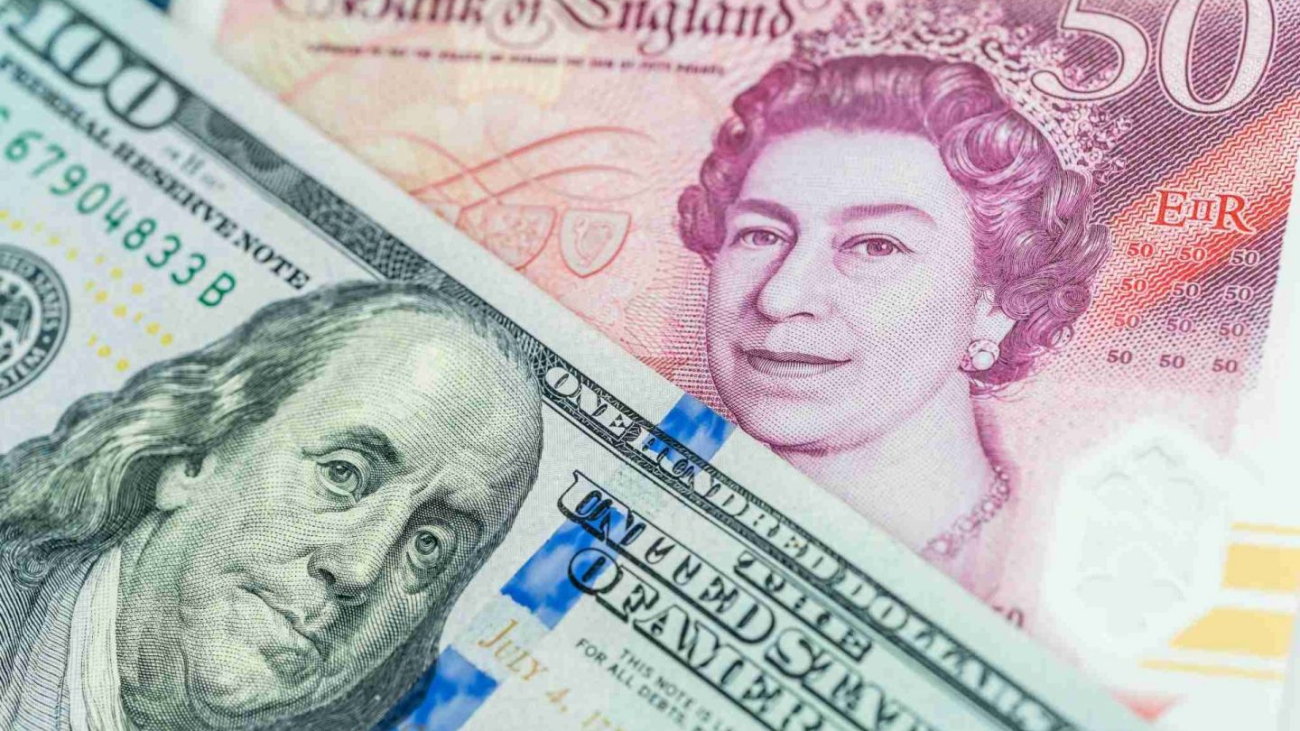
The US dollar declined for the second consecutive day on Wednesday amid growing expectations of a potential ceasefire in the ongoing conflict in the Middle East, after the United States indicated that the end of the war may be near, although markets remained cautious amid fears of possible renewed escalation.

The White House said that US President Donald Trump will address the nation “to provide an important update on Iran” at 09:00 PM Eastern Time on Wednesday (01:00 GMT Thursday).

Trump said on Tuesday that the United States could end its military campaign against Iran within two to three weeks, while US Secretary of State Marco Rubio told Fox News that Washington may see the “finish line” in the war with Iran.

Expectations of a ceasefire have led to a reversal of some of the most widely traded market positions since the outbreak of the war in late February.

The Japanese yen recovered part of its losses after rebounding from its lowest level this year at ¥160.46 per dollar, moving back above the key psychological level of ¥160, which had previously raised concerns about potential intervention by Japanese authorities in currency markets. Meanwhile, the euro reached its highest level in a week.

The dollar index — which measures the US currency against a basket of currencies including the yen and the euro — fell 0.1% to 99.60, hitting its lowest level in a week after declining 0.65% on Tuesday.

Kirstine Kundby-Nielsen, a foreign exchange analyst at Danske Bank, said: “Markets are increasingly adopting the view of broader de-escalation in the Middle East.”

She added: “Markets are optimistic. We are seeing some relief with lower interest rates and higher equities, and the price action in euro/dollar reflects that well.”

The euro rose 0.3% against the dollar to $1.1583, after gaining 0.8% on Tuesday.

The Japanese yen also rose 0.1% to ¥158.65 per dollar, while the British pound climbed 0.3% to $1.3265.

At the same time, there were signs of continued escalation in the conflict. US Defense Secretary Pete Hegseth said that the coming days in the war against Iran will be decisive, warning Tehran that the conflict will escalate if no agreement is reached.

Meanwhile, attacks occurred on multiple fronts on Wednesday, with drones striking fuel tanks at an international airport, while an oil tanker was hit by an unidentified projectile off the Qatari capital Doha.

The US dollar had benefited from safe-haven demand since the start of the conflict in late February. The United States — as a net energy exporter — is also relatively better positioned to handle oil supply disruptions compared to other countries.

Brent crude futures fell below $100 per barrel on Wednesday, although they were last trading around $100.40.

Focus on jobs data

The main economic focus in the United States this week is the March jobs report, due on Friday. The report is expected to show that employers added about 60,000 jobs during the month, according to the median estimate of economists surveyed by Reuters, following an unexpected loss of about 92,000 jobs in February.

A sharp deterioration in the labor market would likely revive expectations for Federal Reserve rate cuts this year, which have largely faded amid rising oil prices due to the war with Iran, increasing inflation concerns.

Markets are currently pricing around 13 basis points of monetary easing from the Federal Reserve this year, implying roughly a 50% probability of a quarter-point rate cut in 2026.

As for the yen, the Japanese currency remained little changed after the Bank of Japan’s quarterly Tankan survey showed an improvement in business sentiment among large Japanese manufacturers during the three months through March, although companies expect conditions to deteriorate in the next three months.

Sho Suzuki, a market analyst at Matsui Securities, said that the dollar is likely to remain supported by the Federal Reserve’s cautious stance on rate cuts, while the yen is supported by rising expectations of a Bank of Japan rate hike in April.

He added: “We may see a tug of war between dollar strength and yen strength, with dollar/yen trading sideways in the upper 150s range.”

The Australian dollar rose 0.4% to $0.6930, while the New Zealand dollar gained 0.2% to $0.5756

Gold_Dollar

Gold widens gains to two-week high as dollar weakens

Gold prices rose in European trading on Wednesday, extending gains for the fourth consecutive day and hitting their highest level in two weeks, supported by the current decline in the US dollar against a basket of currencies, amid growing optimism over a potential end to the Iran war, especially following recent statements by Donald Trump.

With global oil prices declining, expectations for the Federal Reserve to raise US interest rates this year have eased. To reassess those expectations, investors are awaiting further key data on the US labor market.

Price Overview

Gold prices today: gold rose 1.7% to $4,747.92, the highest level since March 19, up from the session opening level of $4,668.90, after hitting a low of $4,661.89.

At Tuesday’s settlement, gold gained 3.5%, marking its third consecutive daily gain and the largest daily increase since February 6, following a report that Trump is seeking to exit the war with Iran.

Over the course of March trading, gold prices declined 11.6%, marking their first monthly loss since July 2025 and the largest monthly loss since October 2008.

This largest monthly loss in nearly 18 years is attributed to the impact of the Iran war, particularly rising oil prices and renewed global inflation concerns.

US dollar

The dollar index fell 0.45% on Wednesday, extending its losses for the second consecutive session and moving away from a ten-month high, reflecting the continued decline in the US currency against a basket of global currencies.

As is well known, a weaker US dollar makes gold, which is priced in dollars, more attractive to buyers holding other currencies.

Aside from profit-taking activity, the US dollar is declining amid growing optimism over a potential end to the Iran war, particularly following recent remarks by US President Donald Trump.

Iran war developments

Trump said on Tuesday that the United States could end its military campaign against Iran within two to three weeks. He added that Tehran is not required to reach an agreement as a precondition for ending the conflict.

US Secretary of State Marco Rubio told Fox News that the United States sees the “finish line” of the war with Iran.

The White House announced that US President Donald Trump will deliver an address to the nation “to provide important updates on Iran” at 09:00 PM Eastern Time on Wednesday (01:00 GMT Thursday).

The Wall Street Journal reported on Monday evening that Trump told his aides he is prepared to end military operations against Iran even if the Strait of Hormuz remains largely closed.

Global oil prices

Global oil prices fell about 2% on Wednesday, extending losses for the second consecutive day, amid growing expectations that Gulf oil supplies could fully return to markets soon.

US interest rates

Following the decline in oil prices, and according to the CME FedWatch tool, markets increased pricing for the probability of keeping US interest rates unchanged at the April meeting from 96% to 99%, while the probability of a 25-basis-point rate hike declined from 4% to 1%.

To reassess these expectations, traders are closely monitoring a series of very important data releases on the US labor market.

Later today, US private-sector employment data for March will be released, followed by jobless claims on Thursday, and the nonfarm payrolls report on Friday.

Gold outlook

Edward Meir, an analyst at Marex, said that discussions suggesting the United States could end the war within two to three weeks, even if the Strait of Hormuz is not reopened, have supported US equity markets and pushed gold prices higher alongside them.

Meir added that gold’s gains remain limited due to the possibility of higher interest rates if inflationary pressures return.

SPDR fund

Holdings of the SPDR Gold Trust, the world’s largest gold-backed exchange-traded fund, increased by 1.14 metric tons on Tuesday, bringing the total to 1,047.27 metric tons, rebounding from 1,046.13 metric tons, which was the lowest level since November 26.

jpy

The USDJPY breaks a bullish trendline

The USDJPY pair is recording consecutive losses during its recent intraday trading, confirming a break below a key short-term ascending trendline. This signals the continuation of the bearish corrective wave, especially with added negative pressure from trading below EMA50, which increases the downside pressure surrounding the pair.


On the other hand, we notice the beginning of a positive crossover of the relative strength indicators, after reaching deeply oversold levels. This helped limit recent losses and caused some price consolidation.


silver

Silver price pauses to catch its breath

Silver declined during its recent intraday trading in a corrective move aimed at taking profits from previous gains, while also attempting to ease the overbought condition on the relative strength indicators, especially with the beginning of a bearish crossover. This pullback comes as part of rebuilding positive momentum, paving the way for a potential resumption of the upward trend in the coming period, amid the dominance of a short-term corrective bullish wave, with price moving along a supportive trendline.

The price is also benefiting from dynamic support as it continues to trade above EMA50, which enhances the chances of the positive scenario continuation in the upcoming period.


gbp6

GBPUSD price shows more negative signs

The GBPUSD pair witnessed fluctuated trading on its recent intraday levels, after retesing 1,3260 key resistance, to rebounce lower amid the continuation of the negative pressure due to its trading below EMA50, which reduces the chances of full recovery on near-term basis, especially with the dominance of the main bearish trend on short-term basis, beside the formation of negative divergence on the relative strength indicators, after reaching overbought levels, exaggeratedly compared to the price move, with the emergence of negative signals from there.

blog-eurusd-28-10-25

EURUSD price reaches a key resistance zone

The EURUSD pair extended its gains during recent intraday trading, rising to test a short-term descending trendline, testing EMA50’s resistance, making the current zone highly important in determining the next direction.


This rise came after a series of strong gains that pushed the relative strength indicators into exaggerated overbought levels compared to the pair’s movement. This suggests the potential of a negative divergence forming, especially with the beginning of a bearish crossover on the indicator, signaling a rapid fading of the positive momentum surrounding the pair. This puts the recent gains at risk of a potential bearish reversal in the near term.

Crude-oil-down-

Crude oil price regains bullish momentum

Crude oil recorded a new increase during its recent intraday trading, preparing to reach the strong resistance level at $100.00, supported by the price continuing to trade above EMA50, which provides dynamic support and reinforces the stability of the main short-term uptrend, especially as price moves along a supportive trendline.


We also notice the beginning of a positive crossover of the relative strength indicators, after it reached deeply oversold levels compared to price movement. This suggests the possibility of positive divergence forming, which strengthens the chances of continued upward movement in the coming period.

gold4

Gold price continues to rise

Gold continued to achieve consecutive gains during its recent intraday trading, supported by dynamic support from trading above EMA50. This reinforces the dominance of a short-term corrective upward wave, especially as the price moves alongside a supportive trendline, alongside positive signals from the relative strength indicators, which supports the continuation of bullish momentum.


However, we notice that these indicators have entered heavily overbought territory, which may limit further gains and push the price toward slowing down or moving sideways in the near term.