images

Euro dips before Eurozone inflation data

The euro slipped slightly in European trading on Tuesday against a basket of global currencies, extending its losses for a second consecutive session against the US dollar and moving further away from a two-week high. The decline comes amid profit-taking and corrective selling, as well as risk aversion driven by investor caution ahead of further developments in the ongoing peace negotiations between the United States and Iran.

Following recent media reports and the rebound in global oil prices, expectations for a European Central Bank rate hike at the June meeting have increased. Investors now await the release of the eurozone’s key inflation data for May later today to reassess those expectations.

The Price

• Euro exchange rate today: The euro fell by less than 0.1% against the US dollar to $1.1627, from an opening level of $1.1632, while the session high stood at $1.1635.

• The euro closed Monday down 0.2% against the dollar, its first loss in three sessions, due to corrective selling and profit-taking after reaching a two-week high of $1.1686 on Friday.

• Beyond profit-taking activity, the euro also came under pressure following limited military exchanges between the United States and Iran.

US dollar

The US Dollar Index rose about 0.1% on Tuesday, maintaining gains for a second consecutive session and reflecting continued strength in the US currency against a basket of global currencies.

The advance comes as investors remain cautious and avoid taking excessive risk while awaiting the outcome of negotiations between Washington and Tehran aimed at ending the conflict and reopening the Strait of Hormuz.

Top News

• Lebanon announced a partial ceasefire between Hezbollah and Israel.

• Trump said: “I had a very productive call with Hezbollah through high-level representatives, and they have agreed to a full ceasefire.”

• Trump said negotiations with Iran are continuing at a rapid pace.

• Trump stated that he is not concerned about oil prices, which surged after reports that Iran may fully close the Strait of Hormuz and suspend negotiations with the United States.

• Iran is seeking an end to hostilities on all fronts, along with the lifting of the naval blockade and easing of economic sanctions.

European interest rates

• Sources told Reuters that the European Central Bank is highly likely to raise interest rates in June due to inflation expectations moving toward an undesirable scenario.

• With global oil prices rising, money markets have increased the probability of a 25-basis-point ECB rate hike at the June meeting from 75% to 95%.

Eurozone inflation

To reassess expectations for European interest rates this year, investors are awaiting the release of the eurozone’s May inflation data later today, which will provide further insight into inflationary pressures facing policymakers at the European Central Bank.

At 09:00 GMT, the annual eurozone Consumer Price Index is expected to show a 3.2% increase in May, up from 3.0% in April. Core inflation is expected to rise by 2.4%, compared with 2.2% in the previous month.

Outlook for the euro

We expect that if inflation data comes in hotter than current market expectations, the probability of a European interest rate hike in June will increase further, which would support higher euro levels against a basket of global currencies.

jpy

USDJPY Holds Recent Gains

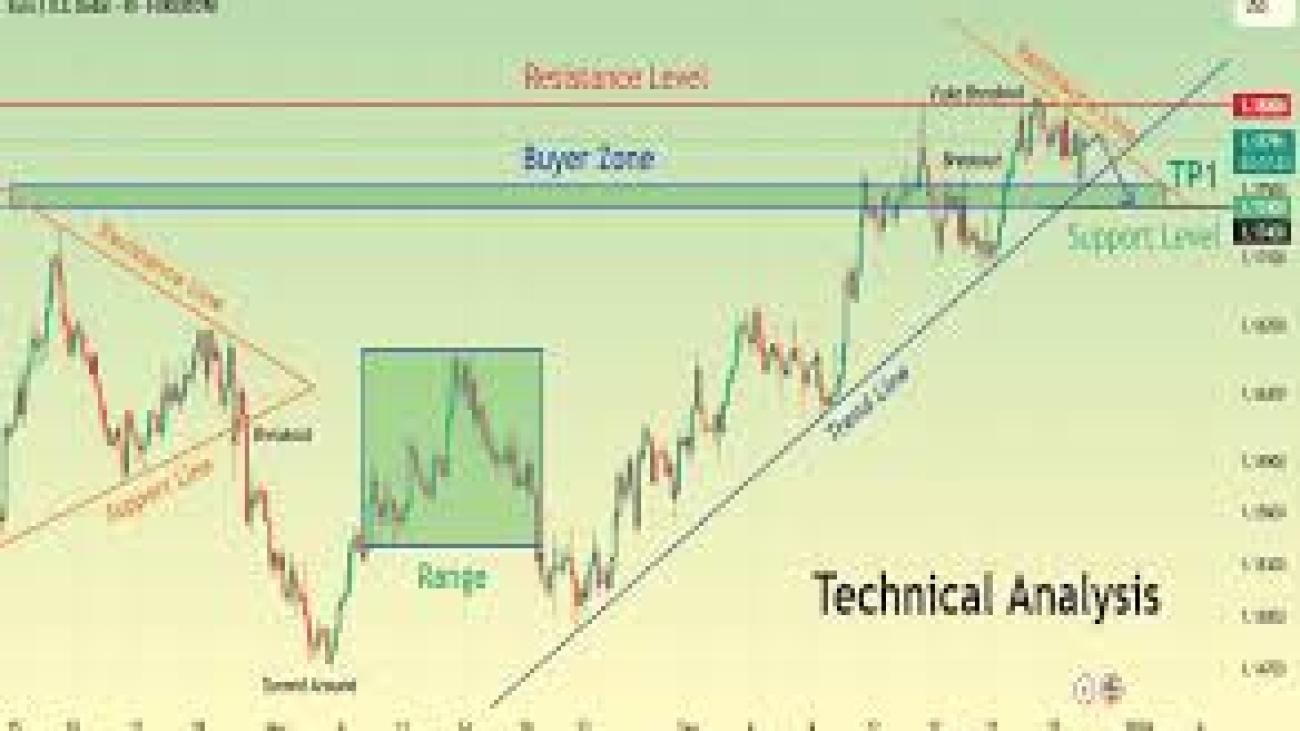
USDJPY settles high in recent intraday trading, amid the dominance of  the short-term corrective bullish trend, with the continuation of the dynamic and positive support from trading above its EMA50, reinforcing the bullish outlook.


However, relative strength indicators have started to generate negative signals after reaching heavily overbought levels, which could limit the pair’s ability to extend its gains in the near term.

silver

Silver Holds Steady Despite Selling Pressure

Silver Fluctuated during recent intraday sessions, as the short-term corrective downtrend continues to dominate, with negative pressure due to trading below its EMA50, making a rapid recovery more difficult and keeping bearish sentiment present in the technical outlook.


On the other hand, some technical indicators have started to show signs of improvement. Positive crossover signals appeared on the relative strength indicators after they reached oversold territory, helping silver stabilize and slow the pace of its recent declines. These signals may support further consolidation and potentially pave the way for a gradual improvement in performance during upcoming trading sessions.

gbp

GBPUSD Recovers Its Losses

GBPUSD remains firm in recent intraday trading, recovering all of yesterday’s losses. The pair continues to benefit from positive support by trading above its EMA50, while relative strength indicators are providing bullish signals after easing from overbought conditions, giving the pair room to extend its gains. Short-term price action also remains supported by an ascending trendline.

eurusd

EURUSD Holds Within an Ascending Price Channel

The EURUSD pair is holding on to its recent gains during intraday trading, supported by a clear improvement in the relative strength indicators, which began to send positive signals after reaching strong oversold levels, which helped strengthen bullish momentum and supported the pair’s stability near its high levels.


This positive performance comes as the pair continues to move within a short-term ascending price channel, while also trading above its EMA50, which provides important technical support. These factors enhance the likelihood of rising and an extension of gains in the near term, if no opposing technical signals emerge.

Crude-oil-down-

Crude Oil Gives Up Its Gains Amid a Dominant Bearish Trend

Crude Oil prices declined during recent intraday trading after reaching EMA50’s resistance, which acted as a barrier to continued recovery attempts. As a result, the price reversed lower and resumed its short-term bearish pressure.


This decline coincided with the emergence of negative signals from the relative strength indicators, which formed a bearish divergence after reaching heavily overbought levels relative to price action. This development has reinforced the technical pressure surrounding the market. At the same time, the short-term downtrend remains dominant, with prices moving along a descending trendline that supports the bearish outlook, suggesting that negative sentiment is likely to persist in the near term.


gold

Gold Attempts to Ease Oversold Conditions

Gold rose during its latest intraday trading sessions in an attempt to recover part of the previous losses, supported by improving relative strength indicators, which started to generate positive signals after reaching clearly oversold levels, helping the metal regain some momentum and achieve limited gains.


Despite this improvement, bearish pressure continues to dominate gold’s price action as it remains below its EMA50, reinforcing the strength of short-term bearish trend. The price continues to move alongside a descending trendline that supports the bearish outlook, keeping recovery chances limited unless gold succeeds in surpassing key technical resistance levels in the coming sessions.

trump

Trump lays out his conditions: What could the upcoming Iran agreement look like?

US President Donald Trump said Friday morning that he would meet in the “Situation Room” to make a “final decision” after outlining a set of conditions that Iran must accept before he approves an agreement to end the war.

It was not immediately clear from Trump’s statement on Truth Social which of his key demands had already been incorporated into the preliminary agreement currently being negotiated by US and Iranian officials to end the three-month conflict.

Trump demanded that Iran agree never to possess a nuclear weapon and that the Strait of Hormuz be “opened immediately” to shipping traffic without any restrictions or transit fees.

He also stated that the US naval blockade against Iran in the Gulf of Oman “will be lifted now,” although it was unclear whether he meant that this step would occur only if the previous conditions were met.

Trump added that the enriched material buried at sites targeted during last year’s attacks on Iran’s nuclear facilities “will be extracted” by the United States “in close coordination and cooperation with the Islamic Republic of Iran and the International Atomic Energy Agency,” before being destroyed.

He also said: “No funds will be exchanged until further notice,” adding that “other less important provisions have been agreed upon.”

Trump concluded by saying: “I am now heading to the Situation Room to make the final decision.”

Oil prices fell following Trump’s post.

Disagreements over the agreement’s text

The exact terms of the agreement remain unclear. Later on Friday, Iran’s Fars News Agency responded to Trump’s statement, saying it included issues that “contradict the provisions of the agreement text.”

The agency said in a Telegram post, citing informed sources, that there is no clause in the agreement requiring the strait to remain open without fees.

It also stated that the draft agreement contains no reference to Iran dismantling or destroying its nuclear materials.

Fars emphasized that “the most important part of the agreement” is the “immediate payment of $12 billion in frozen Iranian assets,” adding that Iran will reject any further negotiations unless that payment is made.

The White House did not immediately respond to CNBC’s request for comment regarding Trump’s remarks and the Fars response.

A White House official had confirmed on Thursday an Axios report stating that US and Iranian negotiators had reached a 60-day memorandum of understanding that would extend the current ceasefire and open the door to nuclear talks.

According to the report, the memorandum would also lift restrictions on navigation through the strait and require Iran to remove all mines from the waterway within 30 days in exchange for the United States lifting its blockade.

The issue of Iran’s highly enriched uranium stockpile and enrichment program would be a top priority during the 60-day period, according to the Axios report. The draft is also expected to pave the way for negotiations on sanctions relief and the release of frozen Iranian funds.

The status of the Strait of Hormuz

Trump’s recent signals suggesting progress toward a US-Iran peace agreement contrast with continued military and economic escalation between the two countries, as well as ongoing anti-American rhetoric from Iranian officials.

The Pentagon announced Thursday morning that Iran had launched a ballistic missile toward Kuwait and deployed attack drones in and around the Strait of Hormuz. Iranian media also reported late Thursday that Iranian armed forces launched missiles toward undisclosed targets.

The US Treasury Department announced new sanctions against Iran on Wednesday and Thursday, including measures targeting Tehran’s recent efforts to assert control over transit traffic through the strait.

In posts on X before Trump’s Friday remarks, Iranian officials appeared defiant toward the United States, praising relations with neighboring Middle Eastern countries, including Oman, which has recently been the subject of Trump’s threats.

According to reports, Oman has been holding discussions with Iran regarding transit fees for ships passing through the Strait of Hormuz, the vital global oil shipping route where traffic has been severely disrupted by Iranian threats since the outbreak of the war.

During a Cabinet meeting on Wednesday, Trump said: “Oman will behave like everyone else, or we’ll have to bomb them.”

On Thursday, US Treasury Secretary Scott Bessent warned Oman that the United States would “aggressively target” any party involved in “facilitating the imposition of fees” on passage through the strait.

In a translated post on X attributed to Iranian Parliament Speaker Mohammad Bagher Ghalibaf on Friday morning, a vague but sharply worded description of the negotiations was offered.

The account wrote: “We extract concessions not through dialogue but through missiles; negotiations merely make them understand that.”

It added: “We do not trust guarantees or words. Actions alone are the standard. No step will be taken before the other side moves.”

The statement continued: “The winner of any agreement is the side most prepared for war the next day.”

Meanwhile, Iranian Foreign Minister Abbas Araghchi said he had spoken with his Omani counterpart and “reaffirmed Iran’s solidarity with Oman in the face of any threat.”

EUR_USD_L_4

Euro gives up two-week high on US-Iran negotiations outlook

The euro weakened in European trading on Monday against a basket of global currencies, pulling back from a two-week high against the US dollar and heading toward its first loss in three sessions, as profit-taking and corrective selling emerged amid a cautious mood across global markets ahead of developments in ongoing peace negotiations between the United States and Iran.

Following media reports and rising global oil prices, expectations for a European Central Bank interest rate hike at this month’s meeting have increased. Investors are now awaiting the release of the Eurozone’s key inflation data for May on Tuesday to reassess those expectations.

Price Overview

• Euro exchange rate today: The euro fell about 0.15% against the dollar to $1.1642, from an opening level of $1.1658, after reaching an intraday high of $1.1659.

• The euro ended Friday up about 0.1% against the dollar, marking its second consecutive daily gain and reaching a two-week high of $1.1686 amid easing military tensions between the United States and Iran in the Strait of Hormuz.

• During May, the euro lost 0.65% against the US dollar, recording its third monthly decline in the past four months due to risk aversion and rising US Treasury yields.

US dollar

The dollar index rose 0.15% on Monday as part of a recovery from a two-week low, reflecting renewed strength in the US currency against a basket of major and minor currencies.

The advance comes amid cautious market sentiment and reduced risk-taking as investors await the outcome of negotiations between the United States and Iran regarding an end to the war and the reopening of the Strait of Hormuz, one of the world’s most important energy trade routes.

Global oil prices

Oil prices jumped more than 2% on Monday, rebounding from five-week lows as Israel expanded its offensive in Lebanon, reducing hopes for a ceasefire in the Middle East.

Latest developments in the Iranian war

• The United States and Iran remain without an agreement to end the war after Trump stated that he is not in a hurry to finalize a deal.

• The US president returned the proposed agreement draft with Iran to include “stricter” conditions related to the nuclear file, extending negotiations for several additional days.

• Donald Trump said on Friday that he would make a decision soon regarding the proposed agreement to extend the ceasefire with Iran.

• The mechanism for releasing frozen Iranian assets abroad remains one of the most complex points of disagreement between Washington and Tehran.

• Iranian Foreign Minister Abbas Araghchi confirmed that messages continue to be exchanged with Washington, noting that the success of the talks will ultimately be judged by their final outcome and whether the rights of the Iranian people are preserved.

European interest rates

• Sources told Reuters that the European Central Bank is highly likely to raise interest rates in June due to inflation expectations moving toward an undesirable scenario.

• Amid the rebound in global oil prices, money markets increased the probability of a 25-basis-point ECB rate hike in June from 55% to 65%.

• To reassess those expectations, investors are awaiting the release of the Eurozone’s key inflation data for May on Tuesday.

yen

Yen declines ahead of US-Iran negotiations developments

The Japanese yen weakened in Asian trading on Monday against a basket of major and minor currencies, moving into negative territory against the US dollar and approaching its lowest level in four weeks, as caution and uncertainty dominate global markets ahead of further developments in peace negotiations between the United States and Iran.

Investors are also awaiting the Bank of Japan’s policy meeting later this month, when policymakers will reassess monetary tools and decide on interest rates amid differing views within the policy board regarding the central bank’s next move.

Price Overview

• Japanese yen exchange rate today: The dollar rose about 0.2% against the yen to ¥159.50, from Friday’s closing level of ¥159.23, and recorded an intraday low of ¥159.30.

• The yen ended Friday’s trading virtually unchanged against the dollar after gaining 0.2% in the previous session as part of a recovery from a four-week low of ¥159.65.

• During May, the yen lost 1.7% against the US dollar, marking its third monthly decline in the past four months, largely due to higher US Treasury yields.

US dollar

The dollar index rose more than 0.1% on Monday as part of a recovery from a two-week low, reflecting renewed strength in the US currency against a basket of global currencies.
The advance comes amid cautious market sentiment and reduced risk-taking as investors await the outcome of ongoing negotiations between the United States and Iran regarding an end to the war and the reopening of the Strait of Hormuz, one of the world’s most critical energy trade routes.

Global oil prices

Oil prices jumped more than 2% on Monday, rebounding from five-week lows as Israel expanded its offensive in Lebanon, reducing hopes for a ceasefire in the Middle East.

Latest developments in the Iranian war

• The United States and Iran remain without an agreement to end the war after Trump stated that he is not in a hurry to finalize a deal.

• The US president returned the proposed agreement draft with Iran to include “stricter” conditions related to the nuclear file, extending negotiations for several additional days.

• Donald Trump said on Friday that he would make a decision soon regarding the proposed agreement to extend the ceasefire with Iran.

• The mechanism for releasing frozen Iranian assets abroad remains one of the most complex points of disagreement between Washington and Tehran.

• Iranian Foreign Minister Abbas Araghchi confirmed that messages continue to be exchanged with Washington, noting that the success of the talks will ultimately be judged by their final outcome and whether the rights of the Iranian people are preserved.

Japanese interest rates

• The Bank of Japan will meet on June 15-16 to assess monetary policy options appropriate for developments in the world’s fourth-largest economy.

• Market pricing for a quarter-point interest rate increase at the June meeting currently stands at around 60%.

• Markets are eagerly awaiting a speech by Bank of Japan Governor Kazuo Ueda on Wednesday for clues on whether the central bank intends to proceed with a rate hike in June.

• Investors are also awaiting additional data on inflation, unemployment, and wages in Japan to reassess those expectations.

The ¥160 threshold

Japanese authorities continue to closely monitor movements in the local currency, particularly as the yen weakens toward the critical ¥160-per-dollar level, which has long been viewed as a threshold that could trigger renewed intervention in the foreign exchange market.

Reuters sources previously reported that Tokyo intervened several times in late April and early May to halt the yen’s decline, although the currency’s recovery proved short-lived. At the time, the exchange rate reached ¥159.25 per dollar, its weakest level since April 30.