oil4

Crude Oil Loses Positive Momentum as Downside Risks Increase

Crude Oil declined in recent intraday trading as bearish pressure continued to build. The pullback comes amid the emergence of a negative divergence on relative strength indicators after they reached heavily overbought levels, with negative signals beginning to appear and pointing to weakening bullish momentum.


The decline also coincides with oil continuing to trade below its EMA50, which maintains downward pressure on price action. In addition, the dominant short-term trend remains bearish, with prices moving along a descending trend line that supports the current direction. Together, these factors reinforce the likelihood of continued selling pressure in the near term and keep the overall technical outlook negative.

xr:d:DAFigiIBsGY:25,j:46844874268,t:23051010

Gold Attempts to Recover Some of Its Losses

Gold surged high in its recent intraday trading, supported by an improvement in technical momentum after relative strength indicators reached deeply oversold levels. These indicators have started to generate positive signals, helping the price rebound and recover part of its previous losses.


This rise comes as gold attempts to shake off oversold pressure and regain some buying strength. However, the broader technical picture still faces challenges, as the price continues to trade below the EMA50, which acts as dynamic resistance and reinforces the dominant short-term bearish trend. As a result, the current gains remain within the scope of a corrective rebound unless gold succeeds in breaking key resistance levels that could support a more sustainable trend reversal.

dollar-jan27

Dollar eases slightly but remains near one-year highs

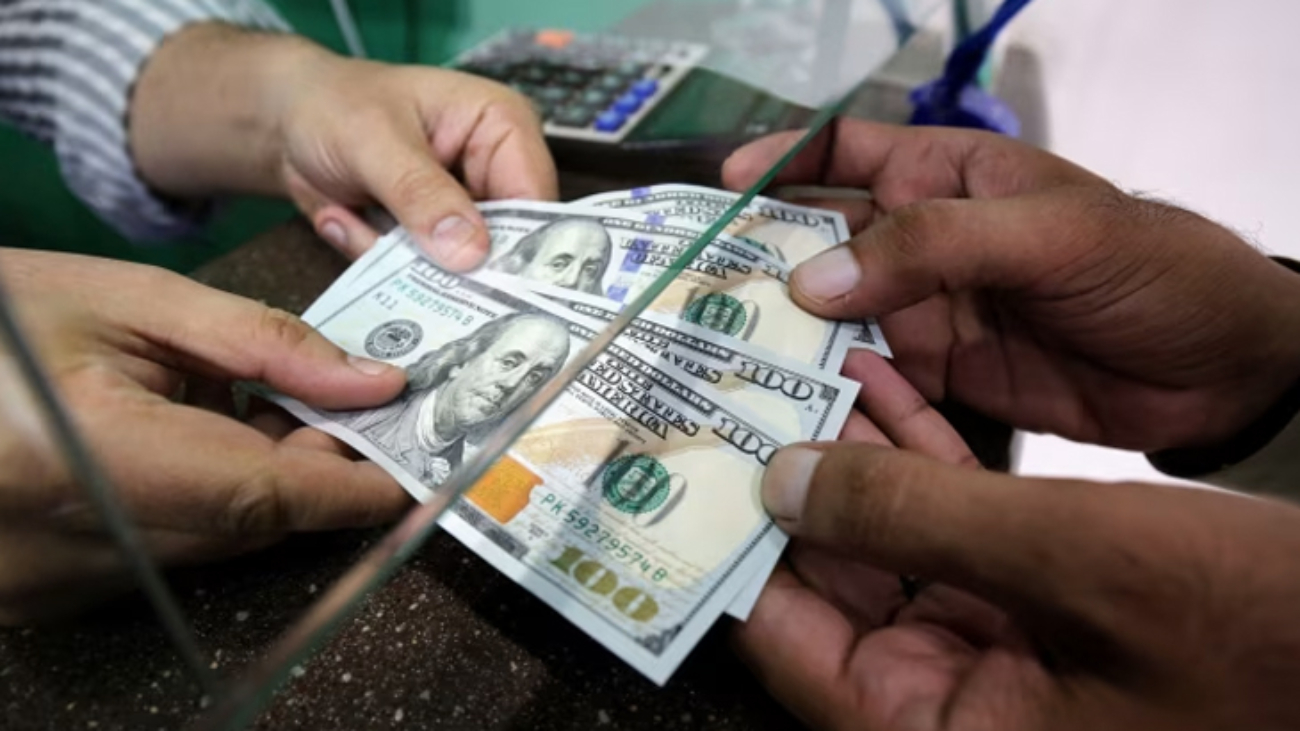
The US dollar climbed to its highest level in more than a year on Thursday after the Federal Reserve’s decision to keep interest rates unchanged while adopting a hawkish tone fueled expectations for further rate increases. Although the dollar edged lower today, it remains close to that peak.

The US central bank left interest rates unchanged within a range of 3.50% to 3.75% at its first meeting under new Federal Reserve Chairman Kevin Warsh, who began his tenure with a broad policy review. Nearly half of Fed policymakers now expect interest rates to rise this year as concerns over inflation continue to grow.

According to data from the London Stock Exchange Group, the federal funds futures market is now fully pricing in an interest rate hike by October. Strong retail sales data has further reinforced expectations that monetary tightening will continue.

The US Dollar Index, which measures the currency against a basket of major peers including the yen, euro, and British pound, slipped 0.1% to 100.7 points. Despite the decline, the index remains near its highest level since May 2025.

Lee Hardman, Senior Currency Analyst at Mitsubishi UFJ Financial Group, said that “the Federal Reserve’s hawkish policy update threatens to trigger a powerful rally in the US dollar.”

He added that “the dollar has benefited from the sharp upward revision in short-term US interest rate expectations, more than offsetting the negative impact of the US-Iran agreement announced over the weekend.”

Japanese yen

The Japanese yen weakened beyond the ¥161-per-dollar level late on Thursday, approaching its weakest point in four decades and reviving speculation that Tokyo could intervene again to support the currency.

After Japanese equity markets closed on Thursday, the yen fell sharply through the ¥161 level before extending losses later in the day to ¥161.80 per dollar, its weakest level since July 2024.

A move beyond ¥161.96 per dollar would push the yen to its weakest level since 1986.

Market speculation

The currency’s decline prompted fresh warnings from Japanese financial officials. Reports indicated that Japanese Finance Minister Satsuki Katayama told a recent G7 meeting that Japan is “prepared to take decisive action against speculative movements” in foreign exchange markets.

The yen remains under pressure despite more than $70 billion in intervention by Japan’s Ministry of Finance in May and recent interest rate hikes by the Bank of Japan, which have pushed borrowing costs to their highest level since 1995.

According to reports, Bank of Japan Deputy Governor Ryozo Himino told parliament that the central bank is closely monitoring currency movements because of their impact on the economy and inflation.

Analysts told CNBC that intervention efforts in the foreign exchange market have not been particularly effective in curbing yen weakness because the underlying drivers are structural in nature.

These factors include elevated US Treasury yields, which continue to support the dollar, as well as the pro-growth policies pursued by Japanese Prime Minister Sanae Takaichi’s administration, which has signaled a preference for maintaining relatively accommodative monetary conditions.

While yen weakness has helped support Japan’s exports and economic growth, it has also raised concerns about imported inflation and the erosion of household purchasing power.

OILBRENT_02_L

Brent heads for a 9% weekly loss as traders assess prospects for the US-Iran truce

Brent crude prices were on track to post a weekly decline of 9% on Friday as traders assessed diminishing prospects for a lasting truce between the United States and Iran after talks were canceled and Israel intensified its attacks in Lebanon.

Brent crude futures fell by 24 cents, or 0.3%, to $79.61 per barrel by 11:00 GMT, putting the benchmark on course for a second consecutive weekly decline.

Switzerland said that talks between US officials and Iranian negotiators aimed at reaching an agreement to end the Middle East conflict would not take place on Friday. At the same time, US Vice President JD Vance canceled his travel plans, adding to uncertainty over the prospects for a permanent ceasefire.

Tamas Varga, an analyst at PVM Oil Associates, said: “This highlights the difficult road ahead in achieving a full and sustained resumption of oil flows through the Strait of Hormuz.” He added: “Headlines related to an extended ceasefire agreement will undoubtedly continue to influence market sentiment.”

Both benchmark crude contracts hit their lowest levels since the early days of the conflict on Thursday after several oil tankers, including three Saudi-flagged vessels carrying a combined 6 million barrels of crude, passed through the strait just hours after the US and Iranian presidents signed a temporary agreement to end the war.

Analysts expect the agreement to return more than 85 million barrels of oil currently stranded in the Gulf region to global markets. The deal also includes the removal of US sanctions on Iranian oil, which would add further supplies to the market.

Around 20% of global oil and liquefied natural gas supplies pass through the Strait of Hormuz. However, the recovery of flows and production following the US-Iran agreement could take several months.

Citigroup said its base-case scenario, with a 60% probability, assumes a continued normalization of oil flows, leading to a market surplus and lower prices over the next six to twelve months, with crude potentially falling to around $60-$65 per barrel by the first quarter of 2027.

Commerzbank said oil supplies are expected to recover gradually and lowered its year-end Brent forecast to $80 per barrel from $85 previously. However, it still expects prices to remain above pre-war levels for most of next year.

Iraqi Oil Minister Bassem Mohammed said Iraqi oil fields are ready to resume production and that output will gradually return to its previous normal levels.

On the demand side, OPEC said in its 2026 Annual World Oil Outlook that global oil demand is expected to rise to 113.3 million barrels per day by 2030, up from 105.1 million barrels per day in 2025.

However, Israel’s continued military campaign against Hezbollah in Lebanon has raised questions about the durability of the peace agreement between the United States and Iran.

gold

Gold extends losses on hawkish Federal Reserve stance

Gold prices fell more than 2% in European trading on Friday, extending losses for a third consecutive session and heading toward a third straight weekly decline, pressured by broad strength in the US dollar against a basket of global currencies.

The Federal Reserve’s latest meeting, chaired by Kevin Warsh for the first time, was more hawkish than markets had expected. Policymakers warned that inflation risks remain elevated and reaffirmed the central bank’s commitment to bringing inflation back to target, boosting expectations that restrictive monetary policy will remain in place for longer and increasing the likelihood of at least one interest rate hike before the end of the year.

The Price

• Gold prices today: Gold fell more than 2.0% to $4,122.06, from an opening level of $4,209.35, after reaching an intraday high of $4,213.71.

• At Thursday’s settlement, gold prices lost 1.15%, marking a second consecutive daily decline, due to rising US dollar levels and Treasury yields.

Weekly performance

So far this week, which officially concludes with today’s settlement, gold prices are down approximately 2.5%, putting the metal on track for a third consecutive weekly loss.

US dollar

The US Dollar Index rose 0.3% on Friday, extending gains for a third straight session and reaching a 13-month high of 101.10 points, reflecting continued broad-based strength in the US currency against a basket of global currencies.

As is well known, a stronger US dollar makes dollar-denominated gold bullion less attractive to holders of other currencies.

The advance comes as investors continue to favor the dollar as the most attractive available investment, particularly after the Federal Reserve’s latest meeting, which was more hawkish than markets had anticipated.

Federal Reserve

At the conclusion of its regular monetary policy meeting in the United States, and in line with most expectations, the Federal Reserve left interest rates unchanged on Wednesday for a fourth consecutive meeting.

The Federal Open Market Committee voted unanimously (12-0) to keep the benchmark federal funds rate within a range of 3.50% to 3.75%, the lowest level since September 2022.

Monetary policy statement

New Federal Reserve Chairman Kevin Warsh introduced a major revision to the monetary policy statement by removing language that had previously indicated a bias toward future rate cuts, signaling a more cautious and restrictive stance.

The Fed also changed its description of inflation in the official statement, describing it as “elevated” rather than “somewhat elevated,” while reaffirming its unwavering commitment to returning inflation to its 2% target over the medium term.

The FOMC stated that it will continue to monitor the impact of incoming data on the economic outlook and remains prepared to adjust monetary policy at any time should risks emerge that threaten its objectives.

Economic projections

The Federal Reserve’s quarterly Summary of Economic Projections released on Wednesday included several important revisions:

• Economic growth: The Fed lowered its US growth forecast for this year from 2.4% to 2.2%. For 2027, growth was left unchanged at 2.3%, while the 2028 forecast was raised from 2.1% to 2.2%.

• Headline inflation: The Fed raised its headline inflation forecast for this year to 3.6%, up from 2.7% in the March projections. The 2027 forecast was increased to 2.3% from 2.2%, while the 2028 forecast remained unchanged at 2.0%.

• Core inflation: The Fed left its core inflation forecast unchanged at 2.7% for this year, in line with the March projections. Core inflation for 2027 remained at 2.2%, while the 2028 forecast was unchanged at 2.0%.

• Target interest rate: The Fed raised its target rate projection for this year from 3.50% to 3.75%, increased the 2027 projection from 3.25% to 3.50%, and left the 2028 projection unchanged at 3.25%.

• Members unanimously removed all previous projections that had indicated interest rate cuts this year. Nine of the eighteen policymakers now expect at least one rate hike before the end of 2026.

Kevin Warsh

New Federal Reserve Chairman Kevin Warsh said during his first press conference that the central bank is fully prepared to use all available monetary tools to ensure price stability, stressing that the fight against inflation is not over and that the US economy remains resilient enough to withstand the current restrictive policy stance.

Key comments from Warsh included:

• Inflation remains well above the 2% target due to the Iran war.

• I expect proposed revisions, including changes to the Summary of Economic Projections.

• Additional adjustments are coming and may warrant press conferences.

• Financial market prices are the most important source of information used by central bankers.

US interest rates

• Following the meeting, according to CME Group’s FedWatch Tool, market pricing for the Federal Reserve to leave rates unchanged at its July meeting fell from 91% to 72%, while the probability of a 25-basis-point rate hike increased from 9% to 28%.

• Market pricing for the Federal Reserve to keep rates unchanged at its December meeting dropped from 45% to 15%, while expectations for a 25-basis-point rate increase rose from 55% to 85%.

• To reassess those expectations, investors are closely monitoring upcoming US economic data as well as comments from Federal Reserve officials.

Gold outlook

Tim Waterer, Chief Market Analyst at KCM Trade, said: “Gold’s rally on the back of the US-Iran peace agreement was short-lived. A recovering dollar, driven by the Federal Reserve’s new hawkish direction under Kevin Warsh, quickly captured market attention.”

Waterer added: “The new Fed chairman’s firm stance has effectively neutralized the geopolitical momentum, reminding markets that monetary policy remains the primary driver.”

SPDR Fund

Holdings of the SPDR Gold Trust, the world’s largest gold-backed exchange-traded fund, increased by 7.42 metric tons on Thursday, marking a second consecutive daily increase and the largest daily rise since April 17. Total holdings climbed to 1,020.49 metric tons, the highest level since June 4.


jpy

USDJPY Pulls Back After Reaching Our Target Level

The USDJPY pair moved lower in recent intraday trading after reaching the 161.50 resistance level, which represented our final upside target. The decline appears to be a profit-taking move following previous gains, while the pair also attempts to ease its overbought conditions as relative strength indicators begin to generate negative signals.


Despite this pullback, the overall technical outlook remains positive. The pair continues to trade within a short-term uptrend, supported by an ascending trendline and sustained trading above the EMA50, which provides dynamic support and enhances the prospects for renewed gains.

silver 3

Silver Deepens Its Losses Amid Rising Selling Pressure

Silver continued to decline during recent intraday trading, breaking below the $66.00 support level. This bearish signal reflects the ongoing strength of selling pressure and supports expectations for further downside in the coming sessions.


The metal remains under pressure while trading below EMA50, which continues to reinforce the short-term bearish trend. Relative strength indicators are still issuing negative signals despite reaching deeply oversold levels, highlighting the strength of the current downward momentum and keeping the door open for additional losses.

gbp

GBPUSD Breaks Below Our Target Level

The GBPUSD pair remains under pressure after extending its recent losses and breaking below the 1.3245 support level, which had been one of our projected downside targets. The pair continues to trade below the EMA50, reinforcing the short-term bearish trend, while price action remains aligned with a descending trendline that supports further weakness.


On the other hand, relative strength indicators have started to show a positive crossover after reaching deeply oversold levels. This has helped the pair stabilize temporarily and attempt to ease some of the selling pressure, although it has not yet altered the broader bearish outlook.


euro

EURUSD Shows Temporary Stability Supported by Technical Indicators

The EURUSD pair stabilized with sharp losses, attempting to show some resilience after a strong selling wave pushed the pair to lower levels. However, negative technical pressures continue to dominate their short-term movement.


The technical outlook remains bearish as the pair continues to trade below EMA50 and moves alongside a bearish trendline that supports the main bearish trend. Nevertheless, the emergence of a positive crossover on the relative strength indicators, after reaching deeply oversold levels, may help slow the current pace of losses and support the possibility of limited bullish rebounds or a period of sideways trading before detecting the next trend.

oil5

Crude Oil Attempts to Recover Part of Its Losses –

Crude Oil rose cautiously during recent intraday trading, supported by an improvement in relative strength indicators after they reached deeply oversold levels. The indicators have begun generating positive signals, helping the price rebound and recover part of its previous losses.


Despite this improvement, the broader technical outlook remains bearish. The short-term downtrend is still dominant, while the price continues to trade below EMA50, which acts as a dynamic resistance level and limits upside attempts. As a result, current gains are viewed as a limited recovery unless the price succeeds in breaking key resistance levels.