golrd

Gold price is gathering its gains

Gold prices declined in recent intraday trading, with the emergence of negative signals from relative strength indicators, after reaching sharp overbought levels, indicating a clear attempt to offload these conditions besides gathering the gains of previous bullish wave and calming the intense of the rally.


Despite this decline, the chances remain valid strongly, especially with the stability above $5,000 psychological resistance, and the dominance of minor bullish wave on short-term basis, supported by the trading alongside bullish trend line, besides the dynamic support of the trading above EMA50, which might push the price to resume its rise.


Therefore, we suggest a rise in gold prices’ upcoming intraday trading, if it settles above $5,000, to target $5,300 resistance. The expected trading range is between $4,900 support and $5,200 resistance.


Today’s forecast: Bullish

GBP_01_L

Sterling falls on Starmer trouble, increasing rate cut bets

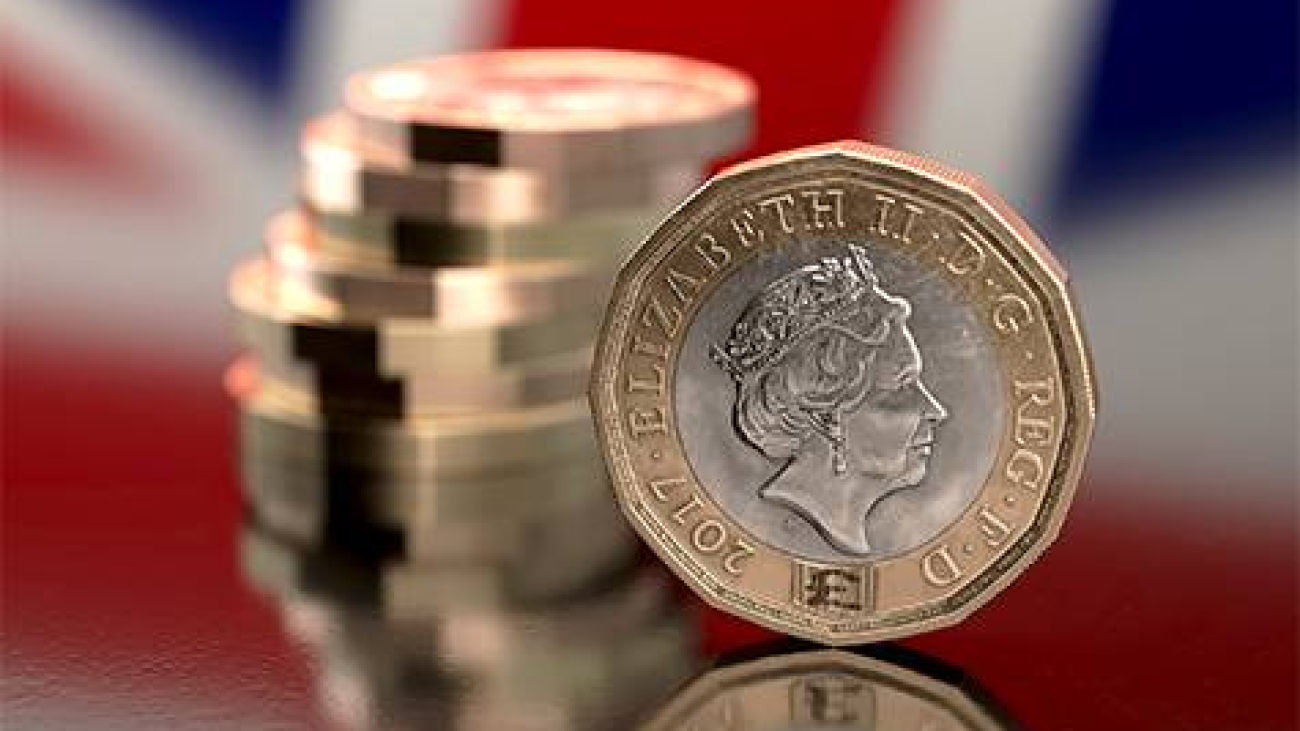
The British pound fell against the euro and weakened versus the dollar on Monday, as traders reacted to the crisis facing UK Prime Minister Sir Keir Starmer, alongside the impact of expectations for future interest rate cuts on the currency.

Morgan McSweeney, Starmer’s chief of staff, resigned on Sunday, saying he took responsibility for advising the prime minister to appoint Peter Mandelson as ambassador to the United States despite his known links to Jeffrey Epstein.

Even so, Starmer remains under growing pressure as the fallout from the Epstein case continues and difficult local elections approach.

The euro rose 0.49% in the latest trading against the pound to 87.22 pence, close to a two-week high, although the European currency remains broadly stable against sterling since the start of the year.

Against the dollar, the pound slipped slightly to $1.3607 after falling about 0.2% earlier in the session.

Politics in focus for UK assets

UK government bonds slightly underperformed their European peers on Monday, with markets focused on Starmer’s position, though moves remained limited.

Many bond investors fear that a new Labour prime minister could shift toward more left-leaning policies and higher spending, while currency markets typically dislike political instability.

The government now faces the possibility of publishing near-complete private correspondence between officials regarding Mandelson’s appointment, in what could prove politically embarrassing.

A by-election in Manchester later this month, along with local elections in May, could also deliver another blow to Starmer’s leadership.

Chris Turner, head of global markets at ING, said pressure is expected to continue on both sterling and UK government bonds amid market speculation about possible changes in the occupants of 10 and 11 Downing Street, referring to the prime minister and finance minister. He added that, alongside the dovish tone seen at last week’s Bank of England meeting, the pound is under pressure.

Diverging rate-cut bets

Sterling was also affected by the Bank of England’s decision last week to keep interest rates unchanged, with a closer-than-expected vote split that pushed traders to increase bets on further cuts this year.

By contrast, the European Central Bank is expected to keep rates steady for the foreseeable future, reducing the pound’s appeal versus the euro amid expectations of relatively lower yields.

Neil Jones, managing director of FX sales and trading at TJM Europe, said the pound appears set to continue its broader weak trend as political uncertainty rises.

Three-month risk reversals, which measure the cost difference between euro call options versus pound calls, rose to 67 basis points, the highest level since late November, up from 22 basis points on Thursday. A higher reading signals stronger bullish positioning in the euro versus the pound.

The euro also rose about 0.4% against the dollar on Monday. Some analysts noted that a Bloomberg report saying China advised banks to limit their holdings of US Treasuries added pressure on the dollar.

oil

Oil falls over 1% as supply concerns fade following US-Iran talks

Oil prices fell by more than 1% on Monday as fears of a Middle East conflict eased after the United States and Iran pledged to continue indirect talks over Tehran’s nuclear program, calming concerns about possible supply disruptions.

Brent crude futures declined by $0.84, or 1.2%, to $67.21 per barrel as of 07:47 GMT, while US West Texas Intermediate crude fell $0.82, or 1.3%, to $62.73.

Tony Sycamore, market analyst at IG, said that with more talks ahead, immediate concerns about supply disruptions in the Middle East have largely faded.

Iran and the United States agreed to continue negotiations after what both sides described as positive discussions held on Friday in Oman, easing worries that a breakdown in talks could push the region toward military confrontation, especially as the US has deployed additional forces to the area.

Roughly one-fifth of global oil consumption passes through the Strait of Hormuz between Oman and Iran.

Both benchmark crudes dropped more than 2% last week as tensions cooled, marking their first weekly decline in seven weeks.

However, Iran’s foreign minister said the country would target US bases in the Middle East if attacked by American forces, underscoring that the risk of conflict has not fully disappeared.

Priyanka Sachdeva, senior market analyst at Phillip Nova, said volatility remains elevated amid conflicting rhetoric, and any negative headlines could quickly rebuild risk premiums in oil prices this week.

Investors are also weighing Western efforts to curb Russia’s oil revenue that supports its war in Ukraine. The European Commission on Friday proposed a broad ban on services that support Russia’s seaborne crude exports.

Sources in refining and trading said Indian refiners — previously the largest buyers of Russian seaborne oil — are avoiding purchases for April delivery and may stay away longer, which could help New Delhi secure a trade agreement with Washington.

Sachdeva added that oil markets will remain sensitive to how far this shift away from Russian crude expands, whether India’s reduced buying continues beyond April, and how quickly alternative supplies reach the market.

images

Gold rises over 1.5% to above $5000 once more

Gold prices rose more than 1.5% in the European market on Monday, extending gains for a second consecutive session and trading back above the psychological $5,000 per ounce level, supported by the current decline in the US dollar against a basket of major global currencies.

Following less aggressive comments from several Federal Reserve officials, traders are watching closely this week for a series of key US economic releases that will provide strong evidence about the path of US interest rates over the course of this year.

Price Overview

Gold prices today rose by 1.65% to $5,047.18 per ounce, from an opening level of $4,964.30, with a session low recorded at $4,964.30.

At Friday’s settlement, gold gained 3.7%, marking its third advance in the past four sessions, driven by safe-haven buying amid geopolitical tensions between the United States and Iran.

Over the past week, gold posted a 1.45% gain, recording its fourth weekly rise in the last five weeks.

US Dollar

The US Dollar Index fell 0.4% on Monday, extending losses for a second straight session and reflecting continued weakness in the US currency against a basket of major and secondary currencies.

A weaker dollar makes dollar-denominated gold bullion more attractive to holders of other currencies, supporting demand.

The dollar is facing negative pressure from tighter scrutiny of capital spending by major technology companies, rising concerns about AI-driven disruption in the software sector, and liquidity and margin-related pressures linked to gold and silver markets.

US Interest Rates

San Francisco Federal Reserve President Mary Daly said on Friday that one or two additional rate cuts may be needed to address weakness in the labor market.

According to the CME FedWatch tool, the probability of leaving US interest rates unchanged at the March meeting stands at 85%, while the probability of a 25 basis point rate cut is priced at 15%.

To reprice these expectations, investors are closely monitoring upcoming US economic data as well as further comments from Federal Reserve officials.

Starting Tuesday, several key US data releases are due, including retail sales, the delayed jobs report on Wednesday, weekly jobless claims on Thursday, and core inflation data for January on Friday.

Gold Outlook

Kelvin Wong, Senior Market Analyst for Asia Pacific at OANDA, said the very short-term relationship during the session between the dollar and silver, as well as gold, is helping push precious metals higher.

Tim Waterer, Chief Market Analyst at KCM Trade, said bargain hunting is also driving gold back above the $5,000 level.

He added that any weakness in employment data could support gold’s recovery, noting that no Federal Reserve rate cut is expected before mid-year unless labor market data shows a sharp deterioration.

SPDR Fund

Holdings of SPDR Gold Trust, the world’s largest gold-backed ETF, declined by 1.72 metric tons on Friday, marking the fourth consecutive daily decrease, bringing total holdings down to 1,076.23 metric tons, the lowest level since January 15.

silver

Super Micro price erases recent gains

Super Micro Computer, Inc. (SMCI) stock price recorded a decline in its latest intraday trading after the stock ran into resistance at its SMA50. This comes under the dominance of the main short-term downtrend, after the stock attempted to unwind its oversold conditions on the RSI, but selling pressure appears stronger than the recent recovery attempt.


Therefore we expect the stock price to decline in upcoming trading, as long as the $35.85 resistance level remains intact, to target the key support at $27.60.


Today’s price forecast: Bearish

cisco

Cisco price returns higher

Cisco Systems, Inc. (CSCO) stock price recorded gains in its latest intraday trading, supported by continued trading above its SMA50, which provides dynamic support and reinforces the stability and dominance of the main medium-term upward trend, with price action moving along a supportive trend line. However, negative signals are beginning to appear on the RSI after reaching overbought territory, which may limit part of the upcoming gains.


Therefore we expect the stock price to rise in upcoming trading, as long as it remains above the $80.00 support level, to target the first resistance at $85.75.


Today’s price forecast: Bullish

yen9

Yen tries to recover after Takaichi’s landslide victory

The Japanese yen rose in Asian trading on Monday against a basket of major and minor currencies, heading toward its first gain in seven days against the US dollar, as it attempts to recover from a three-week low recorded in early trading this week, supported by notable dip-buying activity.

The move is also supported by rising concerns over possible intervention by Japanese monetary authorities to support the local currency, outweighing the impact of the ruling party’s landslide election victory led by Prime Minister Sanae Takaichi.

The ruling Liberal Democratic Party, led by Takaichi, secured a sweeping victory in the House of Representatives election on Sunday, backed by pledges to ease living-cost pressures on Japanese households and accelerate economic stimulus efforts.

Price Overview

The Japanese yen exchange rate today: the dollar fell against the yen by 0.6% to 156.20, from Friday’s close at 157.18, and recorded an intraday high at 157.66, the highest level since January 23.

The yen ended Friday down 0.1% against the dollar, marking its sixth straight daily loss, driven by election-related speculation in Japan.

The yen lost 1.6% against the dollar last week, its first weekly loss in three weeks and the largest weekly decline since July 2025.

Landslide victory

Japanese Prime Minister Sanae Takaichi achieved a historic landslide victory in Sunday’s general election, strengthening her grip on power and granting her a strong mandate to push forward her political and economic agenda.

The Liberal Democratic Party secured 316 seats on its own out of 465 in the House of Representatives, the highest seat count for the party since its founding in 1955.

With this result, the party holds a two-thirds majority on its own, enabling it to pass laws and budgets even if rejected by the upper house, and opening the door to major constitutional amendments.

With its new partner, the Japan Innovation Party, winning 36 seats, the ruling coalition’s total rose to 352 seats.

The centrist reform opposition alliance suffered heavy losses, giving up more than two-thirds of its previous seats.

Early voting reached a record 26%, or about 27 million voters, despite severe cold and snowfall across large parts of the country on election day.

New warnings

Atsuki Mimura, Japan’s top currency diplomat, said authorities are closely monitoring foreign exchange market moves with a high sense of urgency. Exchange rates should move in a stable manner reflecting economic fundamentals, and appropriate action will be taken if needed to counter excessive or speculative moves.

Opinions and analysis

Sim Moh Siong, a currency strategist at OCBC in Singapore, said that although the yen’s initial weakness did not develop as expected, the outlook for the Japanese currency still points to difficulty achieving sustained strength.

He added that, at least in the near term, intervention risks remain a concern, which could limit gains in the dollar/yen pair.

Shoki Omori, chief rates and FX strategist at Mizuho Bank in Tokyo, said the Liberal Democratic Party’s landslide win removes political uncertainty and supports policy execution, but shifts market focus directly toward how fiscal policy will be designed and delivered.

He added that fiscal expansion risks had largely been priced in before the election, and the key question now is whether those risks will intensify or gradually fade.

Japanese interest rates

Money markets price the probability of a quarter-point rate hike by the Bank of Japan at the March meeting at below 10%.

Investors are watching for further data on inflation, unemployment, and wages in Japan to reassess those expectations.


Euro hits a week high as dollar faces pressure

The euro rose in European trading on Monday against a basket of global currencies, extending gains for a second straight session versus the US dollar and recording a one-week high, supported by continued downside pressure on the US currency ahead of a data-heavy week in the United States.

Following the European Central Bank’s first monetary policy meeting of the year, expectations for a rate cut in March have eased, despite the recent slowdown in inflationary pressures.

Price Overview

Euro exchange rate today: the euro rose against the dollar by more than 0.35% to $1.1854, the highest level in a week, up from the day’s opening at $1.1810, and recorded a session low at $1.1809.

The euro closed Friday up 0.3% against the dollar, its first gain in three sessions, as part of a recovery move from a two-week low at $1.1766.

Over the past week, the euro lost 0.3% against the dollar, marking its first weekly decline in three weeks, due to correction and profit-taking from five-year highs.

US dollar

The dollar index fell 0.35% on Monday, extending losses for a second consecutive session, reflecting continued weakness in the US currency against a basket of major and minor currencies.

The decline comes under negative pressure led by tighter scrutiny of capital spending by major technology companies, rising fears of AI-driven disruption in the software sector, and liquidity and margin-related pressures linked to gold and silver.

The dollar’s weakness comes at the start of a week that will bring several key US releases, including retail sales, inflation data, and the delayed jobs report due Wednesday.

European interest rates

The European Central Bank kept its main interest rates unchanged last week at 2.15%, the lowest level since October 2022, marking the fifth consecutive meeting without a change.

ECB President Christine Lagarde said the bank is “not pre-committing to a specific rate path,” stressing that the March decision will depend entirely on incoming data in the coming weeks.

Lagarde added that the ECB is closely monitoring the euro exchange rate, noting that the currency’s current strength helps restrain imported inflation and may support reaching targets without the need for further tightening.

Money markets repriced expectations after the meeting, with the probability of a 25-basis-point ECB rate cut in March falling from 50% to 30%.

Investors are waiting for further eurozone data on inflation, unemployment, and wages to reassess those expectations.

images

The USDJPY is witnessing sharp fluctuation

The (USDJPY) fluctuated on its last intraday levels, amid the dominance of bullish corrective wave on short-term basis, with its trading alongside supportive trend line, taking advantage of the dynamic support that is represented by its trading above EMA50, reinforcing the chances of extending the corrective wave, on the other hand, we notice the emergence of negative overlapping signals on relative strength indicators, which might hinder the upside track on its upcoming intraday levels.

silver3

Silver Price is extending its cautious gains

Silver prices (SILVER) surged higher in their recent intraday trading, breaching steep bearish trend line on short-term basis, providing a chance for extending the rises in the near period, especially with the stability of $73.00 key support.


On the other hand, the negative pressures remain valid due to the trading below EMA50, accompanied by forming negative divergence by the relative strength indicators after reaching exaggerated overbought levels compared to the price move, with the emergence of negative overlapping signals that reinforces the likelihoods of the bullish momentum slowness.


Accordingly, we suggest a decline in sliver’s upcoming intraday trading, especially if $86.00 resistance settles, and there are strong chances for retesting this resistance, if it declines, our initial target will be $73.00 support.


The expected trading range is between $73.00 support and $86.00 resistance.


Today’s forecast: Neutral