Palladuim_L_1

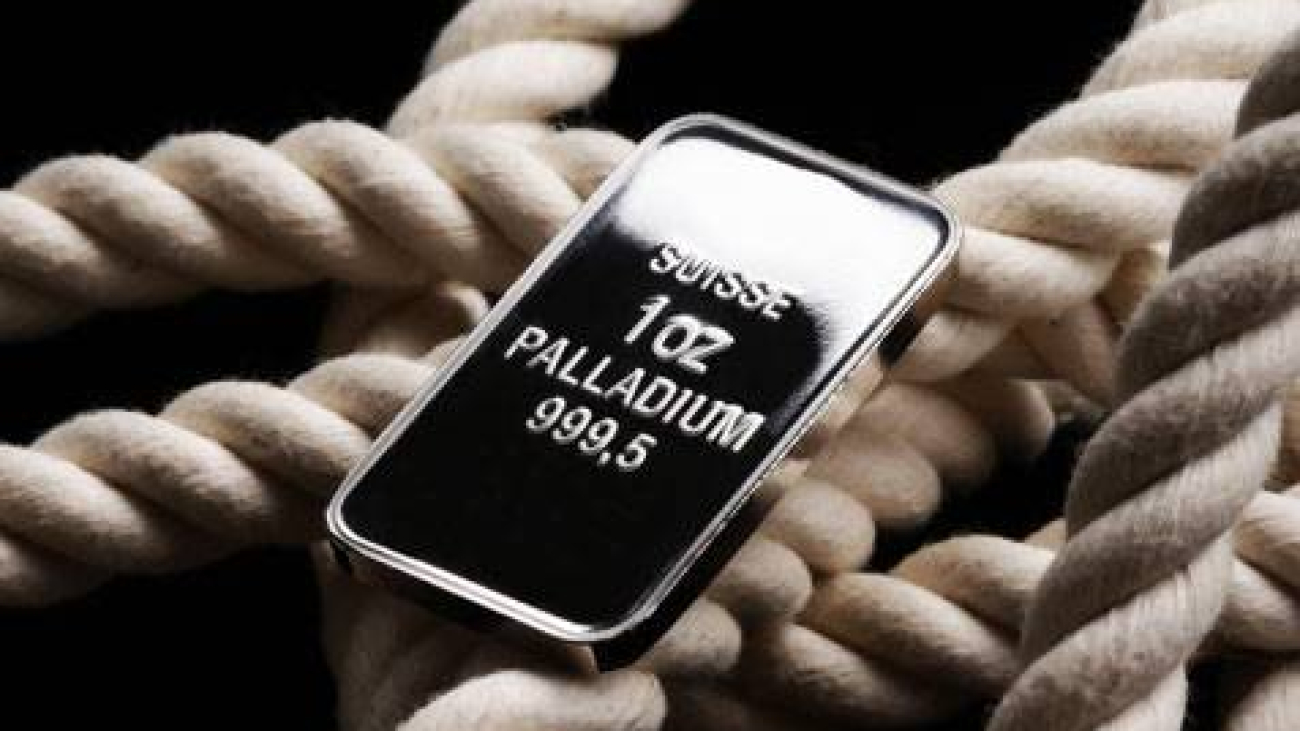
Palladium rallies over 6% as metals demand resurges

Palladium prices rose during Tuesday trading as demand for metals — particularly industrial metals — improved, alongside a decline in the US dollar against most major currencies.

UBS said in a client note last month that it raised its palladium price forecast by $300 per ounce to $1,800, citing a sharp increase in investment inflows into the metal.

Analyst Giovanni Staunovo said the revision was driven by strong investment demand in recent months, noting that the relatively small size of the palladium market often leads to sharp price swings.

The bank explained that the recent price momentum was not driven by traditional industrial uses, but rather by investor positioning ahead of potential US interest rate cuts, a weaker dollar, and rising geopolitical uncertainty.

Staunovo said that if investment demand remains strong, prices could move higher, but warned that without that support, the market would appear broadly balanced — which is why UBS prefers exposure to gold instead.

Palladium demand has shifted in recent years after autocatalyst consumption peaked in 2019, when prices surged above platinum and triggered substitution trends.

The spread of electric vehicles, which do not use catalytic converters, has also weighed on palladium demand.

However, the bank noted that palladium has rallied alongside platinum and silver since mid-2025. With palladium now significantly cheaper than platinum, UBS expects catalytic converter manufacturers to gradually switch back to using it over time.

Investment activity in palladium has increased notably, with UBS highlighting rising ETF holdings since mid-2025, as well as a sharp build-up in speculative futures positions after being net short for most of last year.

China may also be supporting demand, as Staunovo said the launch of yuan-denominated platinum futures contracts in Guangzhou likely boosted palladium demand as part of broader trading activity across the platinum group metals complex.

The US dollar index fell 0.2% to 97.4 by 15:29 GMT, after touching a session high of 97.6 and a low of 97.3.

In trading, March palladium futures jumped 6.3% to $1,813 per ounce as of 15:30 GMT.

gbp

The USDJPY is getting ready to reach our expected target

The (USDJPY) rose in its last intraday trading, preparing to reach the current resistance at 156.25, which represents our expected target in our previous analysis, amid the dominance of strong minor bullish wave on short-term basis, with the continuation of dynamic support that is represented by its trading above EMA50, reinforcing the chances of extending its gains on intraday basis, especially with the emergence of positive overlapping signals on relative strength indicators, after offloading its overbought conditions, opening the way for extending its gains on near term basis.

silver

Silver Price is showing a negative divergence that threatens its temporary gains

Silver prices (SILVER) rose in their recent intraday trading, to retest previously broken main bullish trend line, in attempt to confirm this break before detecting the next trend, this bullish track comes despite the continuation of the negative pressure due to its trading below EMA50, which still represents dynamic resistance that limits the strength of the current rebound.


Noticing a clear negative divergence of relative strength indicators after reaching exaggerated overbought levels compared to the price move, accompanied by the emergence of negative signals, which reinforces the likelihoods of the intraday rebound failure and a return to the selling pressures, unless the price manages to trade above the broken trend line.

images

GBPUSD price is reinforcing its cautious gains

GBPUSD rose in its last intraday trading supported by the emergence of positive signals from relative strength indicators, and the price remains under negative pressure due to its trading below EMA50, and under the dominance of steep bearish corrective wave on short-term basis, these last gains are considered as attempts to recover some of the previous losses. 

Untitled

EURUSD price is rising, affected by key support

The (EURUSD) price rose in its last intraday trading, leaning on 1.1800 key support, gaining bullish momentum, supported by the positive signals from relative strength indicators, indicating an attempt to take a breather and recover some of its previous losses.


This rise still lacks sufficient strength, amid ongoing negative pressure, due to trading below EMA50, which forms a dynamic resistance that limits the chances of sustainable recovery, accompanied by the dominance of steep bearish corrective wave on the short-term basis, keeping the cautious scenario valid over the near term.

images

Crude oil prices extend gains

Crude oil prices kept rising in their last intraday trading, to attack the near resistance at $63.50, taking advantage of its trading above EMA50, which represents a key dynamic support that reinforces the stability and dominance of the main bullish trend on short-term basis, and the price is moving alongside supportive trend line for this path, indicating the strength of the bullish momentum.


This bullish performance is supported by the positive signals from relative strength indicators, which confirms the momentum improvement and opens the way for breaching this resistance, if it happens, we will witness extra gains in the near term.

xr:d:DAFigiIBsGY:25,j:46844874268,t:23051010

Gold price settles above key psychological level amid warning signals

Gold prices (GOLD) kept rising during recent intraday trading, to settle above the key psychological resistance at$5,000, as a signal for the continuation of the positive attempts to recover some previous losses, however it reached EMA50’s resistance, which represents an obstacle against extending gains in near term.


This comes amid the dominance of bearish corrective wave on short-term basis, accompanied by the emergence of negative signals from relative strength indicators, after reaching overbought levels, to prefer to begin a fluctuated trading or a limited decline in the upcoming period.

Gold_Dollar

Gold climbs over 6% after historic selloff

Gold prices rose by more than 6% in European trading on Tuesday, beginning a rebound from a four-week low, after a sharp three-day selloff driven by a historic wave of liquidation across precious metals. The recovery is also supported by a pause in the US dollar’s advance in the foreign exchange market.

Starting today, traders are closely watching the release of several very important US labor market reports, which are expected to provide strong clues about the Federal Reserve’s interest rate path over the course of this year.

Price Overview

• Gold prices today: Gold rose by 6.2% to $4,949.81, up from the session opening level at $4,660.63, and recorded a session low at $4,660.63.

• At Monday’s settlement, the precious metal gold fell by 4.75%, marking its third consecutive daily loss, and hit a four-week low at $4,402.83 per ounce.

• In addition to accelerated profit-taking from the all-time high at $5,598.13 per ounce, the gold market entered a historic selloff after concerns about Federal Reserve independence eased, and after CME Group raised margin requirements on gold and silver futures.

The US Dollar

The US Dollar Index fell by 0.2% on Tuesday, pulling back from a two-week high at 97.73 points, reflecting a halt in the dollar’s gains against a basket of major and minor currencies.

Beyond profit-taking, the dollar is edging lower as investors refrain from building new long positions while waiting for clearer signals on the future path of US interest rates.

US Interest Rates

• According to the CME FedWatch tool, pricing for keeping US interest rates unchanged at the March meeting stands at 85%, while the probability of a 25-basis-point rate cut is priced at 15%.

• To reprice those expectations, traders are closely monitoring a series of very important US labor market data releases.

• Later today, US job openings data for the end of last November will be released, followed on Wednesday by private-sector payrolls data for January, and on Thursday by weekly jobless claims.

Gold Outlook

Deutsche Bank analysts said that history suggests short-term drivers are usually behind moves of this kind, even if the scale of the recent selloff has raised fresh questions about market positioning.

The bank’s analysts explained that although speculative activity indicators have been elevated for months, they are not sufficient on their own to explain the magnitude of last week’s move.

They added that the correction in precious metals prices exceeded the apparent catalysts, and that it is unlikely investor intentions toward precious metals — whether official, institutional, or retail — have fundamentally turned more negative.

Deutsche Bank noted that the selloff resulted from a mix of factors, including a rebound in the US dollar, shifting expectations about Federal Reserve leadership after President Donald Trump nominated Kevin Warsh to head the Fed, and position trimming ahead of the weekend.

Xavier Wong, market analyst at eToro, said speculative positioning clearly played a short-term role. He added that silver attracted greater retail participation than gold, making it more sensitive to fast shifts in sentiment and short-term trading flows.

SPDR Fund

Gold holdings at SPDR Gold Trust, the world’s largest gold-backed ETF, were unchanged on Monday, keeping the total at 1,087.10 metric tons.

USDBULLISH_01_L

Euro tries to recover ahead of eurozone inflation data

The euro rose in European trading on Tuesday against a basket of global currencies, posting its first gain in three days versus the US dollar, as part of a rebound attempt from a two-week low, supported by a pause in the dollar’s advance in the foreign exchange market ahead of key US labor market data.

Investors are awaiting the release on Wednesday of headline inflation data for the euro area for January, which is expected to provide strong signals about the European Central Bank’s interest rate path this year.

Price Overview

The euro rose 0.2% against the US dollar to $1.1816, from the day’s opening level at $1.1791, and recorded a session low at $1.1785.

The euro closed Monday down 0.5% against the dollar, marking a second straight daily loss, and hit a two-week low at $1.1776 after the release of strong US economic data.

US Dollar

The dollar index fell 0.2% on Tuesday, pulling back from a two-week high at 97.73 points, reflecting a pause in the US currency’s gains against a basket of major and minor currencies.

Beyond profit-taking sales, the dollar weakened as investors refrained from building new long positions ahead of important US labor market data, which will offer clearer guidance on the Federal Reserve’s interest rate path this year.

Later today, US job openings data for the end of November will be released, followed on Wednesday by US private payrolls data, Thursday’s weekly jobless claims, and Friday’s official employment report for December.

European Rates

Money markets are currently pricing the probability of a 25 basis point rate cut by the European Central Bank in February at below 25%.

To reassess those expectations, investors are watching for the euro area headline inflation data for January due on Wednesday.

The first ECB monetary policy meeting of the year begins Wednesday, with decisions due Thursday, and rates are widely expected to remain unchanged for the fifth consecutive meeting.

images

The USDJPY is taking a breather

The (USDJPY) declined in its last intraday trading, to gather the gains of its previous rises, attempting to offload some of its clear overbought conditions, especially with the emergence of negative overlapping signals, to gather its bullish momentum that might help it to recover and rise again, with a dynamic support that is represented by its trading above EMA50, with the dominance of strong bullish corrective wave on short-term basis.