1794597857_ce594d

US Treasury bonds head for worst weekly selloff in 18 months as inflation fears intensify

US Treasury bonds headed for their steepest weekly selloff in more than 18 months on Friday, November 13, as persistent inflation and increasingly hawkish Federal Reserve expectations drove yields sharply higher, reversing a recent recovery in the world’s largest government bond market.

The benchmark 10-year Treasury yield climbed to 5.17%, gaining approximately 31 basis points this week, its largest weekly increase since April 2025, when President Donald Trump’s sweeping tariff announcements triggered widespread financial market volatility.

Meanwhile, the two-year Treasury yield, which is particularly sensitive to monetary policy expectations, advanced 37 basis points to 4.89%, marking its biggest weekly increase since late 2024.

The sharp rise in yields, which move inversely to bond prices, reflected a rapid reassessment of the Federal Reserve’s interest rate outlook following stronger-than-expected inflation figures and warnings from policymakers that additional monetary tightening may be necessary.

Inflation pressures force investors to reconsider Fed policy

The selloff accelerated after Tuesday’s consumer price inflation report showed prices rising 0.4% in October, exceeding market expectations and reinforcing concerns that inflationary pressures remain deeply embedded in the US economy.

Friday’s producer price index report offered limited relief, despite showing a smaller-than-expected monthly increase.

Producer prices rose 0.3% in October, below economists’ forecasts of 0.4%, following a revised 1.4% increase in September.

However, annual producer inflation accelerated to 6.5%, compared with 6.3% in September, reaching its highest level since November 2022.

Core producer prices also increased 0.5% during the month, suggesting that underlying inflationary pressures remain persistent even as the headline monthly reading moderated.

The figures strengthened concerns that businesses could pass higher production costs on to consumers, complicating the Federal Reserve’s efforts to restore price stability.

Markets price in further interest rate increases

Investors have sharply revised their expectations for US monetary policy, with markets now fully pricing in a 25-basis-point interest rate increase at the Federal Reserve’s December meeting.

Traders have also assigned some probability to a larger 50-basis-point increase, while expectations for additional tightening in January and later in 2027 have strengthened.

Recent comments from Federal Reserve officials reinforced the shift in sentiment.

San Francisco Fed President Mary Daly indicated that further tightening would likely be necessary, citing persistent inflationary pressures extending beyond sectors directly affected by tariffs and energy prices.

Cleveland Fed President Beth Hammack also emphasized the importance of measured policy adjustments, while maintaining concerns about the inflation outlook.

The increasingly restrictive monetary policy outlook has forced investors who recently increased their exposure to Treasury securities to unwind positions, accelerating the decline in bond prices.

Bond market turmoil spreads across financial markets

The consequences of the Treasury selloff have extended beyond government debt, placing pressure on equities, precious metals and other interest-rate-sensitive assets.

Higher Treasury yields increase financing costs for businesses and households, while making government securities more attractive relative to riskier investments.

The 10-year yield is particularly important because it influences mortgage rates, corporate borrowing costs and the valuation of financial assets across global markets.

For the US government, sustained increases in borrowing costs also threaten to raise the expense of financing federal debt, adding pressure to an already strained fiscal outlook.

The dollar has benefited from the widening interest rate advantage over other major currencies, while gold and other non-yielding assets have struggled against the prospect of higher returns on government bonds.

Investors are now assessing whether the recent surge in yields represents a temporary adjustment to inflation expectations or the beginning of a more prolonged period of elevated borrowing costs.

With inflation remaining substantially above the Federal Reserve’s 2% target, the Treasury market faces continued uncertainty ahead of December’s monetary policy decision.


sil33

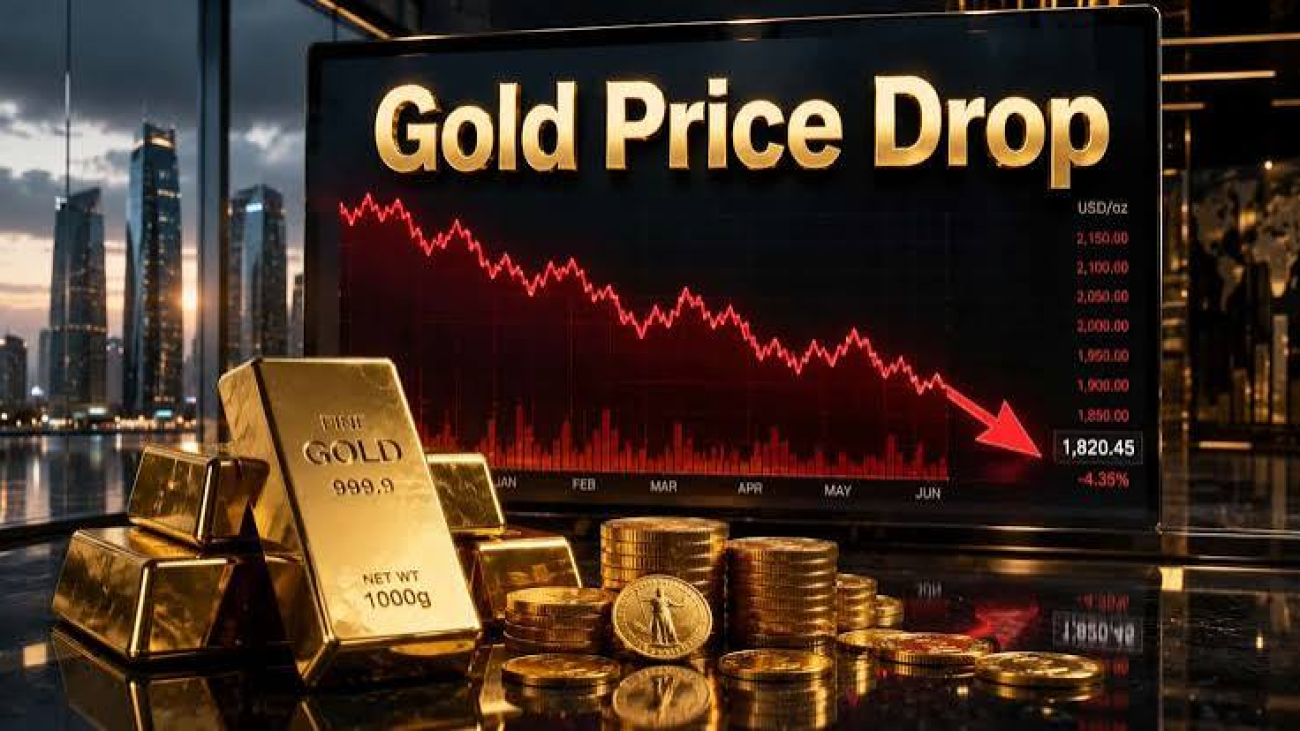
Gold plunges to 13-month low as silver tumbles nearly 3% on Fed tightening fears

Gold prices extended their losses in European trading on Monday, November 16, falling to their lowest level since October 2025, as a stronger US dollar and expectations of further Federal Reserve interest rate increases intensified selling across precious metals.

Spot gold fell approximately 1% to $3,840.52 per ounce, while US gold futures for December delivery declined 1.1% to $3,843.60.

Silver suffered steeper losses, dropping approximately 3% to $47.26 per ounce, as concerns about industrial demand compounded pressure from rising US Treasury yields.

Gold extends sharp weekly decline

Gold’s latest decline followed a 4.5% weekly loss, driven by persistent inflation concerns and a sharp increase in US government bond yields.

The dollar remained near its highest level since April 2025, making precious metals more expensive for buyers holding other currencies.

Meanwhile, investors continued pricing in additional Federal Reserve monetary tightening following stronger inflation figures and hawkish comments from policymakers.

Markets assigned a 92% probability to a 25-basis-point interest rate increase in December, with an 8% probability of a larger 50-basis-point move.

Silver faces additional demand pressures

Silver came under pressure following projections that global demand could decline 5% in 2026, reflecting weaker jewellery consumption and reduced use in solar panels.

Higher prices have encouraged solar manufacturers to reduce silver consumption and adopt alternative materials, adding uncertainty to the metal’s industrial demand outlook.

Fed policy remains in focus

Investors are awaiting remarks from Federal Reserve Chair Kevin Warsh later Monday, alongside minutes of the October policy meeting due Wednesday.

Further hawkish signals could extend losses in precious metals, while any moderation in interest rate expectations could provide support following the recent selloff.

yen

Yen rebounds from two-month low despite unexpected economic contraction

The yen rose against the US dollar in European trading on Monday, November 16, extending its recovery from a two-month low despite disappointing domestic economic data, as fears of government intervention prompted investors to reduce short positions.

The Japanese currency attempted to recover some of last week’s losses, when rising US Treasury yields and mounting expectations of further Federal Reserve monetary tightening pushed the yen beyond the psychologically important 160 level.

Price Overview

The dollar fell 0.26% against the yen to 159.38 at 06:10 GMT, after opening at 159.79 and recording a session high of 159.84.

Japan’s economy contracts

Data released on Monday showed that Japan’s economy contracted at an annualized rate of 0.1% during the third quarter, compared with market expectations of 0.3% growth.

The unexpected contraction raised questions about the Bank of Japan’s ability to proceed with further monetary tightening in December, particularly amid concerns about weak domestic consumption.

However, the disappointing figures did not trigger substantial selling of the Japanese currency, given the heightened risk of intervention by Japanese authorities near current exchange rate levels.

US interest rates

The US dollar index remained close to its highest level since April 2025, trading around 103.46, while the yield on 10-year US Treasury bonds stood at 5.137%.

Markets are pricing in a 92% probability of a 25-basis-point Federal Reserve interest rate increase in December, compared with an 8% probability of a larger 50-basis-point increase.

The widening interest rate differential between the United States and Japan remains a major obstacle to a sustained recovery in the Japanese currency.

Investors are awaiting fresh remarks from Federal Reserve officials later on Monday, including Fed Chair Kevin Warsh at 17:00 GMT, for further indications of the extent of monetary tightening anticipated over the coming months.

usdjpy

USDJPY Attempts to Gain Positive Momentum

The (USDJPY) experienced volatile trading during its latest intraday movements, following the stability of the current resistance level at 159.80. The pair is attempting to build positive momentum that could help it breach this resistance and resume its gains, amid the dominance of the main short-term uptrend, with price movements following a minor ascending trend line that supports this direction. Positive pressure also remains in place as the pair trades above EMA50, increasing the chances of recovery in the near term.


Furthermore, positive crossover signals are beginning to emerge from the relative strength indicators, after offloading the overbought conditions, giving it greater room to move higher.

silver

Silver Breaks Through Our Target Level

Silver declined sharply during its latest intraday trading, managing to break below the key support level of $49.00, which was our last price target in previous analysis, amid the dominance of the main short-term bearish trend, with the price moving alongside a trend line that supports this path. Additional negative pressure stems from trading below EMA50, which continues to act as dynamic resistance, increasing the likelihood of further losses in the near term.


This coincides with continued negative signals from the relative strength indicators, despite reaching deeply oversold levels. This reflects strong bearish momentum and the continued dominance of selling pressure.

gbp6

GBPUSD Prepares to Break Below Our Price Target

GBPUSD declined during its latest intraday trading, approaching a potential break below 1.3200 support level, which was our price target in earlier analysis.


This comes amid the dominance of a steep short-term downward corrective wave, alongside continued negative pressure resulting from trading below EMA50, which is increasing selling pressure on the pair. Meanwhile, negative signals are emerging from the relative strength indicators, after offloading the oversold conditions. This gives the price room to record further losses in the near term.

CANADIAN_2_L

EURUSD Deepens Its Losses

The EURUSD pair continued its decline during its latest intraday trading, as the main short-term downtrend remains dominant. Negative pressure also persists as the pair trades below EMA50, which continues to weigh on price movements and increases the likelihood of further declines in the near term.


This comes alongside continued negative signals from the relative strength indicators, despite reaching deeply oversold levels, showing the strength of the bearish momentum and the continued dominance of selling pressure, keeping the possibility of further losses alive in the short term.

OIL_02_L

Crude Oil Price Succumbs to Negative Pressure

The price of crude oil declined during its latest intraday trading, after reaching EMA50’s resistance, which prompted the price to resume its decline, amid the dominance of the main short-term bearish trend, reinforcing the negative pressure and limiting the chances of recovery in the near term.


This coincides with negative signals emerging from the relative strength indicators, following the indicators’ arrival in deeply overbought territory, weakening bullish momentum and renewed selling pressure and supporting the likelihood of the bearish trend continuing in the near term.

images

Gold Price Faces Negative Pressure

The price of gold is trading lower during its latest intraday movements, amid continued negative pressure from trading below EMA50, which acts as dynamic resistance, reinforcing the dominance of the main downtrend and its stability in the short term.


This coincides with negative signals emerging from the relative strength indicators, after offloading the oversold conditions. This reflects renewed bearish momentum and intensifies the negative pressure, increasing the likelihood of further declines in the near term.

1794577343_7705a3

Oil prices mixed as Middle East tensions offset weaker demand outlook

Oil prices traded mixed on Friday, November 13, as investors weighed persistent supply risks in the Middle East against weakening US fuel demand and expectations of limited escalation in the conflict involving Iran.

Brent crude futures rose approximately 0.4% to $96.21 per barrel, while US West Texas Intermediate crude slipped 0.1% to $88.62 per barrel, as of 12:00 GMT.

Both benchmarks were heading for a second consecutive weekly decline of approximately 2%, despite recovering from sharp losses earlier in the week.

Middle East supply risks remain elevated

Oil markets remained sensitive to developments surrounding the US-Israeli conflict with Iran, particularly after President Donald Trump indicated that reaching an agreement with Tehran was not essential.

His remarks reinforced expectations that Washington could maintain economic sanctions and restrictions on Iranian oil shipments rather than pursue further military escalation.

Meanwhile, Iran reported attacks on four tankers in the Strait of Hormuz, although the claims remained unverified.

Yemen’s Houthi movement also reported attacks targeting Saudi energy infrastructure, including the East-West pipeline and facilities in Yanbu and Riyadh.

US inventories weigh on sentiment

Signs of weakening American fuel demand added pressure to crude prices after government figures showed increases in crude oil and refined product inventories.

Higher imports and softer consumption of petroleum products raised concerns about demand resilience, limiting the impact of geopolitical supply risks.

Investors also continued assessing the recovery of Middle Eastern oil shipments to Asian markets, where refiners have gradually increased purchases following earlier disruptions.

Despite the improving flow of supplies, traders remained cautious about the security of alternative transportation routes.

Oil prices consequently remained confined to a relatively narrow trading range, with geopolitical developments and US demand indicators continuing to shape expectations for the coming sessions.