08166635848

Yen fall may prove a debilitating blow to Japan, spotlights BOJ

Yen fall may prove a debilitating blow to Japan, spotlights BOJ

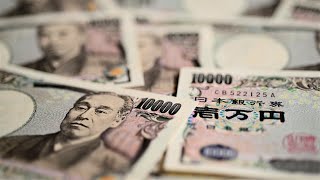
The yen’s recent weakening may not be as rapid as last year when it lost around 20 percent of its value relative to the U.S. dollar, but the prospect of it staying longer at current levels is already a cause for alarm for Japan Inc. and consumers.

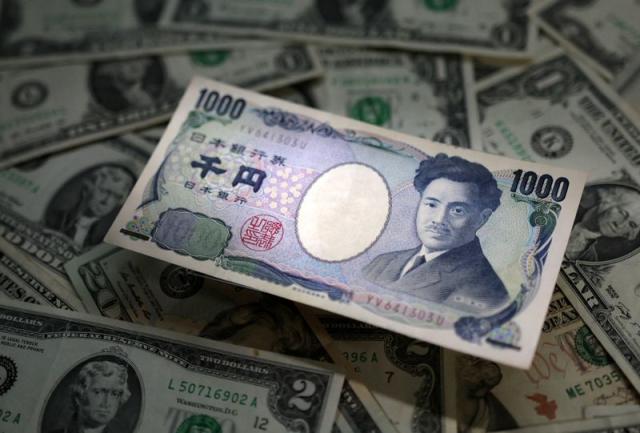
The yen is in the 143 zone to the U.S. dollar, far from around 130 that major Japanese firms expect the currency pair to average in the current business year to next March. The euro has also hit a 15-year high versus the yen near 157.

While Japanese authorities say they are closely monitoring forex developments due to the importance of stable currency moves that reflect economic fundamentals, the yen’s recent weakness is largely due to the divergence of monetary policies between Japan and its peers in the United States and Europe.

Bank of Japan Governor Kazuo Ueda has been taking a neutral stance on the yen’s fall of late, calling it “positive for some sectors but negative for others.”

But consumers are feeling the lagging effects of the yen’s precipitous fall since last year, as companies continue to pass on higher import costs to consumers, and Ueda has acknowledged that rising prices are “big burdens” on households.

The yen’s depreciation may not be as rapid as when Japanese authorities intervened in late 2022, but analysts say the weak trend will likely persist in the coming months, at least until financial markets are convinced that the U.S. Federal Reserve and the European Central Bank will pause raising interest rates.

Some say the weaker yen can prompt the BOJ to tweak its monetary policy if the nation’s inflation becomes more entrenched.

“For the time being, the yen is expected to stay at current levels relative to the other two (euro and dollar), and it won’t be until October or later that we will see a reversal of the trend and the yen will rise,” said Koji Fukaya, a fellow at consulting firm Market Risk Advisory Co.

“The dollar staying around 140 yen is already a headache for many Japanese firms, particularly importers,” he added. “Inflation may slow, but relative price levels will be high, and this is a severe blow to households.”

Japanese firms expect the dollar to average 127.61 yen for fiscal 2023, according to research firm Teikoku Databank.

Among some 11,000 companies that gave valid responses, importers set their assumed exchange rate about 1.6 yen higher than exporters on average, the survey showed, with the biggest gap of over 7 yen seen between wholesalers and construction companies.

Bank of Japan Governor Kazuo Ueda attends a press conference at the central bank headquarters in Tokyo on June 16, 2023, following a two-day policy-setting meeting. (Kyodo) ==Kyodo

Exporters tend to be the major beneficiary of a weak yen that inflates their overseas profits in yen terms. On the flip side, importers need to shoulder higher costs.

Russia’s war in Ukraine and a global economic recovery from the COVID-19 shock have meant higher fuel costs. Adding to the woes of resource-poor Japan is the yen’s recent depreciation.

“There are views that (Japan) is accepting of the weaker yen partly because it is boosting stocks. But there is this undeniable logic that higher cost burdens squeeze the economy as a whole,” said Yoshimasa Maruyama, chief economist at SMBC Nikko Securities Inc.

“The Fed’s policy stance (to seek higher interest rates) can keep the momentum for yen weakness. With that in mind, we should be on guard against the scrapping of yield curve control in July when the BOJ releases its quarterly outlook report and likely revises upward its inflation forecast,” Maruyama added.

Consumer inflation is well above the BOJ’s 2 percent target for the 14th straight month, but the BOJ under Ueda, who became governor in April, has repeatedly shot down speculation of dialing back monetary stimulus soon because inflation is expected to slow.

Still, one BOJ board member said while it was appropriate to wait “a little longer,” the time was ripe to consider revising its yield curve control program due to its hampering market functioning, according to minutes of the central bank’s policy meeting in April.

The BOJ sets short-term interest rates at minus 0.1 percent and guides 10-year Japanese government bond yields to around zero percent, with a 0.5 percent cap.

“Any rapid yen weakening, like toward 145 (to the U.S. dollar) in the short-term, might trigger an early (policy) adjustment as the BOJ is in favor of a stable yen move in tandem with the fundamentals,” said Daiju Aoki, chief investment officer for Japan, at UBS SuMi TRUST Wealth Management.

Japan intervened in the currency market after the yen breached 145 to the U.S. dollar in September. It carried out three yen-buying, dollar-selling operations in September and October, spending over 9 trillion yen ($62.6 billion).

As the yen’s weakness also trimmed its current account surplus, Japan was removed from a U.S. watch list that monitors trading partners for potentially unfair foreign exchange practices for the first time since 2016.

Saudi Aramco says China India are especially driving oil demand despite economic headwinds

Saudi Aramco says China India are especially driving oil demand despite economic headwinds

Comments crossing news wire from the Saudi Aramco CEO: • Oil markets fundamentals remain generally sound for rest of the year. • Developing countries, especially China and India, driving oil demand growth of more than 2mln barrels/day this year. • Says China’s transport and petrochemical sectors are still showing signs of growth despite economic headwinds.

New Zealand PM to boost cooperation, promote ties in first China visit

New Zealand PM to boost cooperation, promote ties in first China visit

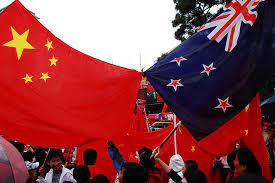
New Zealand Prime Minister Chris Hipkins, bringing a business delegation of 29 representatives from various fields, is making his first trip to China starting from Sunday, with a dual focus to boost the country’s economy and promote ties with its largest trading partner.

In the increasingly complex international situation and with the Biden administration accelerating its alliance-building, New Zealand has set a good example for Western countries of how to balance its relations with both China and the US, and maintain strategic autonomy, experts said.

According to the Xinhua News Agency, Hipkins is paying an official visit to China from June 25 to 30, and will attend the 14th Annual Meeting of the New Champions, also known as the Summer Davos Forum, in Tianjin at the invitation of Chinese Premier Li Qiang.

Hipkins is accompanied by 29 delegates, representing a wide range of export sectors including tourism and education, said the New Zealand Trade and Enterprise (NZTE), the country’s international business development agency.

“In the past, many may think that New Zealand, as a relatively small country, lacked diplomatic autonomy, but in fact it has more say in various aspects including economy and national defense, even more than its neighboring country Australia,” Chen Hong, director of the New Zealand Studies Center at East China Normal University, told the Global Times on Sunday.

Grasping a major chance as the world enters the post-pandemic era, New Zealand has been able to exclude all kinds of pressures and influences to strengthen its relationship with China, setting a good example for other US allies of balancing well between its own interests in cooperating with China and its relations with Western countries, Chen said.

China-New Zealand relations have maintained positive development over the past decades, with New Zealand making many “firsts” with China, for example, the first Western country to support China’s accession to the WTO and the first country to sign a free trade agreement with China, Shen Shishun, an Asia-Pacific affairs expert at the China Institute of International Studies, told the Global Times on Sunday.

Against the backdrop of growing protectionism and unilateralism, Hipkins’ first visit to China underscores the importance the New Zealand government attaches to its major trading partner, Shen said.

The economic and trade cooperation between China and New Zealand is complementary and has served as a ballast stone for bilateral relations, Shen said. China has reportedly been New Zealand’s largest trading partner for years, accounting for around 30 percent of New Zealand’s exports of goods and services, according to the website of the Chinese Embassy in New Zealand.

During Hipkins’ visit, the two countries may strive to seek in-depth cooperation in more fields in addition to trade, tourism and education, Shen said, suggesting that the two sides continue to uphold multilateralism and win-win cooperation to deepen their friendly cooperation.

Chen believes that another focus for Hipkins’ visit is to boost its tourism industry. As an important pillar for New Zealand’s economic development, the tourism sector has always seen Chinese visitors as a strong driving force, and it is eagerly looking forward to welcoming Chinese tourists back to New Zealand in the post-pandemic era.

In addition, Hipkins is believed to wish to attract more Chinese students to New Zealand universities through this tour, Chen said, as most universities in the country have high rankings in the world and are known for their multicultural environment.

Hipkins said prior to his visit that China is a “critical part of our economic recovery,” as China represents nearly one-quarter of all New Zealand’s exports, was our second largest source of tourists pre-COVID and is a significant source of international students, according to a release on the website of the New Zealand government.

“The export of traditional goods like dairy, meat and wood to China remain important, but it’s critical we also throw our support behind emerging sectors such as gaming and health and wellness,” he said, read the government release.

“The first visit of a New Zealand prime minister to China since 2019 is a symbol of the strength of the relationship between the two countries in the post-pandemic era,” Teh-han Chow, Greater China CEO, Fonterra Co-operative Group, told the Global Times on Sunday.

As a New Zealand company with thriving business operations in China, Fonterra is eagerly anticipating the Hipkins’ visit, and believes that the visit will positively impact the bilateral relationship between the two countries, Chow said.

USD/ZAR: Only a break below 18.10/18.00 would denote risk of a deeper down move – SocGen

USD/ZAR: Only a break below 18.10/18.00 would denote risk of a deeper down move – SocGen

Economists at Société Générale analyze USD/ZAR technical outlook.

A short-term up move towards 19.02 and 19.23 is not ruled out

USD/ZAR has staged an initial bounce after approaching interim support zone of 18.10/18.00 representing the 200-DMA and the ascending trend line drawn since April 2022. Interestingly, this MA has cushioned multiple declines in recent uptrend and is expected to be a crucial support.

A short-term up move towards 19.02 and 19.23, the 61.8% retracement of the pullback is not ruled out.

Only a break below 18.10/18.00 would denote risk of a deeper down move.

Yen Likely to Strengthen Over Next 3 to 12 Months: Nikko Asset Management

Yen Likely to Strengthen Over Next 3 to 12 Months: Nikko Asset Management

“We actually think that the yen’s going to strengthen over the next three, six, 12 months because the trade deficit is going to turned into a trade surplus, especially for goods and services, because tourism is going to keep booming here.” John Vail, chief global strategist at Nikko Asset Management, discusses the Japanese yen, central bank policy and the stock market. He speaks with Shery Ahn and Haidi Stroud-Watts on “Bloomberg Daybreak: Asia.”

Yes, Australian businesses have become less dynamic. But there are bigger reasons for our sliding productivity growth

Yes, Australian businesses have become less dynamic. But there are bigger reasons for our sliding productivity growth

Since 2005, annual labour productivity growth (growth in output per hour worked) has been the best part of one percentage point below its long-term average in Australia and other developed countries.

The Productivity Inquiry that I helped conduct for the Productivity Commission found this will lead to much-slower improvements in Australians’ living standards than in the past.

In the search for a culprit, economists including Australia’s Competition Minister Andrew Leigh have pointed to reduced business competition resulting in decreasing dynamism, by which they mean:

A study that I have just published in Australian Economic Papers, reviews the evidence and finds that while most of these things have happened (and while many are undesirable) they aren’t sufficient to explain what’s happened to productivity.

The findings suggest that even if we did make our economy more competitive and businesses more dynamic (and we probably should) improving productivity growth depends on a much bigger set of policy reforms.

Here’s what we find.

Firm entry and exit has been slowing

In Australia, the rates of firm entry and exit (meaning companies either joining or dropping out of an industry) declined between 2005–06 and 2012–13.

While there’s been an increase in firm entry more recently, it’s been mainly among non-employing business – sole traders and independent contractors – rather than bigger businesses.

In the US (we don’t have an equivalent Australian study) red tape may be strangling dynamism. Investment in new profitable businesses has slowed at the same time as there has been a significant increase in regulation of those businesses.

In Australia, improvements in business survival rates at least partly seem to reflect improved conditions for both survivors and new entrants, rather than barriers that protect unproductive survivors at the expense of more-productive entrants.

Job-switching has slowed

Australian job mobility has declined dramatically over the past 30  years, in part because the population is ageing, and older workers are less likely to switch jobs than younger workers.

Another explanation might be that Australian businesses face a less volatile environment, suggesting job turnover does not have value in its own right.

While job churn tends to fall if barriers to job mobility rise, it also falls when businesses face fewer shocks, making any link between declining job turnover and diminished competition ambiguous.

Business investment has slowed

Non-mining business investment in Australia has stagnated over recent decades, as it has in a number of other advanced economies.

Among the suggested explanations are risk aversion and uncertainty, pessimism about the future and lower productivity growth. The role, played by competition – if any – is far from clear.

Business concentration has climbed

The average concentration of Australian businesses (the extent to which industries are dominated by a few big firms) appears to have been falling until the early 2000s, and climbing since then.

Most of the increased concentration appears to have been in already-concentrated industries, with technological advances and exposure to imports explaining a lot of it.

As an example, concentration has increased in “warehousing and storage”, but the industry has taken advantage of technological advances including parcel tracking and smart warehouses, meaning both concentration and competition have increased as firms have scaled up to install new technologies.

Businesses profit margins have climbed

Markups (profit margins) appear to have climbed by around 57% in Australia between 1980 to 2016, which is less than in the US, Canada and much of the European Union, but greater than in New Zealand and most Asian countries except for South Korea.

But markups at the level of the firm are difficult to measure because they depend on assumptions about the way the firm makes its products. Different assumptions can produce very different estimates.

There are only a few highly-productive firms

Globally and in Australia the most-productive firms seem to be three to four times more productive than the less productive, but, at least in Australia, there is little evidence to suggest the gap is widening.

What evidence there is suggests the gap between the most-productive Australian firms and the most-productive global firms is widening, suggesting all Australian firms are slower to adopt leading technologies than they were.

Put bluntly, Australian businesses as a whole appear to have become slow to adopt world best practice; which is a problem, but not necessarily a problem of highly-productive firms versus the rest.

There are a range of policies that can help to reverse the decline, but it is far from clear that competition plays much of a role.

We’re at risk of chasing the wrong target

The broader reasons for Australia’s declining productivity growth include changing demographics, changing international trade patterns and the changing nature of industries as Australia continues to moves towards a more service-based economy.

Productivity Commission

Fixing our productivity problem requires a suite of changes that address these and other issues. In March, the Productivity Commission laid out a roadmap.

Of course, we shouldn’t ignore competition. The government’s 2015 Competition Policy Review focused on updating competition and consumer laws.

Many of its recommendations remain on the shelf.

Further, new challenges are emerging. To pick one, Australia currently has three alternative ways to get competition clearances when businesses merge.

Unsurprisingly, they pick the path of least resistance.

The head of the Competition and Consumer Commission Gina Cass-Gottlieb has developed a proposal that would help.

Actually boosting productivity will require measures that cover education, technology, business regulation, taxation, carbon emissions, and more.

Blaming declining dynamism and declining competition for declining productivity is not just a diversion, it risks making us do the wrong things.

Putin Faces Historic Threat to Absolute Grip on Power in Russia

Putin Faces Historic Threat to Absolute Grip on Power in Russia

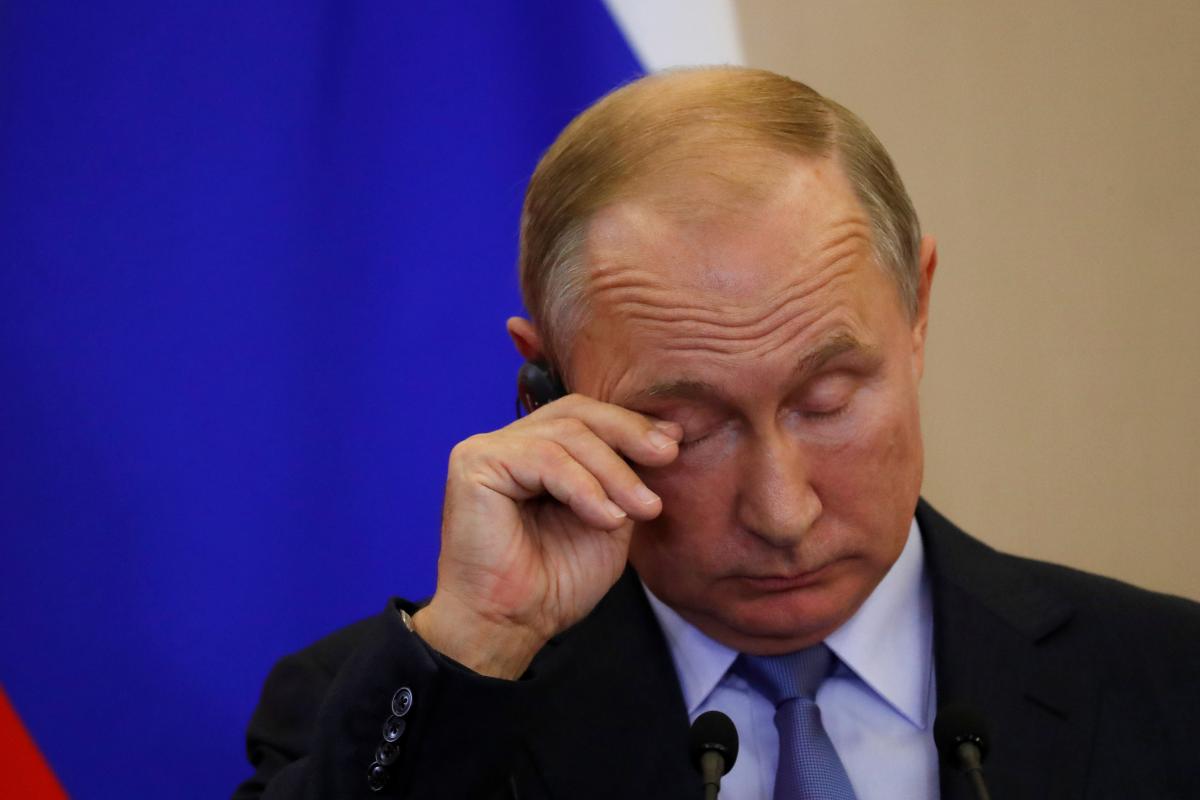
Vladimir Putin managed to avert an attack on Moscow with an eleventh-hour deal with his mutinous mercenary commander. But the uprising has pierced his aura of total political control over Russia unlike any other event in his nearly quarter century in power.

Insiders in Moscow were stunned that he’d ignored repeated warnings that Wagner chief Yevgeny Prigozhin was preparing to bring convoys of heavily armed fighters to the capital. Instead, the Russian leader allowed them to get so close authorities had to deploy tanks and and troops in defense. That’s fueled once-unthinkable doubts about his legendary command of the country.

US and European officials privately described the 24-hour uprising — advance indications of which their intelligence also picked up — as an unprecedented challenge to the 70-year-old president’s control. The murky deal that allowed Prigozhin and his men to leave without consequences is unlikely to mark the end of the tensions, they warned.


Seventeen months into a war that was supposed to last days, the turmoil has laid bare how the struggling invasion has shattered the appearance of stability that Putin has worked for years to create. A longtime protege who’d risen to prominence catering Kremlin events, Prigozhin mounted the first military challenge to a Russian president since 1993, a dark omen in a country where failed wars have repeatedly led to bloody ends for leaders who started them.

“This is the biggest public failure in Putin’s entire political career,” said Ekaterina Schulmann, a Russian political scientist currently based in Berlin. “Prigozhin’s mutiny shows how fragile the Russian political regime really is.”

Both Putin and Russia will likely come out of the crisis weaker, according to one confidential European intelligence assessment, sharing the view that it will be seen as his personal failing.

Ukraine, struggling to break through Russian lines with a counteroffensive that’s its best hope for retaking occupied lands, reveled in the chaos in Moscow. Kyiv said its troops pressed forward around Bakhmut, where Wagner’s forces had fought for months, as well as further south. “There is progress on all fronts,” Deputy Defense Minister Hanna Malyar said Saturday.

Putin’s perceived weakness may encourage those among Kyiv’s allies calling for an even stronger response to Russia’s aggression, particularly at the NATO summit in Vilnius next month where Ukraine is seeking stronger commitments from the alliance, according to one senior western official.

But others among Kyiv’s partners were more cautious. They worried that the upheaval may strengthen the hand of the hardliners who want to step up the war effort or make Putin more unpredictable as he cracks down further at home on those seen to be disloyal. US and European capitals told officials to keep their public statements cautious amid the uncertainty.

Putin worked the phones over the weekend to reassure his allies. Russia sent a diplomat to China, which has stood by Putin through the war, to explain “the events of June 24,” in the euphemism of the Foreign Ministry in Moscow. Beijing’s account of the meeting didn’t even mention the uprising.

To be sure, Putin has survived past threats to his authority, facing down public protests, economic crises and pressure from abroad. For the moment, there’s no sign of immediate challenge to his control. But as the Kremlin prepares for elections next year that will keep Putin in office until 2030, doubts about his political invincibility are growing.


Tensions within the Russian elite over the stumbling war effort have been on the rise for months, according to people familiar with the situation. Rival camps have emerged, they said, with some pushing for a far more aggressive pursuit of the campaign, while others hope for a quick settlement to limit the damage to Russia. Putin’s efforts to balance between the two are getting more difficult, the people said.

The Russian president had been confident that he could manage the ambitions of a man who once served him soup, according to people close to the leadership. Prigozhin’s combat-hardened troops could deliver on battlefields where Putin’s army failed and his expletive-laced public attacks on top commanders kept up the pressure on the underperforming military brass.

But as the war effort struggled, Prigozhin’s reach grew thanks to a flood of funding and support from the Kremlin. His seemingly straight talk in social media won over many ordinary Russians tired of official propaganda. More importantly, he tapped into a deep vein of support among influential hardliners in the security and government elite. They worried Putin and many other top officials weren’t committed enough to achieving victory in Ukraine and might settle for a cease-fire, the people said.

Prigozhin’s critiques never spread from social media into the state-run outlets that determine broader public views. “In society, there’s a desire for this to be over sooner,” said Denis Volkov, a sociologist at the independent Levada Center.

Inside the Kremlin, fears about Prigozhin’s expanding influence grew, but Putin dismissed the warnings that he was preparing to mount an armed challenge, the people said.

It was Putin’s belated effort to rein Prigozhin in that triggered the crisis, these people said, when officials earlier this month ordered his Wagner fighters to sign up with the Defense Ministry by July 1. Used to resolving conflicts man-to-man, Prigozhin took his fighters to demand an audience in the Kremlin.

“They wanted to disband Wagner,” Prigozhin said on Telegram Saturday.


Under the deal to end the uprising, brokered by Belarusian President Alexander Lukashenko, a close Russian ally, Putin agreed to personally guarantee the mercenary could leave the country and lifted all criminal charges from his fighters. Crowds cheered as Prigozhin left Rostov-on-Don late Saturday with his fighters, according to video from the scene.

“They had to make a deal,” said Sergei Markov, a political consultant with close ties to the government.

One senior Putin loyalist joked Sunday that he and his staff had been preparing to defend their offices in downtown Moscow a day before but were shocked that Prigozhin and his men were allowed to leave without consequences. That, he said, left him wondering whether the president really knows what he’s doing.

As armored vehicles were still leaving the streets of Moscow and other cities over the weekend, the Kremlin sought to appear calm. A government ministry recommended journalists be given the day off on Monday after the “emotional and tense” weekend.

But Putin seemed to address those like Prigozhin who questioned his commitment to the war effort in comments shown on state TV Sunday. He told the reporter in an interview recorded before the uprising that the invasion gets all his attention. “The day starts with it and ends with it,” he said. “Around the clock.”

USD/CNH: Further upside should not be ruled out – UOB

USD/CNH: Further upside should not be ruled out – UOB

Extra gains in USD/CNH could retest the 7.2500 level in the next few weeks, comment UOB Group’s Economist Lee Sue Ann and Markets Strategist Quek Ser Leang.

Key Quotes

24-hour view: We expected USD to trade with an upward bias last Friday. However, we were of the view that “a sustained rise above 7.2200 is unlikely.” USD then soared to 7.2285 before pulling back to end the day at 7.2149 (+0.30%). The pullback in overbought conditions suggests USD is unlikely advance much further. Today, USD is more likely to trade in a range of 7.1950/7.2300.

Next 1-3 weeks: Last Friday (23 Jun, spot at 7.1960), we noted that “upward momentum has improved a tad”, and we held the view that “there is room for USD to edge higher to 7.2300.”. USD then rose to 7.2285 and then pulled back. While momentum has not improved much, USD could rise further, albeit at a slower pace. The next level to watch above 7.2300 is 7.2500. On the downside, a breach of 7.1700 (‘strong support’ level previously at 7.1580) would indicate USD is not advancing further.

Forex Today: ECB’s annual Forum on Central Banking kicks off

Forex Today: ECB’s annual Forum on Central Banking kicks off

Markets remain relatively quiet to start the week as investors turn their attention to the European Central Bank’s annual Forum on Central Banking in Sintra that will kick off with ECB President Christine Lagarde’s speech at 1730 GMT. The US economic docket will feature the Federal Reserve Bank of Dallas’ Texas Manufacturing Survey. Germany’s IFO Institute will also release business sentiment data for June.

Over the weekend, tensions between the Wagner mercenary group and Russian President Vladimir Putin eased after the sides reached an agreement late Saturday. Meanwhile, “China needs to step up measures as soon as possible to bolster a faltering post-COVID recovery in the world’s second-largest economy,” said Ning Jizhe, deputy head of the economic committee of the Chinese People’s Political Consultative Conference (CPPCC). Nevertheless, S&P Global announced that it lowered its forecast for China’s Gross Domestic Product (GDP) growth to 5.2% from 5.5% this year. Following these developments, investors seem to have adopted a cautious stance early Monday, with US stock index futures trading modestly lower on the day.

The ECB’s forum is entitled “Macroeconomic stabilisation in a volatile inflation environment.” Many prominent central bankers, including FOMC Chairman Jerome Powell and Bank of England President Andrew Bailey, will be speaking at this event later in the week.

The US Dollar Index, which snapped a three-week losing streak on the back of a strong rebound seen in the second half of the week, stays in a consolidation phase below 103.00 and the 10-year US Treasury bond yield is down more than 1% below 3.7% in the European morning.

EUR/USD holds steady at around 1.0900 early Monday after having registered small losses last week.

GBP/USD came within a touching distance of 1.2700 during the Asian trading hours on Monday but managed to stage a rebound toward 1.2750.

The Summary of Opinions of Bank of Japan’s (BoJ) June policy meeting showed that policymakers thought that the BoJ must consider reviewing the Yield Curve Control strategy at an early stage, while maintaining easy monetary policy. USD/JPY stays under modest bearish pressure early Monday and trades in negative territory at around 143.00.

Gold price benefits from retreating US yields and rises toward $1,930 in the European session after having lost nearly 2% last week.

Bitcoin edged lower over the weekend but managed to hold comfortably above $30,000. Ethereum stays in a consolidation phase near $1,900 on Monday following last week’s rally that saw ETH/USD gain more than 10%.

Shopping Basket
Chat now!
1