oil_447

Oil prices steady as markets assess renewed US-Iran confrontation

Oil prices were little changed on Wednesday as investors evaluated the implications of renewed tensions between the United States and Iran, balancing weaker Chinese demand against continued drawdowns in global inventories.

In trading, Brent crude futures slipped 25 cents, or 0.23%, to $91.24 per barrel by 10:08 GMT, while US West Texas Intermediate crude fell 14 cents, or 0.16%, to $88.06 per barrel.

Prices had risen earlier in the session following the latest exchange of strikes between Washington and Tehran before retreating back toward previous closing levels.

Tamas Varga, analyst at PVM, said ongoing declines in global inventories continue to support prices, but weaker Chinese crude imports are limiting further upside, alongside continued restrictions on shipping activity through the Strait of Hormuz.

Varga added that it remains difficult to reconcile the current relative calm in oil markets with an ongoing conflict in one of the world’s most important energy-producing regions.

Geopolitical tensions restore the risk premium

US forces launched strikes against Iranian targets after President Donald Trump vowed on Tuesday to retaliate for the downing of a US Apache attack helicopter.

Priyanka Sachdeva, Senior Market Analyst at Phillip Nova, said the latest attacks have refocused traders on war-related risks and the potential for supply disruptions.

She added that the recent military exchanges have reintroduced a geopolitical risk premium into oil markets despite continuing diplomatic efforts.

Meanwhile, Tehran warned that it would resume hostilities if Israel continues its operations against the Iran-backed Hezbollah militia in Lebanon.

Israel’s refusal to end its campaign against Hezbollah has further complicated Trump’s efforts to transform the fragile ceasefire in the broader conflict involving the United States, Israel, and Iran into a lasting settlement.

Iran continues to disrupt much of the shipping traffic through the Strait of Hormuz, which normally carries around one-fifth of the world’s crude oil and liquefied natural gas supplies, while Washington maintains a blockade on Iranian ports.

US Energy Secretary said on Tuesday that vessel traffic in the Gulf and oil exports through the Strait are increasing, despite stalled negotiations between Washington and Tehran aimed at ending the conflict that has lasted for more than three months.

In the United States, data from the American Petroleum Institute, according to market sources, showed that US crude inventories declined for an eighth consecutive week last week. Gasoline inventories also fell, providing additional support for oil prices.

yen

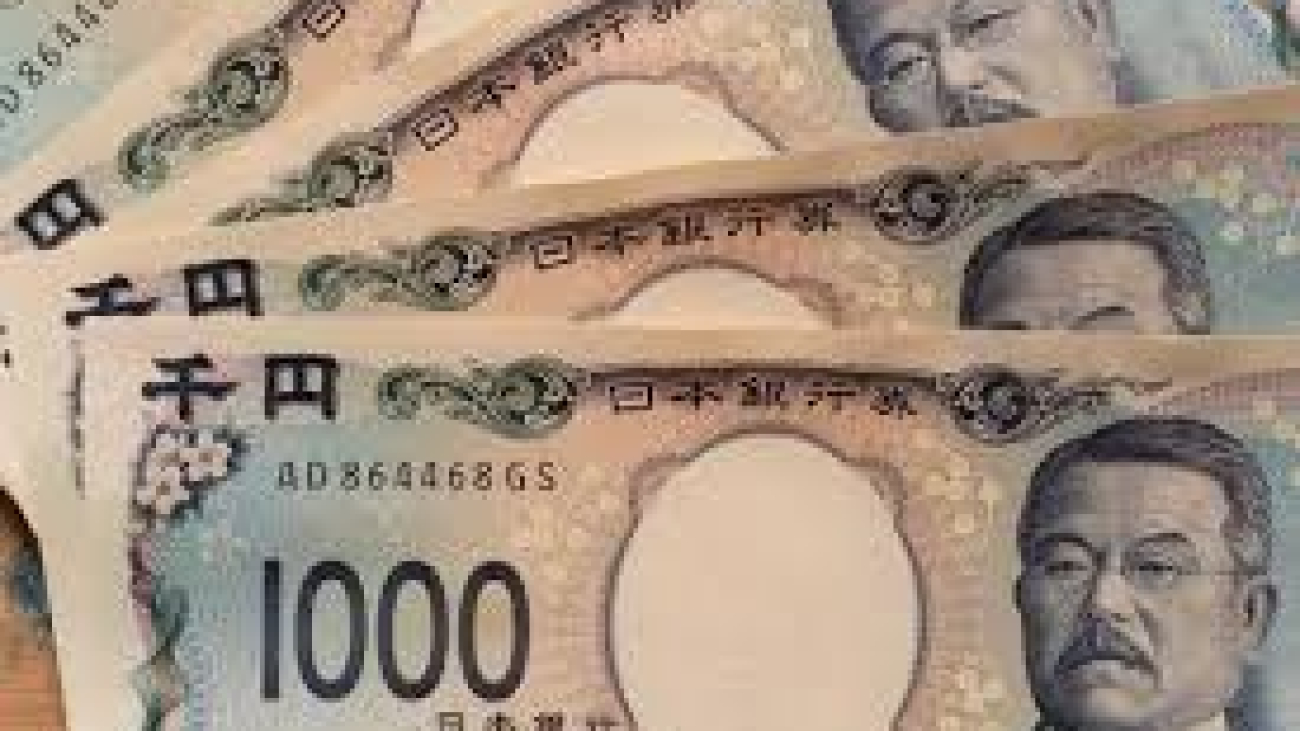
Yen remains near a six-week low as Middle East tensions escalate

The Japanese yen weakened in Asian trading on Wednesday against a basket of major and minor currencies, extending its losses for a second consecutive session against the US dollar and remaining close to a six-week low. Investors continued to favor the US dollar as a safe-haven asset amid escalating geopolitical tensions in the Middle East after the United States launched a new round of airstrikes against Iran.

Data released in Tokyo today showed producer prices rising to their highest level in three years, renewing inflationary pressure on policymakers at the Bank of Japan and strengthening expectations of an interest-rate hike next week.

Price action

• USD/JPY today: The US dollar rose about 0.1% against the yen to ¥160.43, from an opening level of ¥160.34, after touching an intraday low of ¥160.24.

• The yen ended Tuesday down 0.1% against the dollar, marking its lowest level in six weeks at ¥160.45.

US dollar

The US Dollar Index rose about 0.1% on Wednesday, resuming gains after a two-session pause and reflecting broader strength in the greenback against major global currencies.

The move was driven by renewed demand for the dollar as a safe haven following escalating geopolitical tensions in the Middle East. The United States launched a new wave of airstrikes against Iran, while Iran’s Revolutionary Guard responded with attacks targeting US facilities in Bahrain, Kuwait, and Jordan.

Oil prices

Oil prices climbed more than 1% on Wednesday, rebounding from multi-week lows as concerns resurfaced over a prolonged closure of the Strait of Hormuz following the exchange of military strikes between the United States and Iran.

Latest developments in the Iran conflict

• The United States launched new airstrikes against Iran following the downing of an Apache helicopter.

• Donald Trump said the response to the downing of the US helicopter should be “very strong.”

• US Central Command described the strikes on Iran as an act of “self-defense.”

• Iran announced retaliatory attacks targeting the US Fifth Fleet in Bahrain and American bases in Kuwait and Jordan.

• Despite the exchange of attacks, President Donald Trump and Vice President JD Vance reiterated that negotiations toward a comprehensive nuclear agreement remain ongoing.

• Iranian Parliament Speaker Mohammad Bagher Ghalibaf stated that Tehran prefers a diplomatic solution to the crisis but also possesses stronger alternatives if necessary.

The ¥160 intervention threshold

Japanese authorities continue to closely monitor currency market movements, particularly as the yen trades beyond the key ¥160-per-dollar threshold, a level widely viewed as a potential trigger for official intervention.

According to reports from Reuters, Tokyo intervened several times in late April and early May to halt the yen’s decline. At that time, the exchange rate reached ¥160.72 per dollar, the weakest level since July 2024.

Japanese officials have repeatedly warned against excessive currency volatility and emphasized that authorities stand ready to take decisive action against disorderly market movements.

Finance Minister Satsuki Katayama said the government is “prepared to take appropriate measures” if currency markets experience excessive or speculative moves.

Japanese interest rates

• Producer-price inflation in Japan accelerated to its highest level in three years, driven by higher energy costs linked to the Iran conflict.

• Market-implied odds of a 25-basis-point rate hike by the Bank of Japan at its June meeting increased from 75% to 95%.

• Investors are awaiting additional data on inflation, unemployment, and wage growth to further refine expectations for Japanese monetary policy.

• The Bank of Japan is scheduled to meet on June 15–16 to assess the appropriate policy stance for the world’s fourth-largest economy.

gold

Gold deepens losses to a three-month low ahead of US inflation data

Gold prices fell in European trading on Wednesday, extending losses for a fourth consecutive session and hitting their lowest level in three months, as heavy selling pressure continued across the metals market ahead of the release of the key US inflation report for May.

Those losses were partially limited by a weaker US dollar and lower oil prices following the cessation of military exchanges between the United States and Iran, which renewed hopes for a peace agreement that could bring an end to the conflict in the Middle East.

Price overview

• Gold prices today: Gold fell 2.3% to $4,161.56 per ounce, its lowest level since March 23, down from an opening level of $4,260.57. The session high also stood at $4,260.57.

• At Tuesday’s close, gold lost 1.6%, marking its third consecutive daily decline amid broad-based selling activity.

US dollar

The US Dollar Index slipped 0.15% on Wednesday, extending losses for a third straight session and reflecting continued weakness in the greenback against a basket of major and minor currencies.

A weaker dollar generally makes dollar-denominated gold more attractive to holders of other currencies.

In addition to ongoing profit-taking from the dollar’s recent two-month highs, the currency has come under pressure as optimism grows over the possibility of a final agreement that could end the conflict in the Middle East, particularly after military violations between the United States and Iran subsided.

Global oil prices

Oil prices declined more than 0.5% on Wednesday, extending losses for a second consecutive day after the US military announced the end of its defensive air operations in Iran, while Iran’s Revolutionary Guard halted attacks on US bases in Bahrain, Kuwait, and Jordan.

US interest rates

• Goldman Sachs expects the Federal Reserve to keep interest rates unchanged throughout 2026 and delay any rate cuts until 2027, citing stronger economic activity and continued job growth.

• According to the CME FedWatch Tool, markets are currently pricing a 69% probability of a Federal Reserve rate hike at the December meeting.

• Markets continue to price a 99% probability that rates will remain unchanged at the June meeting, while the probability of a 25-basis-point rate cut stands at just 1%.

• Investors are awaiting the release of the US May inflation report later today, which could lead to a significant repricing of interest-rate expectations.

Gold outlook

Market strategist Ilya Spivak said the primary driver behind gold’s weakness is the shift in Federal Reserve policy expectations, along with rising bond yields and a stronger dollar.

Spivak added that if gold breaks below the $4,100 level, the technical support structure could change dramatically, with $3,500 potentially becoming the next major support level by the end of the year.

SPDR Gold Trust

Holdings in the SPDR Gold Trust, the world’s largest gold-backed exchange-traded fund, declined by 3.422 metric tons on Tuesday, bringing total holdings down to 1,016.50 metric tons, the lowest level since October 9, 2025.

Euro_Dollar_L_2

Euro comes under pressure following new US strikes on Iran

The euro weakened in European trading on Wednesday against a basket of global currencies, resuming losses against the US dollar after a two-day recovery. The single currency moved lower once again toward a three-month low, pressured by escalating geopolitical tensions in the Middle East, particularly after the United States launched a new round of airstrikes against Iran.

Higher oil prices are renewing inflationary pressures on policymakers at the European Central Bank, strengthening expectations that the ECB could raise interest rates by 25 basis points at its June meeting, pending further economic data and confirmation of the inflation outlook.

Price action

• EUR/USD today: The euro fell about 0.1% against the dollar to $1.1532, compared with an opening level of $1.1543. The pair reached an intraday high of $1.1552.

• The euro ended Tuesday’s session up 0.1% against the dollar, marking its second consecutive daily gain as it continued recovering from a nearly three-month low of $1.1500.

US dollar

The US Dollar Index rose approximately 0.1% on Wednesday, resuming gains after a two-session pause and reflecting broader strength in the US currency against major global peers.

The advance was driven by renewed demand for the dollar as a safe-haven asset amid rising geopolitical tensions in the Middle East after the United States launched a fresh wave of airstrikes against Iran. Iran’s Revolutionary Guard subsequently announced attacks targeting the US Fifth Fleet in Bahrain and American military facilities in Kuwait and Jordan.

Oil prices

Global oil prices climbed more than 1% on Wednesday, rebounding from multi-week lows as concerns resurfaced over the continued closure of the Strait of Hormuz following the latest exchange of military strikes between the United States and Iran.

Latest developments in the Iran conflict

• The United States launched new airstrikes against Iran after an Apache helicopter was shot down.

• President Donald Trump said the response to the downing of the American helicopter should be “very strong.”

• US Central Command described the strikes on Iran as an act of “self-defense.”

• Iran announced retaliatory attacks against the US Fifth Fleet in Bahrain and military bases in Kuwait and Jordan.

• Despite the exchange of strikes, President Trump and Vice President JD Vance reiterated that negotiations toward a comprehensive nuclear agreement remain ongoing.

• Iranian Parliament Speaker Mohammad Bagher Ghalibaf stated that Tehran prefers a diplomatic solution to the crisis but also retains stronger alternatives if necessary.

European interest rates

• Money markets continue to price in a greater than 90% probability that the European Central Bank will raise interest rates by 25 basis points at its June meeting.

• Investors are awaiting additional eurozone data on inflation, employment, and wage growth to refine expectations regarding the ECB’s policy path.

• Sources speaking to Reuters indicated that an ECB rate hike in June remains highly likely, given inflation projections that are moving toward a less desirable scenario for policymakers.

jpy

USDJPY Gathers Positive Momentum

USDJPY continues to hold onto its recent gains during intraday trading, supported by a short-term ascending trendline. The pair is also benefiting from trading above its EMA50, which provides dynamic support and enhances the prospects for extending gains in the near term.


The positive outlook is supported by relative strength indicators, which have formed a bullish divergence and continue to generate positive signals, helping the pair maintain its bullish path.


silver

Silver Approaches a Break Below Our Target Level

Silver declined during recent intraday trading, approaching a break below $65.00 support level, which had previously been identified as a potential downside target within the current bearish trend. This performance reflects weak buying momentum and the market’s inability to build a recovery strong enough to reverse the negative trend.


Pressure on silver continues to increase as relative strength indicators generate bearish signals, while the price remains below its EMA50, which continues to act as dynamic resistance against any upward attempts. With the primary short-term downtrend still in control, the likelihood of further declines remains high, particularly if the price breaks and closes below current support.

gbp

GBPUSD Faces Bearish Pressure

GBPUSD remains under pressure during recent intraday trading as relative strength indicators begin to form a negative divergence after reaching heavily overbought levels. The emergence of bearish signals suggests weakening upward momentum and increasing downside risks.


This comes amid the dominance of the short-term bearish trend, while the pair continues to trade below its EMA50, which is limiting the chances of a sustained recovery in the near term and maintaining negative pressure on price action.

EUR_USD_L_4

EURUSD Continues to Decline Under Bearish Pressure

The EURUSD pair fell during its latest intraday trading, continuing to move along a short-term bearish trendline, reflecting the ongoing dominance of selling pressure on the pair, while recovery attempts continue to lack sufficient momentum to reverse the current trend.


Technical pressure is increasing as the pair remains below its EMA50, which continues to act as dynamic resistance against any upward attempts. At the same time, relative strength indicators support the bearish outlook after forming a negative divergence and beginning to generate bearish signals, reinforcing the likelihood of further declines and additional losses in the near term.

oil5

Crude Oil Attempts to Ease Oversold Conditions

Crude Oil rose in recent intraday trading after holding above the key $86.00 support level, which was an expected target in our previous analysis. This stability provided positive momentum, allowing prices to recover part of their recent losses and ease oversold conditions, particularly as relative strength indicators began to generate bullish signals.


However, the price continues to face negative pressure while trading below its EMA50, limiting the chances of a sustained recovery in the near term. The short-term corrective bearish trend also remains dominant, keeping downside risks in place.

Gold_General_L_2

Gold Reaches Our Final Downside Target

Gold extended its losses during recent intraday trading, reaching $4,200 support that represented our expected final downside target within the current bearish trend. This decline reflects continued selling pressure and the dominance of sellers over price action.


The negative technical outlook remains intact as gold continues to trade below its EMA50, which is acting as dynamic resistance and reinforcing the short-term downtrend. Relative strength indicators also continue to generate negative signals, suggesting that selling pressure remains active and reducing the likelihood of a strong rebound in the near term.