GBPUSD declined during recent intraday trading after retesting the key resistance level at 1.3455, accompanied by reaching the EMA50 resistance, exposing the pair to renewed negative pressure. This pressure intensified as relative strength indicators began showing a negative crossover after reaching slightly lower overbought levels compared to recent price peaks, signaling the possible formation of a negative divergence that may increase bearish pressure on the pair.
EURUSD Extends Its Cautious Gains
The EURUSD pair strengthened its gains during its recent intraday trading, supported by the stability of 1.1590 support, which provided positive momentum that was reinforced by incoming positive signals from the relative strength indicators after reaching heavily oversold levels, attempting to recover part of the previous losses.
This comes amid the dominance of the short-term bearish corrective trend, while negative and dynamic pressure continues due to trading below the EMA50, reducing the chances of a sustainable recovery for the pair in the near term.
Crude Oil Price Ends Hopes of a Rebound
Crude oil price remains under sharp losses during recent intraday trading, affected by breaking below a short-term bullish channel that had previously controlled trading movements, increasing selling pressure and a shift in momentum in favor of the bearish trend. The EMA50 also continues to apply dynamic negative pressure as the price trades below it, strengthening the chances of further decline in the coming period.
Meanwhile, relative strength indicators continue to send negative signals despite reaching oversold levels, reflecting weak buying momentum and continued seller dominance, with the possibility of limited fluctuations that are unlikely to change the current bearish outlook.
Gold Price Recovers Part of Its Previous Losses
Gold price continued to rise during recent intraday trading, supported by the stability of the key $4,500 support level, which boosted positive momentum. Additional support came from positive signals by the relative strength indicators after forming a positive divergence.
Despite these gains, negative pressure remains due to trading below the EMA50, reinforcing the short-term bearish trend. Relative strength indicators have also reached extremely overbought levels, signaling a possible weakening in bullish momentum.
NZD/USD edges higher as safe-haven Dollar demand, steady PBoC rates limit gains
NZD/USD trades around 0.5850 on Wednesday at the time of writing, up 0.22% on the day. Despite the moderate gains, the New Zealand Dollar (NZD) upside remains limited as the US Dollar (USD) continues to benefit from defensive demand driven by geopolitical risks.
Market sentiment remains fragile following recent comments from US President Donald Trump regarding a potential resumption of military action against Iran. According to market reports, Washington could consider renewed strikes in the coming days if discussions related to the regional conflict fail to progress. Meanwhile, Iranian officials stated that any escalation would be met with an immediate response.
The strength of the US Dollar is also supported by changing monetary policy expectations. Investors continue to adjust their outlook following signs of more persistent inflation pressures in the United States (US), particularly due to energy-related risks. Markets are now pricing in a chance close to 40% of a 25-basis-point rate hike by year-end, according to the CME FedWatch tool.
At the same time, comments from policymakers continue to reinforce a cautious tone. The Federal Reserve (Fed) maintains a data-dependent approach, with several officials indicating that the current policy stance remains sufficiently restrictive to contain inflation pressures while preserving labor market stability.
Investors are also monitoring developments in China, New Zealand’s largest trading partner. The People’s Bank of China (PBOC) left its Loan Prime Rates unchanged for a twelfth consecutive month, keeping the one-year rate at 3% and the five-year rate at 3.5%. The decision suggests that Chinese authorities currently prefer a wait-and-see approach despite persistent signs of economic weakness.
US Dollar: Bond sell-off supports stronger Dollar
ING strategists Francesco Pesole, Frantisek Taborsky and Chris Turner highlight that higher real US yields and a bond market sell-off are reinforcing Dollar strength. They argue the move is driven by inflation concerns, making it supportive for USD. ING sees upside risks for the Dollar, with DXY potentially breaking above 99.50, especially if FOMC minutes hint at further hawkishness.
Higher yields reinforce Dollar support
“Higher real US yields are back to driving dollar strength. Yesterday, we sensed that market patience for any improvement in the Gulf situation was thin, and the latest headlines did not dent the bearish bond momentum.
“It’s worth reiterating that, unlike in 2025, this sell-off is being driven by inflation concerns rather than fiscal fears, making it unambiguously USD positive. When we argued in February that the dollar’s decline was cyclical rather than structural, we constructed a USD safe haven gauge combining the dollar’s correlation with US equities and with 10-year Treasury yields. That measure now points to the strongest safe haven appeal for the dollar since late 2022, and the second-highest reading in our dataset back to 2005.”
“Another event to watch today is the release of April’s FOMC minutes, which will shed more light on the reasoning for the three dissenters who preferred a less dovish message. Any hints that went as far as adding rate hikes to the discussion could underpin the recent hawkish repricing and add support for the dollar.”
“As a result, upside risks to USD remain dominant unless genuinely constructive news emerges from the Gulf. Reports yesterday that NATO is considering intervention in the Strait of Hormuz to support vessel passage failed to lift risk assets in any meaningful way. A break above 99.50 in DXY remains a realistic outcome even in the absence of renewed military escalation.”
“The ongoing bond market sell-off is offering ideal conditions for dollar strengthening. Markets have likely raised the bar for jumping into new de-escalation trades, and we think risks remain on the upside for USD today. In the UK, inflation surprised to the downside, lowering the probability of a BoE hike.”
Dash Price Forecast: Dash rally builds on regulatory scrutiny and Zcash integration hopes
Dash (DASH) is up 12% on Wednesday, extending Monday’s 5% gain toward the $50 milestone. Retail interest is growing, driven by regulatory concerns over the upcoming Digital Assets Market Clarity Act (CLARITY) and the Zcash Orchard Shielded Pool integration, which enhances infrastructure flexibility.
Dash integrates the Zcash shielded pool to clear the CLARITY Act barrier
Dash announced the integration of Zcash Orchard Shielded Pool on February 19, which, according to its official roadmap, will be completed in May. The roadmap lacks an official date, but the retail anticipation is surging as the month comes to an end. The integration will rebrand Dash’s infrastructure from the CoinJoin (mixing) method to the zk-SNARKs (shielded) method to potentially achieve compliance with the CLARITY Act, which fueled the recent Zcash rally earlier this month.
On the derivatives side, DASH futures Open Interest (OI) is up nearly 19% over the last 24 hours to $72.95 million, indicating a positional buildup driven by retail interest for leveraged exposure. The total liquidations of $185,120 in the same period were led by $64,100 in DASH long positions, indicating a bearish wipeout.
Typically, such decisive liquidations led to an imbalance in more active long positions, but the long-to-short ratio of 1.0016 reaffirms almost equal positions on both sides.
Will DASH cross above $50?
Dash trades around $47.10 at press time on Wednesday, extending a bullish bias as price holds above the 50-period Exponential Moving Average (EMA) on the 4-hour chart near $43.56 and the 200-period EMA around $41.85. The climb through the 23.6% and 38.2% Fibonacci Retracements at roughly $43.54 and $46.01, measured over the downswing from $58.09 to $39.84, reinforces a constructive structure.
The 50% retracement level at $48.10 serves as the immediate resistance, guarding the higher barriers at the 61.8% and 78.6% retracement levels at $50.29 and $53.58, respectively.
Momentum is growing bullish on the 4-hour chart, as the Relative Strength Index (RSI) above 71 suggests early overbought conditions, even as the Moving Average Convergence Divergence (MACD) extends a steady positive trend above its signal line, hinting that upside momentum could be stretched in the near term.
On the downside, initial support emerges at the 38.2% Fibonacci retracement around $46.01, ahead of the 23.6% level near $43.54, close to the EMA 50 at $43.56.
Gold hangs near late March lows as hawkish Fed bets and geopolitics underpin USD
Gold remains on the back foot through the Asian session; and currently trades around the $4,470 region, just above its lowest level since March 30, touched earlier this Wednesday amid a bullish US Dollar. Investors remain skeptical about a potential US-Iran peace deal. This, along with inflation fears and expectations for a more hawkish US Federal Reserve, helps the USD to preserve its recent strong gains near a six-week high and weighs on the commodity.
From a technical perspective, acceptance below the $4,500 psychological mark could be seen as a fresh trigger for bearish traders and backs the case for further losses. Moreover, momentum indicators are soft, with the Relative Strength Index (RSI) hovering in the mid-30s and the Moving Average Convergence Divergence (MACD) in negative territory.
This hints that upside traction is fading even as price remains underpinned by long-term trend support near the 200-day Simple Moving Average (SMA) at roughly $4,363.73. A decisive break below this moving average would expose a deeper correction, while holding above it would allow XAU/USD to consolidate its broader uptrend despite the presently weak momentum backdrop.
EUR/USD stabilizes near 1.1600 ahead of FOMC Minutes
EUR/USD struggles to stage a rebound following Tuesday’s decline and holds steady at around 1.1600 on Wednesday. The pair faces headwinds as the US Dollar holds firm due to the combined effect of the risk-aversion market theme and rising United States Treasury Yields, courtesy of the US-Iran uncertainty. FOMC Minutes is next of note for the major.
EUR/USD trades lower at around 1.1596 as of writing. The pair demonstrates a bearish near-term tone as spot holds below the 20-day exponential moving average (EMA) at 1.1684. The pair’s failure to stay above this dynamic barrier suggests rallies are still being sold amid a Double Top breakdown below 1.1660.
The Relative Strength Index (RSI) near 40 hints at lingering downside momentum rather than an imminent reversal.
On the topside, the 20-day EMA at 1.1684 is the first resistance that bulls would need to reclaim to ease immediate selling pressure and open the door to a deeper corrective bounce towards the May 13 high at 1.1742.
Looking down, the pair could slide further toward 1.1500 if it fails to hold the immediate cushion at 1.1592
During the press time, S&P 500 futures extend their Tuesday losses to near 7,340, reflecting a risk-off market mood. The US Dollar Index (DXY), which tracks the Greenback’s value against six major currencies, trades close to its six-week high at 99.43.
Market sentiment turns risk-off amid fears that the war in the Middle East could resume if Iran doesn’t reach a deal with the US. On Tuesday, US President Donald Trump threatened to resume attacks on Iran in “two or three days” as part of the push for a deal to end the war, after he said he had just called off a US attack, Bloomberg reported.
Meanwhile, 10-year US Treasury Yields have posted a fresh over-a-year high at 4.91% as traders have priced out the possibility of interest rate cuts by the Federal Reserve (Fed) this year.
Going forward, investors will focus on the Federal Open Market Committee (FOMC) minutes of the April policy meeting and the Eurozone/US preliminary private sector PMI data for May.
Sterling moves in a positive zone before UK inflation data
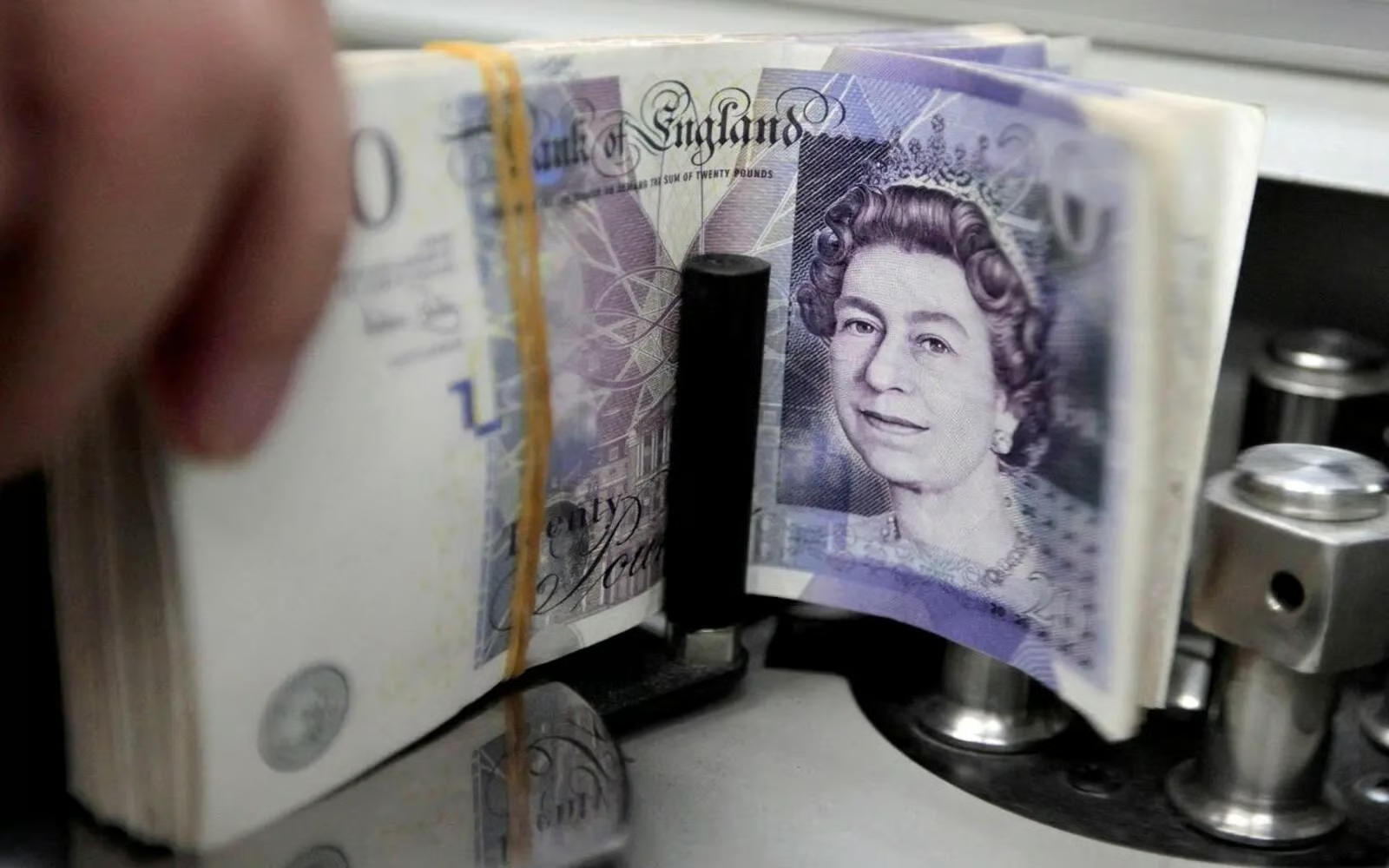
The British pound rose slightly in European trading on Wednesday against a basket of global currencies, moving into positive territory against the US dollar as the greenback slowed following recent White House comments regarding progress in peace talks between the United States and Iran.
Prominent British media outlets reported that Prime Minister Keir Starmer has decided to step down from office in response to mounting pressure and a broad internal revolt led by lawmakers from the ruling Labour Party.
Investors are awaiting key UK inflation data for April later today in order to reassess expectations surrounding British interest rates.
Price overview
• GBP/USD today: The pound rose by less than 0.1% against the dollar to $1.3407, from the day’s opening level at $1.3396, after touching an intraday low of $1.3378.
• Sterling lost 0.3% against the dollar on Tuesday, resuming losses that had paused the previous session during a rebound from a six-week low of $1.3303.
The US dollar
The US Dollar Index slipped by less than 0.1% on Wednesday, pulling back from a six-week high of 99.43 points, reflecting slower momentum in the US currency against a basket of major global currencies.
Beyond profit-taking activity, the dollar weakened after recent comments from President Donald Trump and Vice President JD Vance regarding developments in peace negotiations between the United States and Iran.
Trump stated that he would “end the war with Iran very quickly,” expressing confidence in resolving the conflict, while Vice President JD Vance said the United States and Iran had made “very significant progress” in their ongoing negotiations.
Later today, markets await the release of the minutes from the Federal Reserve’s latest monetary policy meeting, which are expected to provide stronger clues regarding the possibility of further US interest rate hikes to combat rising inflationary pressures.
Political developments
Major British media sources reported that Prime Minister Keir Starmer has decided to resign in response to intense political pressure and a widening rebellion led by members of the ruling Labour Party.
An official statement or press conference from Starmer outlining the resignation details and transition timetable is expected within the coming hours.
The shift came after Labour lawmakers reportedly rejected his latest attempts to remain in power and blamed him fully for the party’s historic and severe defeat in the recent local elections.
British interest rates
• The International Monetary Fund said on Monday that the Bank of England does not need to raise interest rates and may instead need to cut them.
• Market pricing for a Bank of England rate hike at the June meeting remains steady around 45%.
UK inflation data
To reassess current interest rate expectations, investors are awaiting the release of Britain’s key inflation figures for April later today, with the data expected to significantly influence the Bank of England’s monetary policy outlook.
At 06:00 GMT, headline consumer price index data is expected to show annual inflation rising 3.0% in April, down from 3.3% in March, while core CPI is expected to slow to 2.6% annually from 3.1% previously.
Outlook for the British pound
At Economies.com, we expect that if UK inflation data comes in below market expectations, the probability of a June Bank of England rate hike will decline, placing additional downward pressure on the British pound.