EUR_USD_L_4

Euro rebounds on hopes for an end to the Iranian war

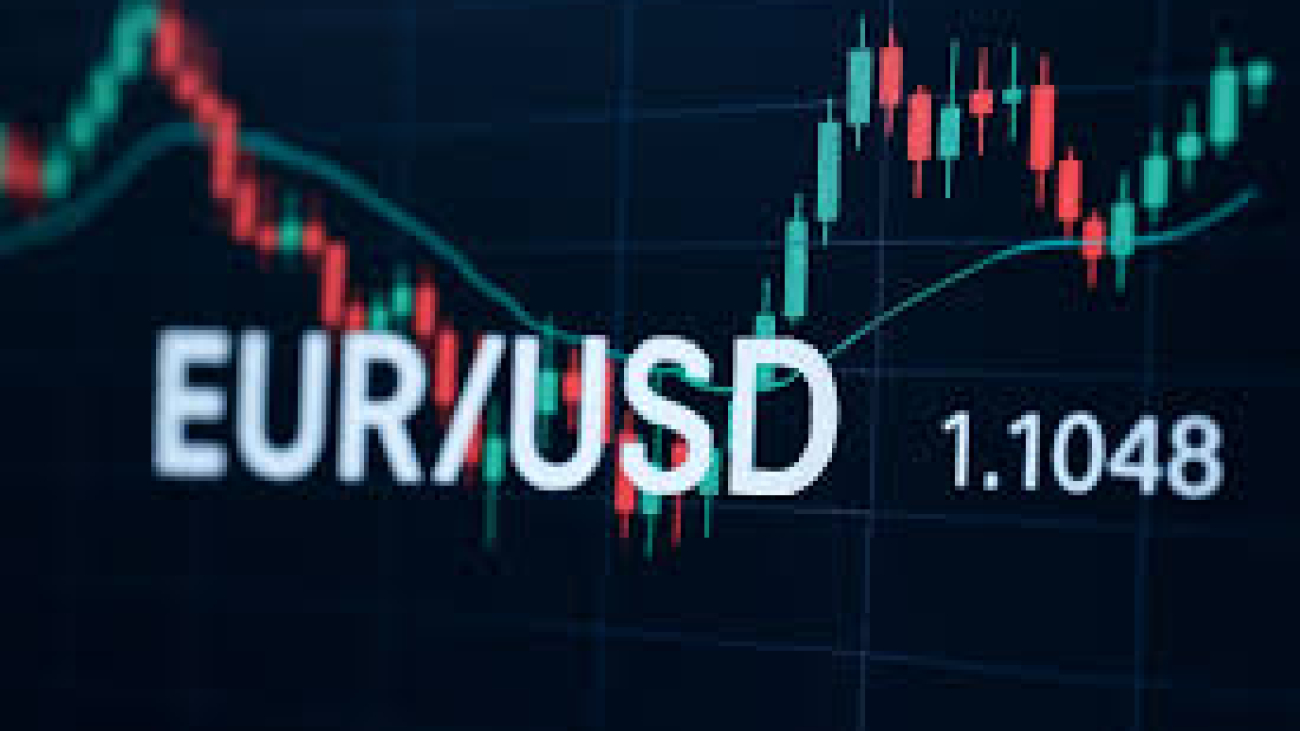
The euro rose in European trading on Friday against a basket of global currencies, in an attempt to recover after three consecutive days of losses against the US dollar, benefiting from a slowdown in the US currency after Donald Trump announced a new delay in targeting Iranian energy facilities, which renewed hopes of reaching a ceasefire agreement in the Middle East.

Following more hawkish comments from the President of the European Central Bank this week, expectations for at least one interest rate hike this year have increased. To reassess those expectations, markets are awaiting further data on developments in the eurozone economy.

Price Overview

Euro exchange rate today: the euro rose 0.15% against the dollar to $1.1542, up from the session opening level of $1.1526, after hitting a low of $1.1524.

The euro ended Thursday’s session down 0.3% against the dollar, marking its third consecutive daily loss, after Iran denied entering negotiations with the United States to end the war in the Middle East.

US dollar

The dollar index fell 0.1% on Friday, heading toward its first loss in the past four sessions, reflecting a slowdown in the US currency against a basket of global currencies.

This comes as traders assess the likelihood of a halt in the war in the Middle East, amid intensified diplomatic efforts aimed at containing the escalation, with cautious anticipation of any signals that could pave the way for a de-escalation agreement or ceasefire.

Iran war developments

US President Donald Trump announced an extension of the delay in strikes on Iranian energy facilities for an additional 10 days, through April 6, noting that negotiations to end the war are progressing “very well.”

US Special Envoy Steve Witkoff confirmed that a 15-point peace proposal had been presented to Tehran via Pakistan, which is acting as a mediator alongside Egypt and Turkey.

The proposal includes a ceasefire and sanctions relief in exchange for Iran abandoning its nuclear program and reopening the Strait of Hormuz.

Iranian sources described the US proposal as “unfair and one-sided,” while state media expressed doubts about Washington’s seriousness, stressing that attacks will not stop without real guarantees.

The Wall Street Journal reported on Thursday that the Pentagon is also considering sending up to 10,000 additional ground troops to the Middle East.

Global oil prices

Global oil prices rose slightly on Friday, extending gains for the third consecutive day, as markets await further evidence of engagement between the United States and Iran in negotiations to de-escalate military tensions and reopen the Strait of Hormuz.

Carol Kong, a currency strategist at Commonwealth Bank of Australia, said the conflict does not appear likely to end soon, adding that the US dollar remains the strongest currency as long as the conflict continues.

Kong added that if expectations of a prolonged conflict prove correct, oil prices are likely to continue rising, which would further strengthen the dollar at the expense of net energy importers such as the Japanese yen and the euro.

European interest rates

ECB President Christine Lagarde said on Wednesday that the bank is ready to raise interest rates even if the expected rise in inflation is temporary.

Following those comments, money markets increased pricing for a 25-basis-point rate hike by the European Central Bank at the April meeting from 25% to 35%.

Sources told Reuters that the European Central Bank is likely to begin discussing interest rate hikes next month.

To reassess these expectations, investors are awaiting further economic data from the eurozone on inflation, unemployment, and wage levels.


OILBRENT_02_L

Brent rallies 6% and recoups recent losses

Oil prices rose during Thursday’s trading, recovering losses from the previous session, as investors remained concerned about a prolonged conflict in the Middle East and continued supply disruptions through the Strait of Hormuz.


Iran’s foreign minister said the country is reviewing a US proposal to end the war but does not intend to engage in direct talks, while US President Donald Trump responded with a sharp escalation in rhetoric, urging Tehran to be serious about reaching an agreement and warning that he could decide at any time to abandon negotiations.


US President Donald Trump also announced on Thursday that he would extend the pause on attacks against Iranian oil facilities by an additional 10 days, through April 6, at the request of the Iranian government.


In trading, Brent crude futures for May delivery rose 5.7%, or $5.79, to settle at $108.01 per barrel.


US Nymex crude futures for May delivery also rose 4.61%, or $4.16, to close at $94.48 per barrel.

Untitled

The USDJPY gathers bullish momentum

The USDJPY pair witnessed a slight pullback during recent intraday trading after facing resistance at the key level of 159.75. This decline appears to be an attempt to regain positive momentum that could help the price break above this resistance. At the same time, the pair is working to ease its overbought conditions on the relative strength indicators, with emerging negative signals.


Despite this, the main short-term trend remains bullish, supported by movement along an upward trendline and continued trading above EMA50, which acts as dynamic support and reinforces the upward bias in the near term.

silver

Silver prices gain temporary support but remain bearish

Silver price posted slight gains during recent intraday trading, supported by holding above the current support level at $67.70. This provided temporary positive momentum, helping the price reduce part of its losses. The move also coincided with attempts to ease oversold conditions on the relative strength indicators, supported by emerging positive signals.


However, the main short-term trend remains bearish, with moving alongside a minor bearish trendline, besides trading below EMA50 maintains negative pressure, which may limit the rise in the near term.

Untitled

GBPUSD price shows more negative signals

The GBPUSD pair is fluctuating on its last intraday levels, to ease its previously oversold conditions on the relative strength indicators, as they entered exaggerated overbought levels compared to the price action, indicating that this positive momentum may fade quickly. At the same time, the pair remains under pressure as it trades below EMA50, which acts as dynamic resistance and reinforces the dominance of the short-term bearish trend, especially with its trading alongside a trendline that supports this path.

images

EURUSD price prepares to break key support

The EURUSD pair is experiencing volatile intraday trading, currently holding above the support level at 1.1530, which provides temporary positive momentum as it attempts to ease oversold conditions on the relative strength indicators. Despite emerging positive signals from them, they are not clearly reflected in price action, indicating that bearish pressure still dominates, especially after the pair broke below EMA50.


Additionally, the pair is influenced by a negative technical formation on the intraday timeframe (double top pattern), which increases the likelihoods of continued sideways movement or a bearish bias in the near term.

oil

Crude oil prices struggle with negative pressure

Crude oil prices are showing volatile intraday movements after facing resistance at EMA50, which has acted as a barrier to further gains. The price has since pulled back as it attempts to regain positive momentum that could help overcome this pressure, while also trying to ease overbought conditions on the relative strength indicators, where negative signals are starting to appear.


Despite these pressures, the main short-term trend remains bullish, besides moving along a supportive upward trendline, keeping the chances of a renewed rise intact in the coming period.

Untitled

Gold price attempts to ease oversold conditions

Gold price recorded a slight increase during recent intraday trading, benefiting from being above the support level at $4,350, which had been previously identified as an initial target. This has provided the price with positive momentum, allowing it to recover part of its losses while attempting to ease oversold conditions on the relative strength indicators, supported by emerging positive signals.


Despite this temporary improvement, the main short-term trend remains bearish, as the price continues to face negative pressure from trading below EMA50, limiting the chances of a full recovery in the near term.

Untitled

Schlumberger price shakes off negative pressures

Schlumberger N.V. (SLB) stock price extended its gains in its latest intraday trading, as the stock successfully overcame the negative pressure from its 50-day SMA with its recent advance. This comes amid the dominance of a primary bullish trend in the short term, with price moving alongside a supporting trendline, in addition to positive signals emerging from the Stochastic indicator, despite reaching excessively overbought levels relative to price action.


Therefore we expect the stock price to rise during its upcoming trading sessions, as long as it remains stable above the support level at $47.35, targeting the key resistance level at $52.45.


Today’s price forecast: Bullish

oil_447

Oil climbs as traders assess Middle East ceasefire odds

Oil prices rose more than 3% on Thursday, recovering losses from the previous session, as concerns grew over the continuation of the conflict in the Middle East and the potential for further supply disruptions.

Brent crude futures rose by $3.51, or 3.4%, to $105.73 per barrel, while US West Texas Intermediate crude increased by $3.04, or 3.4%, to $94.36 per barrel.

Both benchmarks had fallen more than 2% in Wednesday’s session.

Iran’s foreign minister said the country is reviewing a US proposal to end the war but does not intend to enter talks to end the conflict.

Meanwhile, US President Donald Trump warned that the United States would launch more severe strikes against Iran if it does not accept that it has been “militarily defeated,” according to remarks from the White House.

Reports indicated that the US Department of Defense is planning to deploy thousands of airborne troops to the Gulf region, giving Washington additional options for a ground offensive, alongside Marine forces that have already been sent.

Analysts said that continued military escalation, including troop deployments and new strikes, along with restrictions on oil tanker movements, continues to weigh on global energy markets.

Trump’s 15-point plan

The US plan, which was sent via Pakistan, includes provisions such as removing Iran’s stockpile of highly enriched uranium, halting enrichment, limiting its ballistic missile program, and reducing support for its regional allies, according to informed Israeli sources.

The conflict has led to a near halt in shipments through the Strait of Hormuz, which accounts for about one-fifth of global oil and liquefied natural gas supplies, in what the International Energy Agency described as the largest disruption to oil supply ever.

Japan has requested the agency to coordinate the release of additional oil reserves in anticipation of a prolonged crisis.

Additional pressure on supplies

Concerns over global supply have intensified as around 40% of Russia’s oil export capacity has been halted due to Ukrainian drone attacks and tanker detentions.

A Turkish oil tanker was also attacked by a naval drone near the Bosphorus Strait in Istanbul, causing an explosion.

In Iraq, oil production declined sharply as storage facilities filled up and exports were disrupted.

On the other hand, data showed that US crude oil inventories increased by 6.9 million barrels to 456.2 million barrels in the week ending March 20, the highest level since June 2024 and above analysts’ expectations.