
Bitcoin Price Forecast: BTC stalemate soon coming to an end

Bitcoin Price Forecast: BTC stalemate soon coming to an end

Bitcoin (BTC) price has been consolidating between $94,000 and $100,000 for almost two weeks. Amid this consolidation, investor sentiment remains indecisive, with US spot Exchange Traded Funds (ETFs) recording a $580.2 million net outflow last week, signaling institutional demand weakness. At the same time, CryptoQuant data suggests continued accumulation through the 30DMA exchange inflow/outflow ratio.

Bitcoin price consolidates while institutional demand weakens

The Glassnode report last week states, “Bitcoin price has been wildly volatile and ultimately flat over the last few weeks. It has traded up to a high of $105,000, down to a low of $93,000, and ended the week where it started.”

The report further explains that this unstable price action resulted in a substantial loss of $520 million (the largest local capitulation event) when priced in USD. However, when assessing the severity of the drawdown through a normalized measure, the sell-off remains broadly in line with other local corrections.

Looking down on the average Short-Term Holder cost basis chart below, the report highlights that it has historically acted as a strong support level during a bull market uptrend. This pricing model currently trades at around $92,200 and is a key region to hold for the market to avoid further downside.
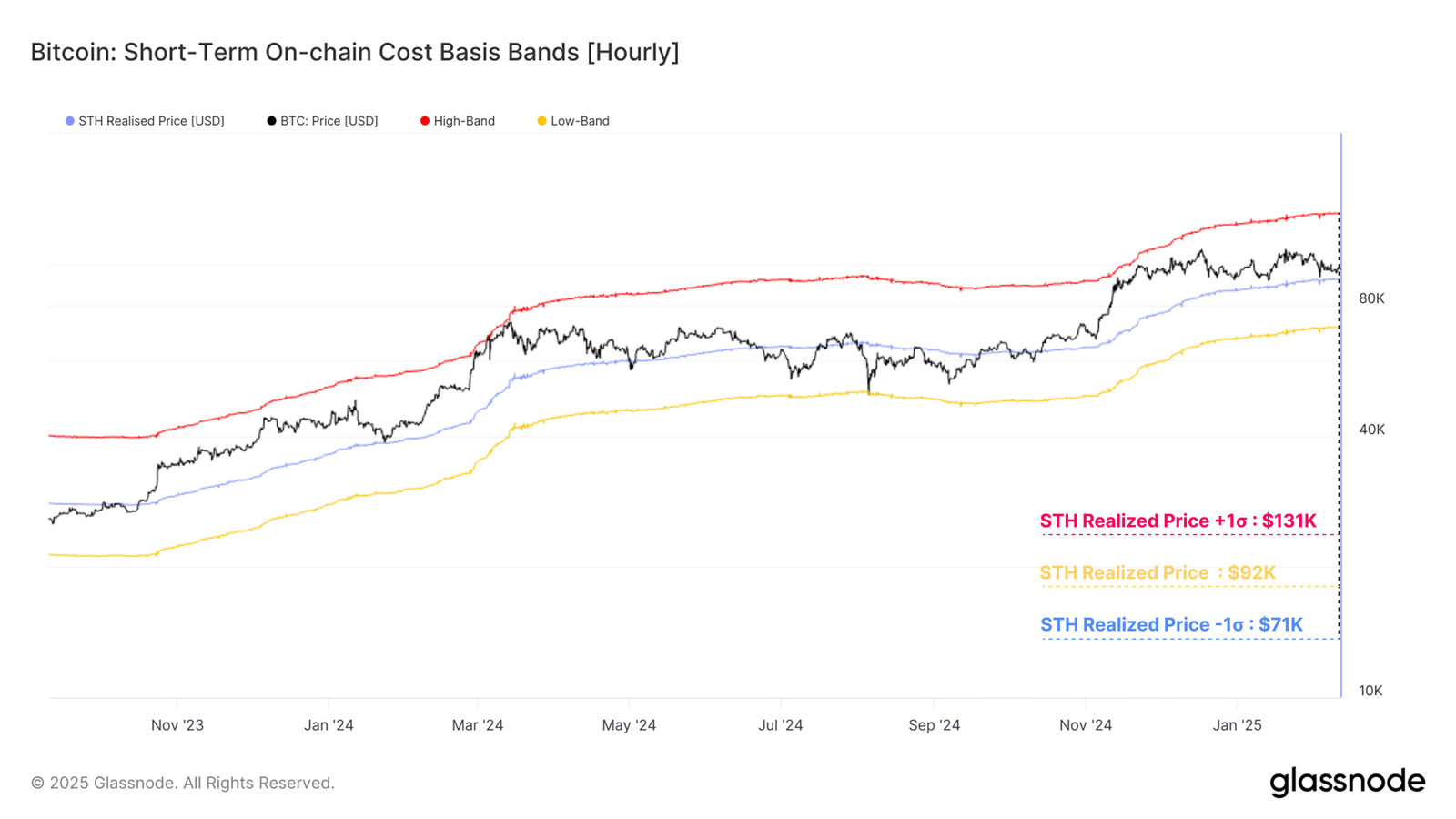
Bitcoin: Short-term on-chain cost basis bands (Hourly) chart. Source: Glassnode

In an exclusive interview with Hyblock, analysts told FXStreet, “Bitcoin remains in a consolidation phase, with two key trading zones to watch: $99,600 – $99,900 (upside) and $95,600 – $95,900 (downside). A move toward $94,00 could create a strong buy opportunity if confluence signals align, while resistance remains at $108,000.”

Diving down into Bitcoin’s institutional demand, it shows signs of weakness. According to Coinglass, Bitcoin spot ETF data recorded net outflows of $580.2 million last week compared to $203.8 million inflows in the previous one. If the magnitude of the outflow continues and intensifies, the Bitcoin price could see further corrections.

Total Bitcoin spot ETF net inflow chart. Source: Coinglass

Some optimistic signs for Bitcoin 

CryptoQuant data shows that despite Bitcoin trading within a broad range between $90,000 and $105,000, there is clear evidence of continued accumulation, as indicated by the 30DMA exchange inflow/outflow ratio.

The chart below shows that the ratio currently reads 0.98, dropping below 1. It suggests that outflows dominate inflows, which many professional investors view as bullish. Generally, the lower the ratio, the stronger the underlying demand appears.

Bitcoin Exchange Inflow/Outflow ratio 30DMA chart. Source: CryptoQuant

Other optimistic signs for Bitcoin include US President Trump’s nomination of Brian Quintenz last week to be the next Chairman of the Commodity Futures Trading Commission (CFTC). Quintenz expressed his gratitude for the nomination on X. Known for his pro-crypto stance, he added that “…the agency is also well poised to ensure the USA leads the world in blockchain technology and innovation.”

Bitcoin Price Forecast: Two weeks of price consolidation

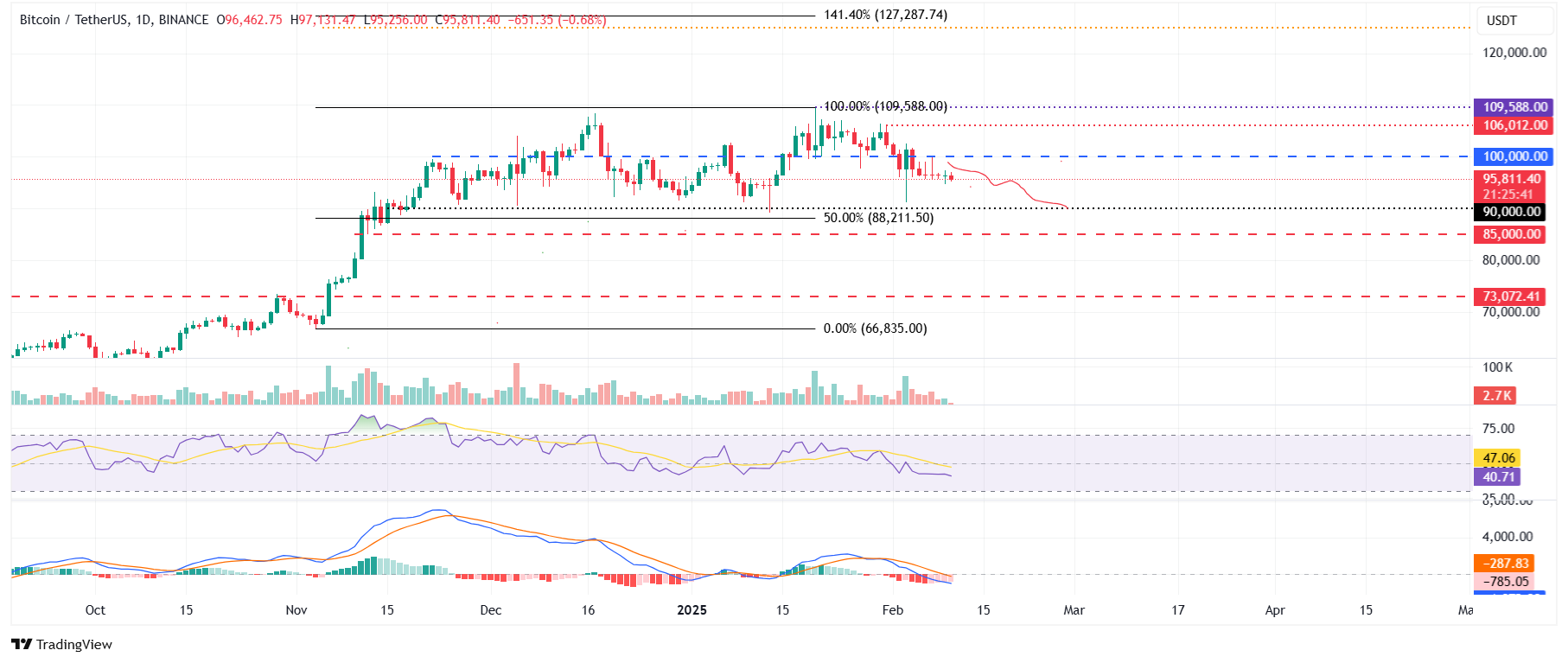
Bitcoin price broke below the $100,000 support level on February 4 and has been consolidating between $94,000 and $100,000 since then. At the time of writing on Monday, BTC hovers around $96,100.

If BTC breaks and closes below the lower boundary of the consolidating range of $94,000, it could extend the decline to test its psychologically important level of $90,000.

The Relative Strength Index (RSI) on the daily chart reads 43, consolidating after being rejected at its neutral level of 50 last week and indicating slightly bearish momentum. Moreover, the Moving Average Convergence Divergence (MACD) showed a bearish crossover and red histogram bars, hinting at further correction.
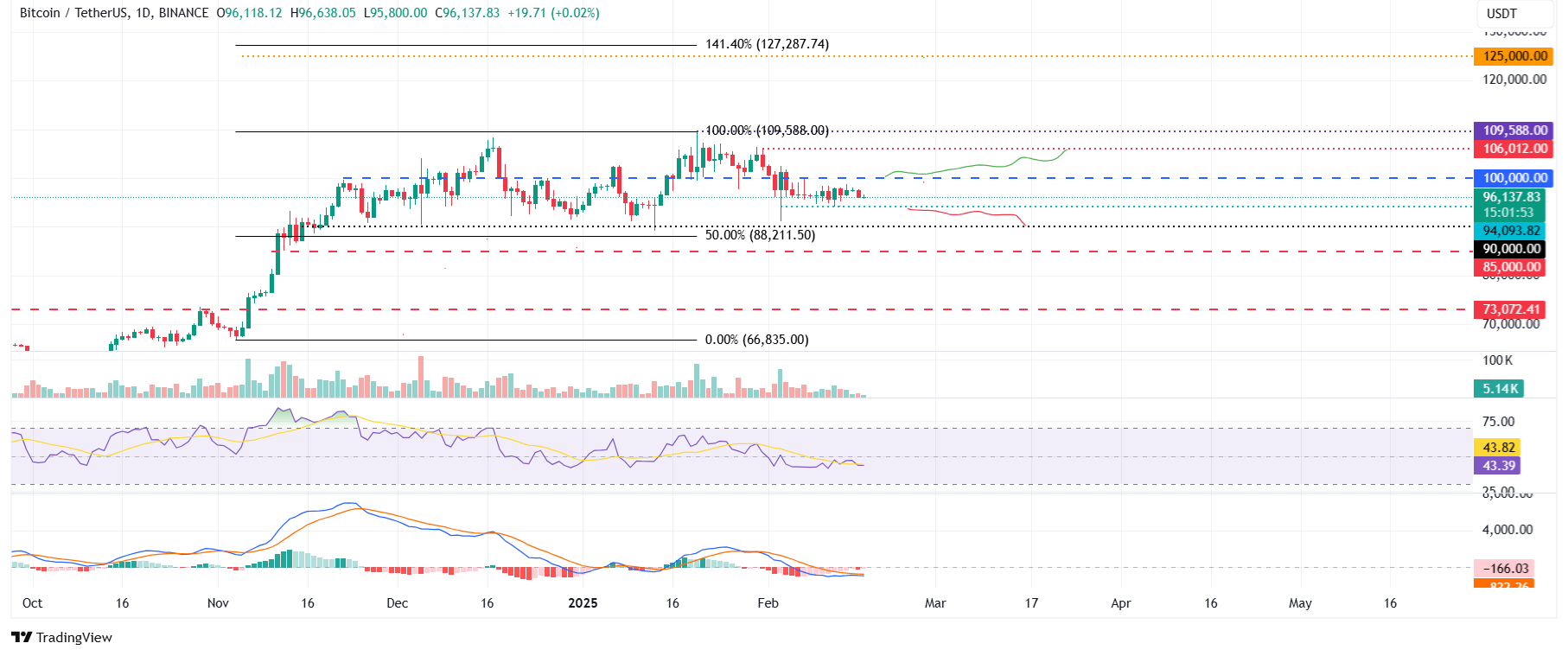
BTC/USDT daily chart

However, if BTC recovers and breaks above the upper boundary of the consolidating range of $100,000, it would extend the recovery to retest its January 31 high of $106,012.

WTI trades cautiously above $70 as investors await Russia-Ukraine peace talks

WTI trades cautiously above $70 as investors await Russia-Ukraine peace talks

West Texas Intermediate (WTI), futures on NYMEX, trades with caution above the seven-week low of $70.15 in Monday’s European session. The Oil price trades cautiously as investors seek more development in the Russia-Ukraine peace talks.

Last week, United States (US) President Donald Trump confirmed that both leaders of Russia and Ukraine have agreed to peace negotiations.

Donald Trump said that he had a “lengthy and highly productive” conversation with Russian leader Vladimir Putin, and he agreed to start peace negotiations with Ukraine. Also, he ordered his team to begin peace talks.

Over the weekend, Trump also said that he is expected to discuss ending the three-year-long war in Ukraine in the coming days.

Analysts at Philip Nova expect, “If negotiations lead to a resolution, more Russian barrels would enter global supplies, which could significantly impact oil prices negatively.”

Meanwhile, reports that OPEC is planning to delay its planned monthly supply increases, which were expected to begin in April, have offered a temporary relief to the Oil price, Bloomberg reported.

The decision is contrary to President Donald Trump’s urge to Saudi Arabia to increase Oil output by two million barrels last month.

Pound Sterling steadies ahead of UK labor market and inflation data

Pound Sterling steadies ahead of UK labor market and inflation data

The Pound Sterling (GBP) trades steady against its major peers at the start of the week as investors turn cautious ahead of the United Kingdom (UK) employment data for three months ending December, which will be released on Tuesday.

Investors will pay close attention to the UK labor market data to know whether business owners are still upset with Chancellor of the Exchequer Rachel Reeves’s announcement of raising employers’ contribution to National Insurance (NI). In the Autumn Budget, Reeves increased employers’ social security contributions by 1.2% to 15%, which will come into effect from April.

Since the announcement, the private sector’s hiring pace has sharply slowed, indicating dissatisfaction among business owners. In the three months ending November, the economy added 35K workers, significantly lower than the 173K addition seen in the August-October period.

Also, Bank of England (BoE) Governor Andrew Bailey said in an interview with BusinessLive in European trading hours that he sees some softness in the labor market and is confident that the disinflation trend is still on. Bailey said, “the economic context is not really supporting the view that we will get more persistence in inflation.”

The UK Office for National Statistics (ONS) is expected to show that the ILO Unemployment Rate accelerated to 4.5% in December from the former reading of 4.4%.

Market participants will also focus on the UK Average Earnings data, which is a key measure of wage growth that has been a major contributor to high inflation in the service sector. Average Earnings (Including and Excluding bonuses) are expected to accelerate at a robust pace to 5.9% compared to the prior release of 5.6%. Hot wage growth measures would boost fears of price pressures remaining stubborn. In February’s monetary policy statement, the BoE stated that inflationary pressures could accelerate before resuming its journey to the 2% target due to higher energy prices.

Therefore, soft employment conditions and high inflation expectations due to strong wage growth could stem the risks of stagflation.

Later this week, investors will also focus on the UK Consumer Price Index (CPI) and Retail Sales data for January, which will be released on Wednesday and Friday, respectively.

Technical Analysis: Pound Sterling strives to break above key level of 1.2620

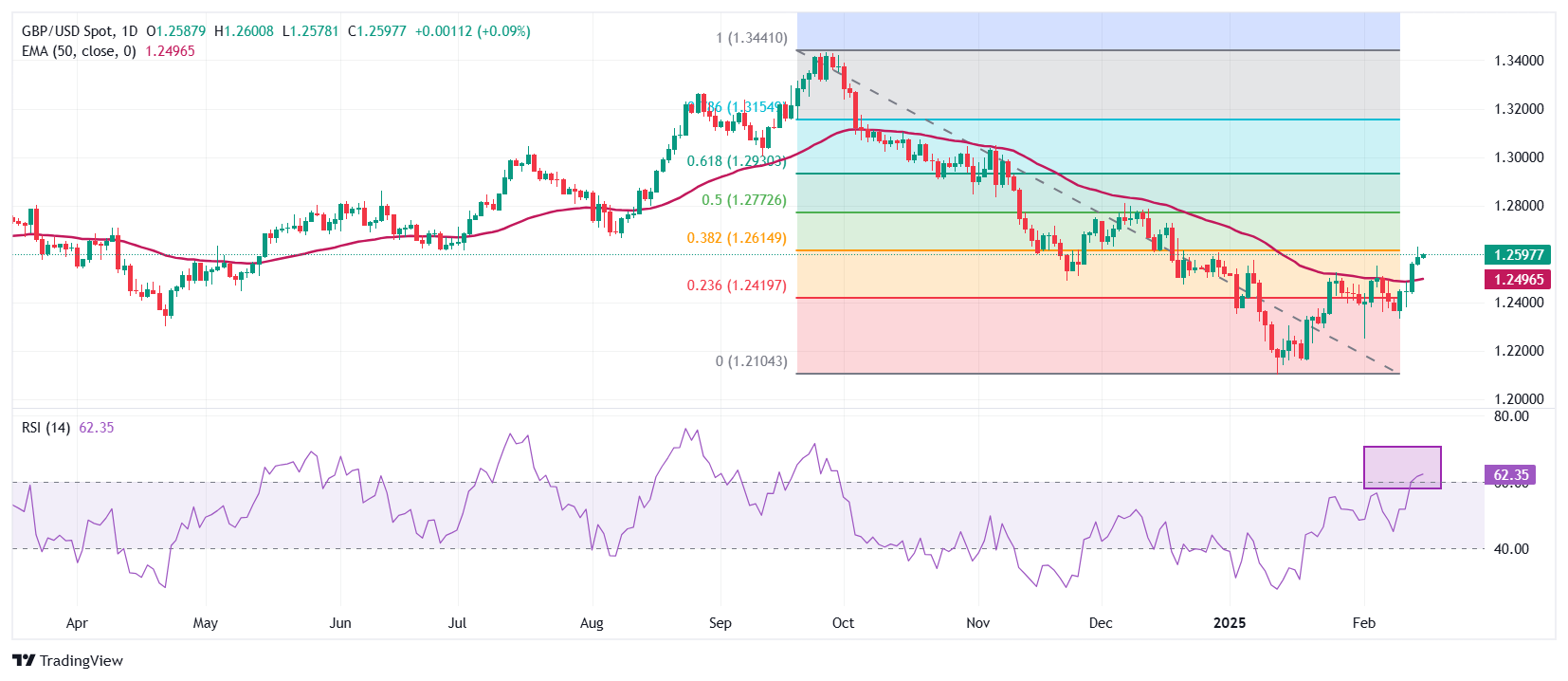
The Pound Sterling trades inside Friday’s trading range but aims to break decisively above the 38.2% Fibonacci retracement around 1.2620. The near-term outlook of the GBP/USD pair has turned bullish as it holds above the 50-day Exponential Moving Average (EMA), which stands at around 1.2500.

The 14-day Relative Strength Index (RSI) advances above 60.00. A bullish momentum would activate if the RSI (14) sustains above that level.

Looking down, the February 3 low of 1.2250 will act as a key support zone for the pair. On the upside, the 50% Fibonacci retracement at 1.2767 will act as a key resistance zone.

EUR/USD stays defensive below 1.0500 amid light trading

EUR/USD stays defensive below 1.0500 amid light trading

EUR/USD struggles to capitalize on recent upside and oscillates in a narrow range below 1.0500 in European trading on Monday. However, the pair’s downside remains cushioned by persistent US Dollar weakness and an upbeat mood. Focus shifts to central bank talks.

The Relative Strength Index (RSI) indicator on the 4-hour chart declines from the 80 mark it touched on Friday but holds above 60, suggesting that EUR/USD remains bullish after correcting from overbought levels.

On the downside, 1.0440 (Fibonacci 61.8% retracement of the latest downtrend) aligns as first support before 1.0400 (100-period Simple Moving Average (SMA), Fibonacci 50% retracement) and 1.0360 (200-period SMA).

Looking north, first resistance could be spotted at 1.0500-1.0510 (round level, Fibonacci 78.6% retracement) ahead of 1.0550 (static level) and 1.0600 (static level, beginning point of the downtrend).

EUR/USD trades in a relatively tight channel below 1.0500 to begin the new week. Financial markets in the US will remain closed in observance of the Presidents’ Day holiday on Monday, limiting the volatility in the second half of the day.

The persistent selling pressure surrounding the US Dollar helped EUR/USD post strong gains in the previous week. Easing fears over an aggressive trade policy by US President Donald Trump helped the market mood improve and weighed on the USD. Ahead of the weekend, the data from the US showed that Retail Sales in the US declined by 0.9% on a monthly basis in January, not allowing the USD to stage a rebound.

The economic calendar will not feature any high-tier data releases in the first half of the week. On Wednesday, the Federal Reserve (Fed) will publish the minutes of its January policy meeting.

In the meantime, market participants will pay close attention to developments surrounding the Trump administration’s trade policy with the EU.

European Trade Commissioner Maros Sefcovic will travel to Washington on Monday to meet with US counterparts to discuss US tariffs.

Bitcoin Price Forecast: BTC stalemate soon coming to an end

Cryptocurrencies Price Prediction: Dogecoin, Bitcoin & Ripple – Asian Wrap 10 February

Dogecoin Price Forecast: DOGE whale transactions fell by more than 70%; bearish move ahead

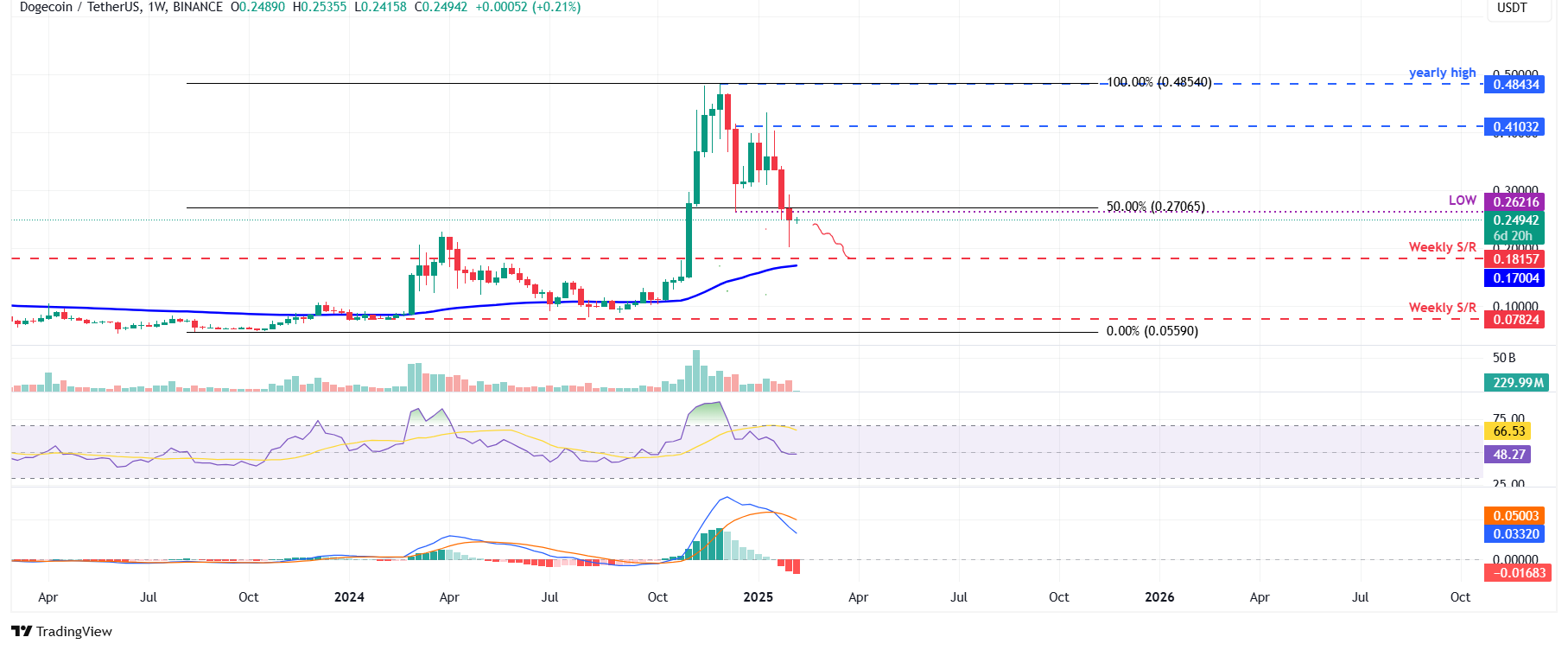
Dogecoin (DOGE) continues to trade down around $0.24 after falling more than 7% in the previous week. The technical outlook suggests a further correction as DOGE’s momentum indicators reflect bearish divergences. Santiment data show that DOGE whale transactions are falling, indicating signs of weakness.

Top 3 Price Prediction Bitcoin, Ethereum, Ripple: BTC, ETH and XRP are headed for further drops

Bitcoin’s (BTC) price continues to edge down, trading below $96,000 on Monday after declining the previous week. Ethereum (ETH) and Ripple (XRP) prices followed BTC’s footsteps, declined more than 7% the previous week, and traded below their key support level, hinting at further correction.

XRP sees gains ahead of Depository Receipts launch, Brad Garlinghouse set to join White House crypto council

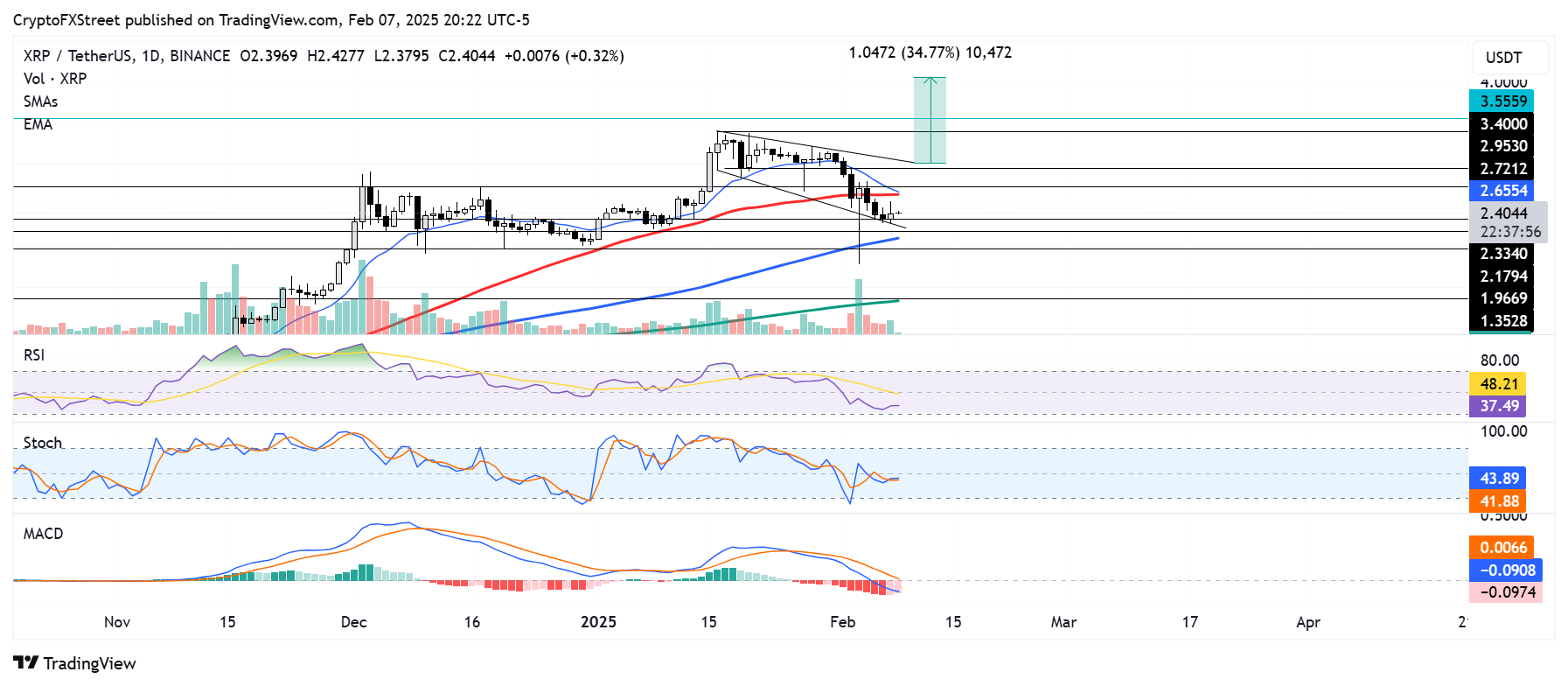
Ripple’s XRP gained 4% on Friday following reports that investment firms Receipts Depository Corp and Digital Wealth Partners plan to launch XRP Depository Receipts in the United States. The receipts will offer investors exposure to XRP’s price, similar to exchange-traded funds (ETFs).

gold-bar-and-dollar-bills-42586628_XtraLarge

Gold rally continues, USD holds ground as markets assess Trump tariff talks

The US Dollar stays resilient against its major rivals on Monday as markets assess the latest headlines surrounding US President Donald Trump’s tariff policy. The economic calendar will not feature any high-impact data releases. Later in the day, European Central Bank (ECB) President Christine Lagarde will deliver the Annual Report at the European Parliament.

Following the mixed labor market data, the USD Index closed modestly higher on Friday. Nonfarm Payrolls (NFP) in the US rose by 143,000 in January, missing the market expectation for an increase of 170,000. On a positive note, November’s increase of 256,000 got revised higher to 307,000 and the Unemployment Rate edged lower to 4.1% from 4% in December.

Meanwhile, President Trump said on Friday that he will announce “reciprocal tariffs” on many countries this Tuesday or Wednesday. Over the weekend, Trump also noted that he plans to impose 25% tariffs on all steel and aluminum imports into the US. The USD Index opened with a small bullish gap and was last seen trading marginally higher on the day, slightly above 108.20. Wall Street’s main indexes suffered large losses on Friday. Early Monday, US stock index futures rise between 0.1% and 0.4%. Federal Reserve (Fed) Chairman Jerome Powell will testify before the Senate Banking Committee on Tuesday and before the House Financial Services Committee on Wednesday.

Despite losing more than 0.5% on Friday, EUR/USD ended the previous week in positive territory. The pair holds steady above 1.0300 in the early European morning.

AUD/USD started the week under bearish pressure on Trump’s announcement of imposing new 25% tariffs on all steel and aluminum imports into the US and declined below 0.6250. In response, Australian Trade Minister Don Farrell said Monday that Australian steel and aluminum is creating “thousands of good-paying American jobs” adding that they are key for their shared defense interests. The pair regains its traction to begin the European session and trades flat on the day above 0.6270.

GBP/USD registered losses on Thursday and Friday but managed to post weekly gains. The pair holds its ground early Monday and fluctuates above 1.2400.

USD/JPY declined sharply and lost more than 2% in the previous week. The pair stages a rebound toward 152.00 early Monday. During a news conference with Japanese Prime Minister Shigeru Ishiba on Friday, Trump said that he intends to “work out” the US’ trade deficit with Japan, which currently sits around $65 billion per year.

Gold preserves its bullish momentum to begin the new week, after having gained more than 2% last week. XAU/USD was last seen trading at a new record-high near $2,890.

USDINR

USD/INR retreats from record high amid likely RBI intervention

The Indian Rupee (INR) recovers some ground on Monday after reachign a fresh all-time low in early trading. USD sales by state-run banks, though most likely on behalf of the Reserve Bank of India (RBI), might help limit the local currency’s losses.

On the other hand, sustained foreign portfolio investors (FPI) outflows, the concern about an economic slowdown in India, and the uncertainty of US President Donald Trump’s tariff policies contribute to the INR’s downside. In the absence of the top-tier economic data releases from the US and India on Monday, the USD/INR pair will be influenced by the USD.

USD/INR maintains a constructive view, overbought RSI warrants caution for bulls

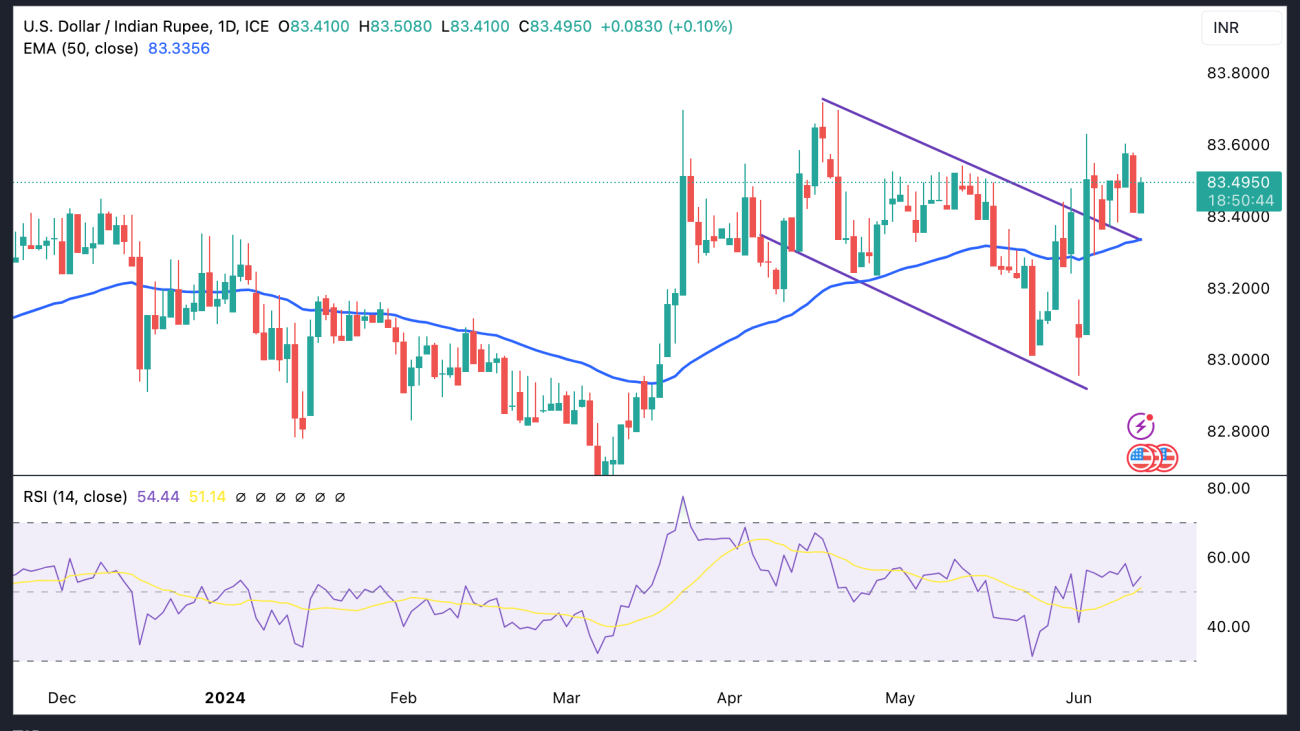
The Indian Rupee trades on a positive note on the day. The USD/INR pair paints a positive picture on the daily chart, characterized by the price holding above the key 100-day Exponential Moving Average (EMA).

Nonetheless, the overbought 14-day Relative Strength Index (RSI) beyond the 70.00 mark warrants caution for bullish traders, potentially signaling a temporary weakness or further consolidation in the near term.

An all-time high of 87.62 acts as an immediate resistance level for USD/INR. Bullish candlesticks and buying pressure above this level might attract bulls aiming for the 88.00 psychological level.

On the other hand, the first downside target to watch is the 87.05-87.00 regions, representing the low of February 5 and the round mark. Consistent trading below the mentioned level, the bears could take control and drag the pair down to 86.51, the low of February 3.


Gold ripple stacked on a bright background of business graphics close-up. Ripple crypto-currency. Anonymous. Virtual currency

France’s Barrot: EU will respond to US President Trump’s latest tariffs announcement

French Foreign Minister Jean-Noel Barrot said on Monday, the European Union (EU) will respond to US President Donald Trump’s latest tariffs announcement.

Key quotes

“France and its European partners should not hesitate to defend their interests in the face of the US tariff threats.”

“The European Commission will decide on the sectors that will be affected by a response.”

“It (the Commission) is ready to push the trigger when the time has come. Now this time has come. It is in no-one’s interest to start a commercial war with the European Union.”

Market reaction

At the time of writing, EUR/USD sheds 0.10% on the day to trade at around 1.0315.

EUR/GBP tumbles to near 0.8300 as traders brace for ECB’s Lagarde speech

EUR/GBP tumbles to near 0.8300 as traders brace for ECB’s Lagarde speech

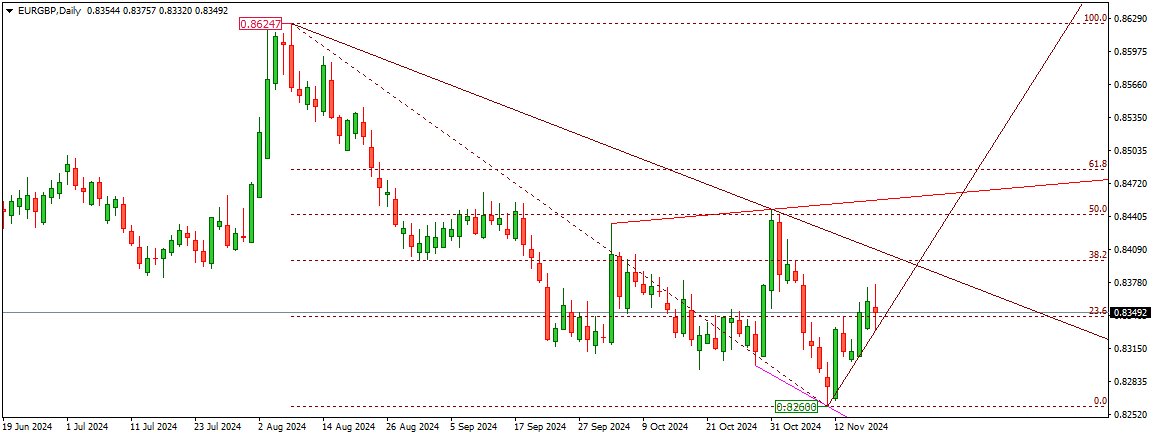
The EUR/GBP cross trades in negative territory near 0.8315 during the early European session on Monday. The concerns about the threat of possible US tariffs on the Eurozone undermine the Euro (EUR). Later on Wednesday, investors await the European Central Bank’s (ECB) President Christine Lagarde speech for fresh impetus.

US President Donald Trump said on Friday that there would be an announcement later in the week about reciprocal tariffs on all countries that tax imports from the US, but he did not specify which countries would be targeted or if there would be any exemptions. Late Sunday, German Chancellor Olaf Scholz stated that the European Union (EU) can act “in an hour” if Trump slaps threatened tariffs on the bloc. Any signs of an escalating trade war between the US and the Eurozone could drag the shared currency lower.

Additionally, the rising expectation that the ECB will further cut the interest rates contributes to the EUR’s downside. The ECB policymaker, Boris Vujcic, said that anticipation for three more rate reductions this year are reasonable, even though it will take until the start of the second quarter to know with more certainty if they’ll materialize.

The Bank of England (BoE) Governor Andrew Bailey guided a cautious and gradual rate-cut approach, and he warned that inflation could temporarily rise to near 3.7% in the third quarter of the year before falling back to the 2% path due to higher energy prices.

EUR/USD stays defensive below 1.0500 amid light trading

EUR/USD rebounds while US Trump’s tariffs threats keep it on tenterhooks

EUR/USD recovers above 1.0300 in Monday’s European session after a weak opening around 1.0280. The major currency opened on a weak note as investors rushed to the safe-haven fleet on renewed United States (US) President Donald Trump’s tariff fears. The US Dollar Index (DXY), which tracks the Greenback’s value against six major currencies, gives up some of its intraday gains but is still 0.15% higher, around 108.25.

Over the weekend, President Trump threatened to raise 25% tariffs on imports of steel and aluminum, as well as reciprocal tariffs on those nations where he saw unfair trade practices. The biggest casualty of Trump’s decision of 25% tariffs on metals is expected to be Canada, the largest exporter of aluminum to the US. The pressure of higher levies on metals will also be borne by Mexico, Brazil, Vietnam, and South Korea, leading exporters to the US.

The impact of reciprocal tariffs is expected to be lethal on the Eurozone, which charges 10% tariffs on automobile imports from the US and pays 2.5% import duty for domestic autos supplied to it. Such a scenario will be unfavorable for the Euro (EUR), which is already vulnerable due to growing economic contraction risks and inflation undershooting the European Central Bank’s (ECB) target of 2%.

Last week, analysts at Macquarie warned that a US tariff bomb would likely find “fertile ground in the EU,” escalating unresolved issues rapidly into trade tensions, given that “Europe is target-rich”.

The ECB is about to continue reducing interest rates, and a few policymakers have also warned that the central bank might need to go below the neutral rate as the Eurozone economy is not strong enough to support inflation at 2%.

Economists at the ECB have predicted that the bank’s so-called neutral rate will probably be between 1.75% and 2.25%.

In Monday’s session, investors will focus on ECB President Christine Lagarde’s speech at the European Parliament at 14:00 GMT. Lagarde will participate in the plenary debate on ECB Annual Report 2023.

Technical Analysis: EUR/USD struggles around 1.0300

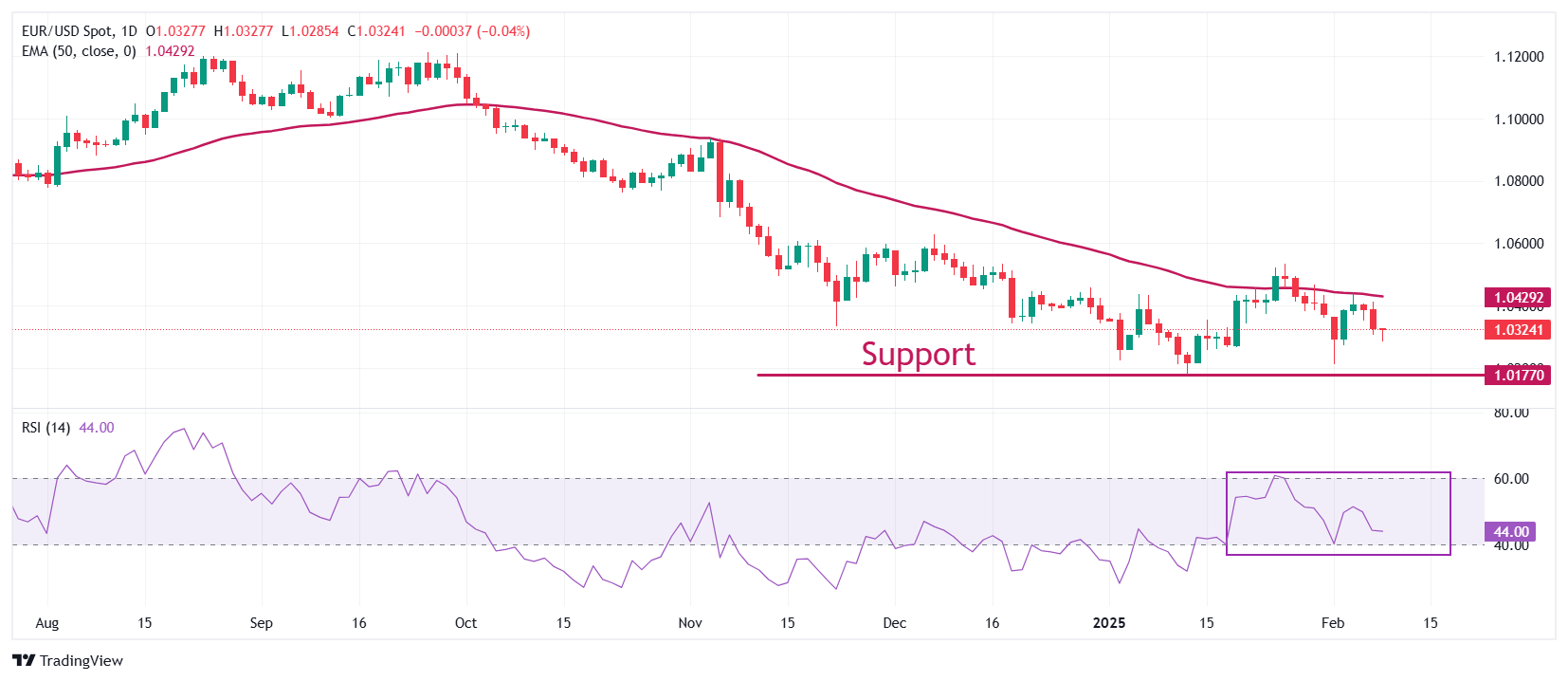
EUR/USD stays under pressure at around 1.0300 in European trading hours on Monday. The major currency pair declined after facing pressure near the 50-day Exponential Moving Average (EMA) around 1.0436 last week, suggesting that the overall trend is still bearish.

The 14-day Relative Strength Index (RSI) oscillates in the 40.00-60.00 range, indicating a short-term sideways trend.

Looking down, the January 13 low of 1.0177 and the round-level support of 1.0100 will act as major support zones for the pair. Conversely, the psychological resistance of 1.0500 will be the key barrier for the Euro bulls.