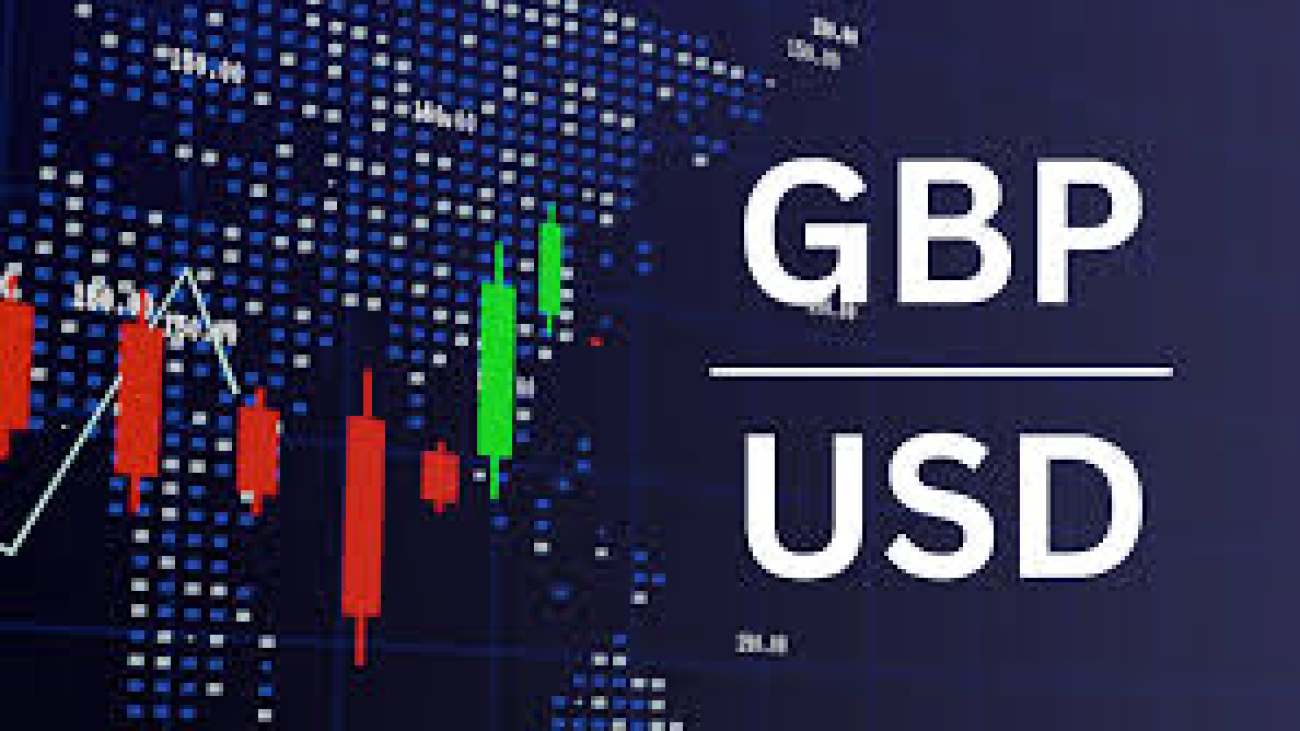
The GBPUSD declined during its latest intraday trading, with the beginning of forming negative divergence on the relative strength indicators, after reaching exaggerated overbought levels compared to the price move, with the emergence of negative signals from there, in a clear signal for ending the bullish momentum, which helped it to correct the main bearish trend, amid its trading alongside supportive trend for this path, besides the continuation of the negative pressure due to its trading below EMA50, reducing the chances of full recovery on the near period.
EURUSD price shows signs of ending its corrective rebound
The EURUSD pair declined during its latest intraday trading, following the gains recorded in yesterday’s session as part of attempts to correct the main downward trend. Amid the price moves alongside a minor supportive trendline in the short term.
The pair is still facing negative pressure as it continues to trade below EMA50, which limits the chances of a full recovery in the near term. At the same time, we notice the beginning of a negative divergence forming on the relative strength indicators after reaching overbought levels compared to price movement, along with the appearance of a bearish crossover. This reinforces the likelihood of continued downward pressure.
Crude oil prices begin to recover
Crude oil (Crude Oil) recorded gains during its latest intraday trading, benefiting from holding above the $92.00 support level. This provided positive momentum that helped achieve these gains. This performance comes amid continued dynamic support from trading above its EMA50, which reinforces stability and the dominance of the main upward trend in the short term, alongside price movement along a supportive trendline.
In addition, we notice the beginning of a positive crossover of the relative strength indicators after reaching sharply oversold levels compared to price action. This indicates the potential formation of a positive divergence, which may strengthen positive pressure and support further upward movement in the coming period.
Gold price shows fluctuating trading reflecting a battle between positive and negative momentum
Gold continues its sideways, volatile movements within a narrow range during its latest intraday trading, benefiting from holding above the psychological support level of $5,000. This level has provided some positive momentum, supported by incoming positive signals from the relative strength indicators, helping the price stabilize temporarily.
On the other hand, negative pressures remain in place, with a short-term bearish sub-trend still dominating. This comes as the price moves along a downward trendline, in addition to continued dynamic pressure from trading below EMA50, which increases the intensity of the pressures surrounding its movement.
Broadcom price tries to vent off overbought saturation
Broadcom (AVGO) stock price recorded a slight decline in its latest intraday trading, as the stock attempts to gain positive momentum that could help it recover and move higher again. At the same time, the price is trying to ease part of its clear overbought conditions on the Stochastic indicator, especially with the beginning of a negative crossover. This comes while the stock is affected by a positive technical pattern formed in the short term, represented by a falling wedge, alongside continued positive dynamic pressure as it trades above its 50-day SMA.
Therefore we expect the stock price to rise during its upcoming trading sessions, as long as it remains stable above the support level at $324.50, targeting the resistance level at $382.00.
Today’s price forecast: Bullish
Yen tries to recover under supervision of Japanese authorities
The Japanese yen rose in Asian trading on Monday at the start of the week against a basket of major and minor currencies, attempting to recover from a 20-month low against the US dollar, supported by buying activity from lower levels and under the watch of Japanese authorities, who confirmed their readiness to take the necessary measures to protect the local currency in the foreign exchange market.
The US currency retreated from its highest levels in ten months as investors assess developments in the Iran war, ahead of a busy week of global central bank meetings.
The Bank of Japan meets later this week and is expected to keep interest rates largely unchanged, while providing further clues about the path of Japanese monetary policy normalization this year.
Price Overview
Japanese yen exchange rate today: the dollar fell 0.3% against the yen to ¥159.25, from Friday’s closing level of ¥159.70, after reaching a session high of ¥159.74.
The yen ended Friday’s trading down about 0.25% against the dollar, marking its fourth consecutive daily loss and recording a 20-month low of ¥159.75 due to the repercussions of the Iran war.
The yen lost 1.25% against the dollar last week, marking its fourth consecutive weekly loss as investors focused on buying the US currency as a preferred safe-haven asset.
Japanese authorities
Japanese Finance Minister Satsuki Katayama said on Friday that Japan is ready to take the necessary measures to address yen movements that affect the lives of citizens. Katayama added that she is in close contact with US authorities regarding foreign exchange issues.
Opinions and analysis
Karl Schamotta, chief market strategist at Corpay in Toronto, said policymakers are likely to view the impact of a weaker exchange rate on already rising import bills with suspicion.
Schamotta added that pressure on Japanese authorities to intervene to support the weakened yen could increase in the coming days and weeks.
Naomi Fink, chief global strategist at Amova Asset Management, said that for Japan the main risk is not only rising oil prices but also deteriorating trade conditions due to imported energy costs and logistics, in addition to the weak yen and limited monetary policy flexibility.
Fink added that markets, especially the foreign exchange market, may be underestimating the likelihood that these pressures could force the Bank of Japan to make more difficult policy choices.
US dollar
The dollar index fell 0.3% on Monday, retreating from a ten-month high of 100.54 points and heading toward its first loss in the past five sessions due to corrective activity and profit-taking.
Beyond profit-taking sales, the US currency weakened at the start of the week against a basket of global currencies as investors continue assessing developments in the Iran war, in addition to awaiting a busy week of monetary policy meetings by major central banks.
At least eight central banks, including the US Federal Reserve, the European Central Bank, the Bank of England, and the Bank of Japan, will meet this week to determine interest rates in their first policy meetings since the start of the conflict in the Middle East.
Carol Kong, currency strategist at the Commonwealth Bank of Australia, said the war poses downside risks to economic growth and upside risks to inflation, meaning central bank responses will largely depend on the current context, specifically whether inflation is above, within, or below target.
Japanese interest rates
Markets price the probability of the Bank of Japan raising interest rates by a quarter percentage point at this week’s meeting at 5%, while the probability of a quarter-point hike at the April meeting stands at 35%.
In the latest Reuters poll, the Bank of Japan may raise interest rates to 1% in September.
Analysts at Morgan Stanley and MUFG wrote in a joint research report that they previously viewed the probability of a Japanese interest rate hike in March or April as low, but with rising uncertainty stemming from developments in the Middle East, the Bank of Japan is likely to adopt a more cautious stance, reducing the likelihood of a rate hike in the near term.
The Bank of Japan will meet on Wednesday and Thursday of this week to review economic developments in the country and determine the appropriate monetary tools for this delicate phase facing the world’s fourth-largest economy.

Euro tries to recover as the week of central banks open up
The euro rose in European trading on Monday against a basket of global currencies, attempting to recover from a seven-month low against the US dollar, supported by relatively active buying from lower levels.
The US currency retreated from its highest levels in ten months as investors assess developments in the Iran war, ahead of a busy week of global central bank meetings.
The European Central Bank meets later this week and is expected to keep interest rates largely unchanged, while providing further clues about the path of European monetary policy this year.
Price Overview
Euro exchange rate today: the euro rose more than 0.35% against the dollar to $1.1456, from Friday’s closing level of $1.1414, after recording a session low of $1.1419.
The euro ended Friday’s trading down 0.85% against the dollar, marking its fourth consecutive daily loss and recording a seven-month low of $1.1411 due to the escalation of the war in the Middle East.
The euro lost 1.75% against the dollar last week, marking its second consecutive weekly loss due to concerns about the global energy price crisis.
US dollar
The dollar index fell 0.3% on Monday, retreating from a ten-month high of 100.54 points and heading toward its first loss in the past five sessions due to corrective activity and profit-taking.
Beyond profit-taking sales, the US currency weakened at the start of the week against a basket of global currencies as investors continue assessing developments in the Iran war, in addition to awaiting a busy week of monetary policy meetings by major central banks.
At least eight central banks, including the US Federal Reserve, the European Central Bank, the Bank of England, and the Bank of Japan, will meet this week to determine interest rates in their first policy meetings since the start of the conflict in the Middle East.
Carol Kong, currency strategist at the Commonwealth Bank of Australia, said the war poses downside risks to economic growth and upside risks to inflation, meaning central bank responses will largely depend on the current context, specifically whether inflation is above, within, or below target.
European interest rates
Money markets price the probability that the European Central Bank will cut interest rates by 25 basis points at the March meeting at 5%.
Amid rising global energy prices, data from the London Stock Exchange Group (LSEG) suggests the European Central Bank is expected to raise interest rates in June.
European Central Bank
The European Central Bank will meet on Wednesday and Thursday of this week in its second monetary policy meeting of 2026, with markets almost fully expecting European interest rates to remain unchanged, marking the sixth consecutive meeting without any change.
Euro outlook
Jane Foley, head of foreign exchange strategy at Rabobank, said in a note that it has become very clear that shipping through the Strait of Hormuz could be affected for some time.
Foley added that Rabobank has therefore lowered its forecasts for the euro/dollar pair over one and three months to 1.14 and 1.15 respectively, down from $1.16.
Intek price surrounded with positive pressures
Intel Corporation (INTC) stock price recorded further gains in its latest intraday trading, benefiting from dynamic support represented by trading above its 50-day SMA, which reinforces the stability and dominance of the main short-term bullish trend, especially with price moving alongside a supporting trendline. In the background, the Stochastic indicator continues to show positive signals despite reaching extremely overbought levels.
Therefore we expect the stock price to rise during its upcoming trading sessions, as long as it remains stable above the support level at $44.00, targeting the key resistance level at $51.50.
Today’s price forecast: Bullish
Bitcoin climbs above $71,000 on US regulation hopes despite Iran concerns
Bitcoin rose on Friday, extending its recent gains and recording its highest level in a week, supported by hopes for more supportive regulation of the cryptocurrency sector in the United States, which helped markets move past ongoing concerns about the war between the United States, Israel, and Iran.
The world’s largest cryptocurrency rose about 3% to $71,529.7 as of 01:49 Eastern Time (05:49 GMT) and is heading for weekly gains, while the recent pause in rising oil prices helped provide some support to markets.
Bitcoin is expected to record weekly gains of about 6.5%, outperforming most high-risk assets despite pressure stemming from the war with Iran.
Gains in cryptocurrencies came mainly after the U.S. Securities and Exchange Commission and the Commodity Futures Trading Commission announced on Wednesday that they would cooperate to establish a more comprehensive regulatory framework for US markets.
Under the agreement, the two agencies indicated they would work together to present a federal policy that includes an “appropriate regulatory framework for crypto assets and emerging technologies.” The initiative is called the “Joint Coordination Initiative” and aims to establish formal protocols for data sharing, streamline reporting requirements, and end separate regulatory procedures related to cryptocurrencies between the two agencies.
Although the agreement is not legally binding, it has boosted optimism about the possibility of establishing a clearer regulatory framework for the digital asset sector. This aligns with US President Donald Trump’s pledges to provide greater regulatory clarity for the industry after appointing crypto-friendly leadership at both agencies.
War concerns weigh on risk appetite
Despite the rise, Bitcoin’s gains still appear fragile, especially after the currency experienced sharp volatility following a series of sudden market collapses in late 2025.
Risk appetite in global markets also remained weak, with stock markets facing heavy selling pressure due to investor concerns about the consequences of the war between the United States, Israel, and Iran.
The inflationary impact of the war is one of the main concerns, as continued disruptions in oil markets could push crude prices higher, supporting a rise in global inflation. This could prompt major central banks to adopt tighter monetary policies, a scenario that typically does not favor cryptocurrencies and speculative assets.
Altcoins rise alongside Bitcoin
Other cryptocurrencies also rose alongside Bitcoin. Ethereum, the world’s second-largest cryptocurrency, climbed 3.9% to $2,109.48, while Ripple rose about 3.6% to $1.4218
Nickel drops but still holds above $17,000 on global supply concerns
Nickel prices fell during trading on Friday amid ongoing concerns about disruptions to metal supplies across the Middle East due to the escalating war between the United States and Iran.
Nickel prices could rise further during the current year as the global market may shift into a supply deficit, following production restrictions imposed by Indonesia — the world’s largest producer — according to Macquarie Group.
The Indonesian government announced in December 2025 stricter quotas and tighter regulation of nickel supplies to address the global surplus and support prices that had been under pressure. Since then, nickel prices as well as related products such as nickel pig iron, nickel sulfate, and nickel ore have risen.
With global supply continuing to tighten, Macquarie strategists led by Jim Lennon expect nickel prices to continue rising amid higher prices for end products and increasing production costs. The bank noted that the rise in the local premium for nickel ore in Indonesia led to an increase of nearly $3,000 in nickel pig iron prices, which supported gains on the London Metal Exchange.
Bank analysts believe that nickel traded on the London Metal Exchange could find support between $17,000 and $18,000 per ton, a range close to the level at which the metal is currently trading.
Production decline risks
The Australian bank also indicated that nickel prices could rise further, as production may not increase this year due to Indonesian restrictions, which could push the global market into a supply deficit compared with previous expectations of a surplus of about 90,000 tons.
Japan’s Sumitomo Metal Mining had previously expected the global nickel surplus to reach 256,000 tons by 2026.
A shortage of limonite ore and the collapse of a mining tailings dam in Indonesia’s Morowali region also negatively affected production of MHP (Mixed Hydroxide Precipitate) extracted from laterite ores.
The bank added that any prolonged disruptions in sulfur supplies from the Middle East could also affect future production plans, along with the possibility of delays in some expansion projects for new production capacity.
During January and February, estimates indicate that nickel pig iron production fell about 10% year-on-year, partly due to lower ore quality and also because some furnaces were converted to produce nickel matte, which offers higher returns compared with NPI.
In trading, nickel spot contracts fell 2.1% to $17,100 per ton at 17:14 GMT.