usdjpy

The USDJPY- positive signals pave the way for more upside moves

The (USDJPY) rose strongly in its last intraday trading, to breach the current resistance of 158.00, amid the dominance of the bullish trend on short-term basis with its trading alongside supportive trend line for this path, supported by its continued trading above EMA50, which represents dynamic support that provides renewed bullish momentum, especially with the emergence of positive signals from relative strength indicators, after offloading its overbought conditions, opening the way for achieving more gains in the upcoming period.

silver 3

Silver Price reaches our target

Silver price declined during its latest intraday trading, reaching the important support level of 79.50$, which represents a price target we identified in our previous analysis. This move was influenced by the emergence of negative signals from the relative strength indicators after it reached sharply overbought levels, which increased selling pressure on price movements.


This decline comes amid continued negative pressure as the price trades below EMA50, which acts as a dynamic resistance limiting recovery opportunities. The price also remains affected by its earlier break of a short-term upward corrective trendline, reinforcing the negative outlook for its movements in the near term.

GBP_01_L

GBPUSD price prepares to break key support

The GBPUSD pair slipped lower during its latest intraday trading, reaching the support level of 1.3280. This support level had been a price target in our previous analysis in preparation for a potential break, amid continued negative pressure as the pair trades below EMA50. This reinforces the stability and dominance of the main short-term bearish trend, especially as price movements continue along a trendline that supports this path.


In addition, we notice the emergence of negative signals from the relative strength indicators after reaching heavily overbought levels.


blog-eurusd-14-01-25

EURUSD price falls and breaks our target

The EURUSD pair is facing strong selling pressure during its latest intraday trading, entering a sharp bearish wave that pushed it to break the key support level at 1.1565, which we had previously identified as a price target in our earlier analysis.


This decline comes amid continued negative pressure as the pair trades below EMA50, which reinforces the stability and dominance of the main short-term bearish trend, moving along major and minor trendlines that support this bearish path, while the relative strength indicators are providing negative signals, reflecting the continuation of selling momentum during the current period.

trump

Will Trump succeed in securing oil tanker transit through the Strait of Hormuz?

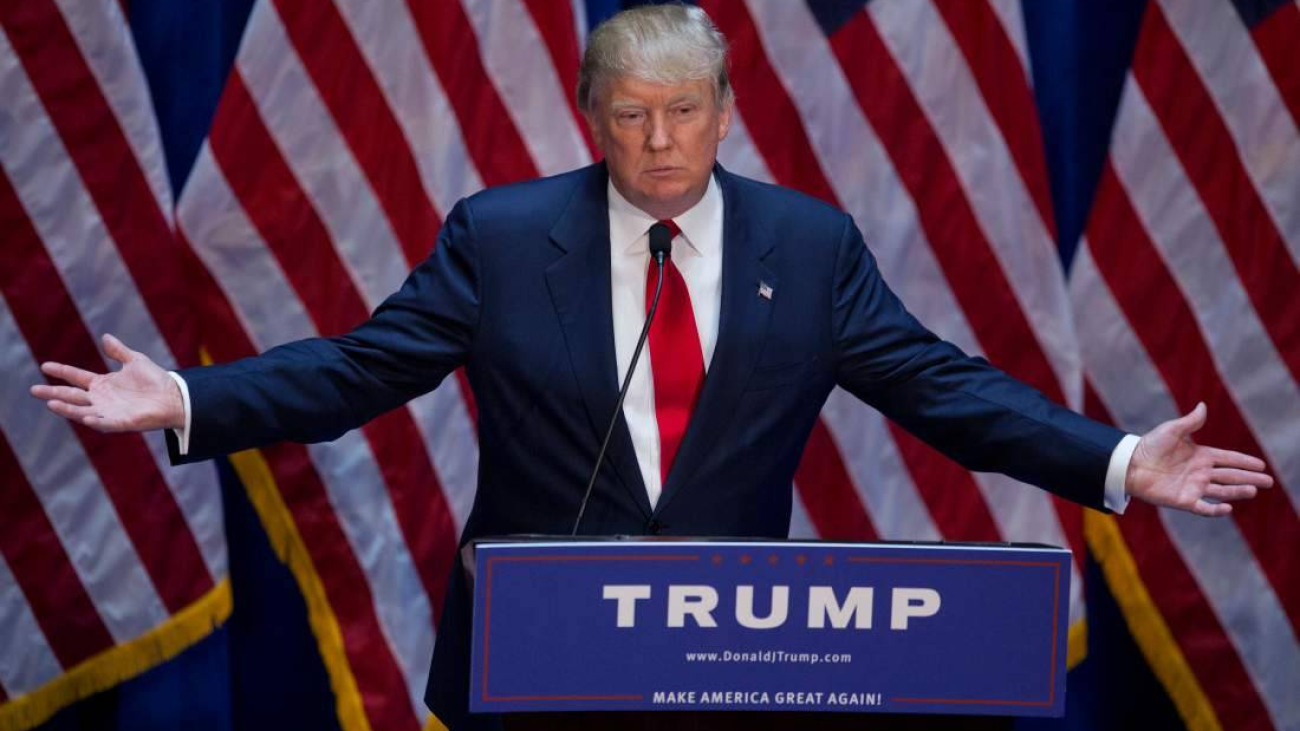
US President Donald Trump is preparing to use the US Navy to escort oil tankers through the Strait of Hormuz amid the intensifying war against Iran. However, ensuring safe passage for the large volume of shipping that normally moves through the waterway will be a major challenge.

CNBC reported that Wall Street analysts believe Brent crude could exceed $100 per barrel if the waterway remains closed for an extended period. At that level, elevated oil prices could push the global economy toward recession.

The narrow strait is the only route for tankers entering and leaving the Arabian Gulf. According to energy consultancy Kpler, more than 14 million barrels of crude oil per day passed through the strait in 2025, representing roughly one-third of the world’s seaborne oil shipments.

Around 100 vessels per day

Matt Smith, oil analyst at Kpler, said that about 100 tankers and cargo ships normally pass through the strait each day, while roughly 400 tankers are currently stranded in the Gulf because of the war.

Matt Wright, senior shipping analyst at the same firm, said: “There are hundreds and hundreds of ships still in the Gulf in the Middle East,” adding that the US Navy would need “a very long time to escort them even if it moved a few ships at a time.”

Trump’s pledge to escort tankers if necessary, along with offering political risk insurance for shipowners, helped calm oil markets on Tuesday and Wednesday.

However, prices rose again on Thursday after Iran said it had attacked a tanker with a missile. At the same time, the British navy reported a major explosion on a tanker anchored in Iraqi territorial waters.

Are there enough warships?

Helima Croft, head of global commodities strategy at RBC Capital Markets, said in a client note on Tuesday: “The key question will be whether there are enough naval assets to escort ships while continuing operations against Iran.”

Wright noted that insurance is not the main issue for shipowners, explaining that tankers are not moving due to concerns about their physical security. He added that shipowners will need to see a sustained period without attacks before risking passage through the strait again.

He stressed that restoring oil flows from the Gulf is extremely urgent, but “there must be some confidence that Iran’s ability to continue the war has been reduced.”

Houthi militants in Yemen disrupted shipping in the Red Sea through missile attacks for more than a year beginning in late 2023. Wright said: “But they do not compare with the complexity of Iranian capabilities, so the threat is completely different.”

Analysts at Rapidan Energy believe US naval escorts could provide partial relief but would not be sufficient on their own to reopen the strait. They added that the United States would need to systematically weaken Iran’s military capabilities, a process that would take time.

The 1980s experience

Croft noted that the US Navy escorted oil tankers through the strait in 1987 when commercial vessels became targets during the Iran–Iraq war. However, she pointed out that at the time the US military was not simultaneously fighting a war against the regime in Tehran while also guaranteeing safe passage for ships.

US Energy Secretary Chris Wright said on Wednesday that the Trump administration would provide naval escorts “as soon as possible.”

He said in an interview with Fox News: “Right now our navy and our military are focused on other matters, namely disarming this Iranian regime that attacks its neighbors and Americans in every possible way.”

He added: “In the not-too-distant future we will be able to use the navy to restore energy flows again, but for now markets remain well supplied.”

No timeline

White House press secretary Karoline Leavitt told reporters on Wednesday that the Trump administration does not have a timeline for when safe commercial navigation through the strait might resume.

Speaking at a press briefing, she said: “I do not want to commit to a timeline, but this is being actively evaluated by the Department of War and the Department of Energy.”

Analysts believe that if tankers remain trapped inside the Gulf for a longer period, the situation in the global oil market could become increasingly complicated.


oil

Escalating Iran–US war pushes US crude up 12%

US crude futures rose more than 12% on Friday but remained below Brent prices, as buyers sought available supplies while Middle Eastern shipments became restricted following the effective closure of the Strait of Hormuz amid the widening war between the United States and Israel on one side and Iran on the other.

Brent crude futures settled at $92.69 per barrel, up $7.28 or 8.52%. US West Texas Intermediate crude reached $90.90 per barrel, gaining $9.89 or 12.21%.

This marked the second consecutive session in which gains in US crude outpaced those of the Brent benchmark.

Giovanni Staunovo, an analyst at UBS, said refineries and trading companies are searching for alternative cargoes, while the United States remains the world’s largest oil producer. He added that the price gap reflects transportation costs aimed at preventing US inventories from falling too quickly due to rising exports.

Janiv Shah, vice president of oil analysis at Rystad Energy, pointed to several factors behind the divergence between Brent and WTI gains, including improved refining margins along the US Gulf Coast, as well as arbitrage flows with Europe and activity in Washington’s futures markets.

Crude oil was also heading for its largest weekly gain since the extreme volatility during the COVID-19 pandemic in the spring of 2020, as the Middle East conflict continued to halt shipping and energy exports through the vital Strait of Hormuz.

Oil could reach $100 or even $150

Qatar’s energy minister said Gulf energy producers may be forced to halt exports within weeks, potentially pushing oil prices to $150 per barrel, according to an interview with the Financial Times published Friday.

John Kilduff, partner at Again Capital, said markets are witnessing a worst-case scenario unfolding, adding that expectations for oil to reach $100 per barrel could soon materialize.

The sharp rally in oil prices began after the United States and Israel launched strikes on Iran last Saturday, prompting Tehran to halt tanker traffic through the Strait of Hormuz.

About 20% of global daily oil demand passes through this waterway. With the strait effectively closed for seven days, roughly 140 million barrels of oil have been unable to reach markets, equivalent to about 1.4 days of global demand.

The conflict has also spread to major energy-producing regions in the Middle East, disrupting production and forcing some refineries and liquefied natural gas facilities to shut down.

Staunovo said every day the strait remains closed will push prices higher, noting that markets had previously believed US President Donald Trump might step back from escalation due to concerns about rising oil prices. However, the continuation of the crisis highlights the scale of risks facing global supplies.

Trump told Reuters he is not concerned about higher gasoline prices in the United States linked to the conflict, saying: “If prices go up, they go up.”

Meanwhile, speculation that the US Treasury might take steps to limit rising energy costs pushed prices down by more than 1% earlier on Friday before they recovered after a Bloomberg report said the Trump administration had ruled out using the Treasury to intervene in oil futures markets.

On Thursday, the Treasury granted exemptions allowing companies to purchase sanctioned Russian oil. The first of these waivers went to Indian refineries, which subsequently bought millions of barrels of Russian crude.

gold55

Gold prices show more signs of weakness

Gold price declined during its latest intraday trading, affected by its earlier break below a short-term bullish corrective trendline, which increased the selling pressure on its movements. The price also continues to face negative and dynamic pressure as it remains below EMA50, which has acted as a barrier against attempts to recovery during the recent period.


In the background, we notice the beginning of a negative divergence forming on the relative strength indicators after reaching exaggerated overbought levels compared with the price movement, along with the emergence of new negative signals, which may increase the chances of continued downward pressure in the near term.


eur

Euro hovers near four-month trough on the energy crisis

The euro fell in European trading on Thursday against a basket of global currencies, resuming losses that paused temporarily yesterday against the US dollar and moving toward retesting a four-month low, as surging global energy prices driven by the Iran war weigh on Europe’s economic outlook.

The crisis is expected to push prices higher and accelerate inflation across the eurozone, placing growing inflationary pressure on policymakers at the European Central Bank.

At the same time, the European economy may require additional monetary support to limit the slowdown in economic activity, creating a complex policy dilemma between containing inflation and supporting growth.

Price Overview

Euro exchange rate today: the euro declined by 0.25% against the dollar to $1.1605, down from the opening level of $1.1633, after touching a session high of $1.1647.

The euro ended Wednesday’s trading up by 0.2% against the dollar, marking its first daily gain in the past three sessions as part of a recovery from a four-month low of $1.1530.

US Dollar

The dollar index rose by 0.25% on Thursday, resuming gains that paused temporarily in the previous session and approaching the highest levels in four months, reflecting renewed strength in the US currency against a basket of major and secondary currencies.

The advance comes as investors continue to favor the dollar as a preferred alternative investment amid growing fears that the war in the Middle East could widen, which would negatively affect global trade and the world economy.

Markets are awaiting the release of the US monthly employment report on Friday, which is expected to provide strong and decisive evidence regarding the Federal Reserve’s interest rate path during the first half of this year.

Global energy prices

Global oil and gas prices surged due to the fallout from the US-Israeli war on Iran, which disrupted energy exports from the Middle East. Tehran’s attacks on ships and energy infrastructure led to the closure of shipping routes in the Gulf and halted production from Qatar to Iraq.

Brent crude rose more than 16% this week and reached a 20-month high of $85.07 per barrel, while European gas prices jumped 70% since the end of last week.

Views and analysis

Analysts at Wells Fargo said in a note that the euro faces a difficult situation. Europe’s natural gas storage refill season is about to begin, and the European Union is entering the season with record-low gas levels in storage, meaning it will need to purchase large amounts of energy at a time when prices could rise significantly.

George Saravelos, head of global FX research at Deutsche Bank, said the impact of the Iran war on EUR/USD revolves around one key factor: energy.

Saravelos added that a negative supply shock is currently forming, effectively acting as a direct tax on Europeans that must be paid to foreign producers in US dollars.

Analysts at ING wrote in a research note that the European Central Bank’s position has suddenly come into question, and they doubt the issue can be resolved in the very near term.

They added that the possibility of the ECB raising interest rates poses a serious risk to interest rate carry trades and could lead to a significant widening in eurozone government bond spreads.

A woman holds Euro banknotes in this illustration taken May 30, 2022. REUTERS/Dado Ruvic/Illustration/File Photo

The USDJPY is looking for higher low

The (USDJPY) continued moving lower in its last intraday trading, in attempt to look for higher low to take it as a base that might help it to gain the required bullish momentum for its recovery, amid the trading within bullish corrective channel that limits its trading on short-term basis, with the continuation of the dynamic support that is represented by its trading above EMA50, reinforcing the chances of near-term recovery.

silver

Silver Price is experiencing negative signals that obstructs its recovery

Silver prices moved higher in its latest intraday trading, attempting to recover part of its previous losses. However, there are technical signals that remain suggesting the negativity.


The relative strength indicators remain providing negative signals, accompanied by the continuation of the trading below EMA50, keeping the dynamic pressure valid and limits the strength of any rebound. The price still under the effect of breaking bullish corrective trend line on short-term basis, showing the weakness of the technical structure and makes the current gains threatened unless the price manages to regain its technical levels.


Accordingly, our outlook favors a decline in silver price during upcoming intraday trading, as long as the $86.00 resistance level remains intact, targeting the $79.50 support level.


The expected trading range is between $79.50 support and $90.00 resistance.


Today’s forecast: Bearish