

EUR/USD jumps higher to near 1.0530 in Wednesday’s European session. The major currency pair strengthens as the US Dollar (USD) tumbles ahead of a string of United States (US) economic data such as the Personal Consumption Expenditure Price Index (PCE), Durable Goods Orders, and Personal Spending data for October, revised Q3 Gross Domestic Product (GDP) growth estimates, and Initial Jobless Claims data for the week ending November 22, which will be published in the North American session.
The US Dollar Index (DXY), which gauges the Greenback’s value against six major currencies, posts a fresh weekly low near 106.35. The Greenback has corrected lately after posting a fresh two-year high at around 108.00 on Friday. The correction was triggered after Scott Bessent, a veteran hedge fund manager, said that the objective of enacting tariffs will be “layered in gradually and the budget deficit will be reduced to 3% of Gross Domestic Product (GDP) by slashing spending,” a move that won’t result in high inflation than feared. The comments from Bessent came after US President-elect Donald Trump nominated him for Treasury Secretary.
Within the array of US data, investors will pay close attention to the PCE inflation, the Federal Reserve’s (Fed) preferred inflation measure for decision-making on policy rates. The PCE report is expected to show that the headline inflation accelerated to 2.3% year-over-year in October from 2.1% a month earlier.
In the same period, the core PCE – which excludes volatile food and energy prices – is estimated to have risen by 2.8%, stronger than the former release of 2.7%. The month-on-month headline and core PCE are expected to have grown steadily by 0.2% and 0.3%, respectively.
The US PCE inflation data will influence Fed interest rate cut prospects for the December meeting. On Monday, Minneapolis Fed Bank President Neel Kashkari said it is reasonable to consider another interest rate reduction in the December meeting. His viewpoint of an interest rate cut next month was backed by expectations that inflation is gently trending down and the labor market remains strong right now.
Technical Analysis: EUR/USD rises above 1.0500
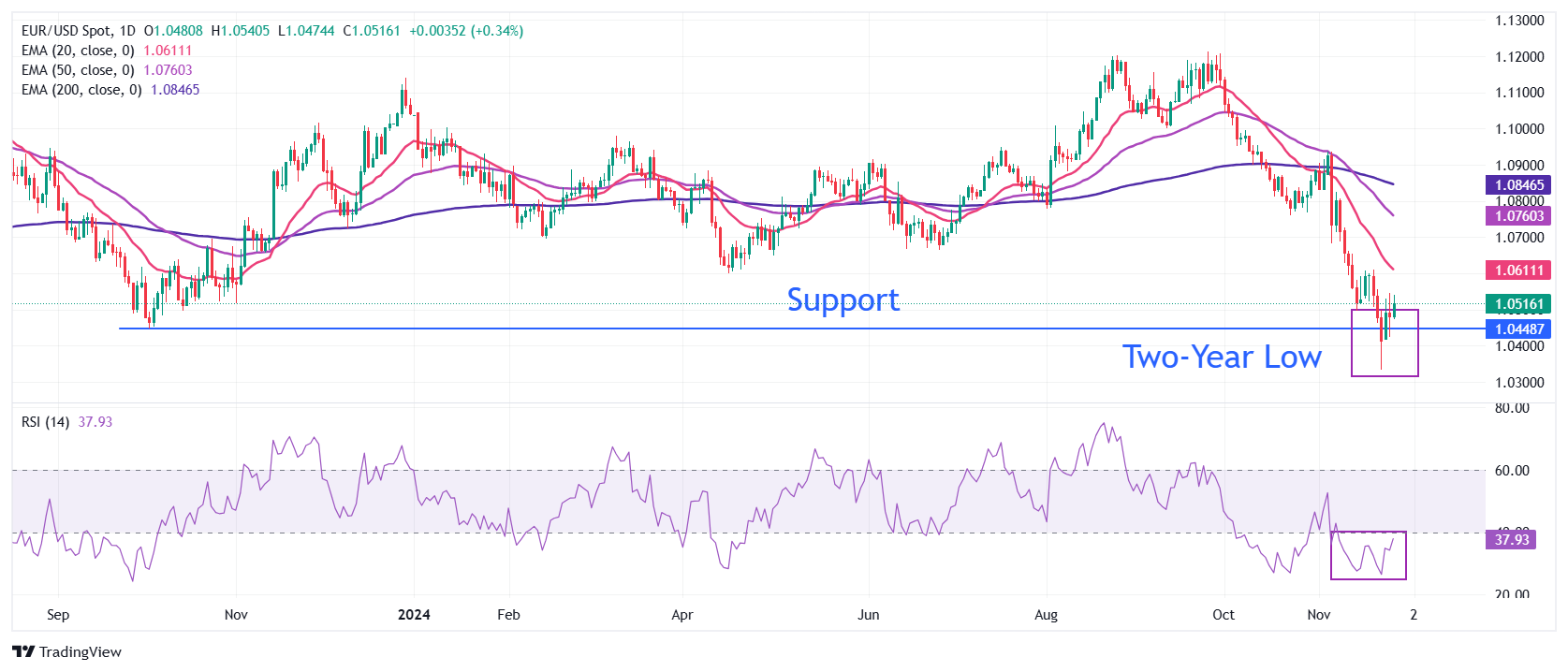
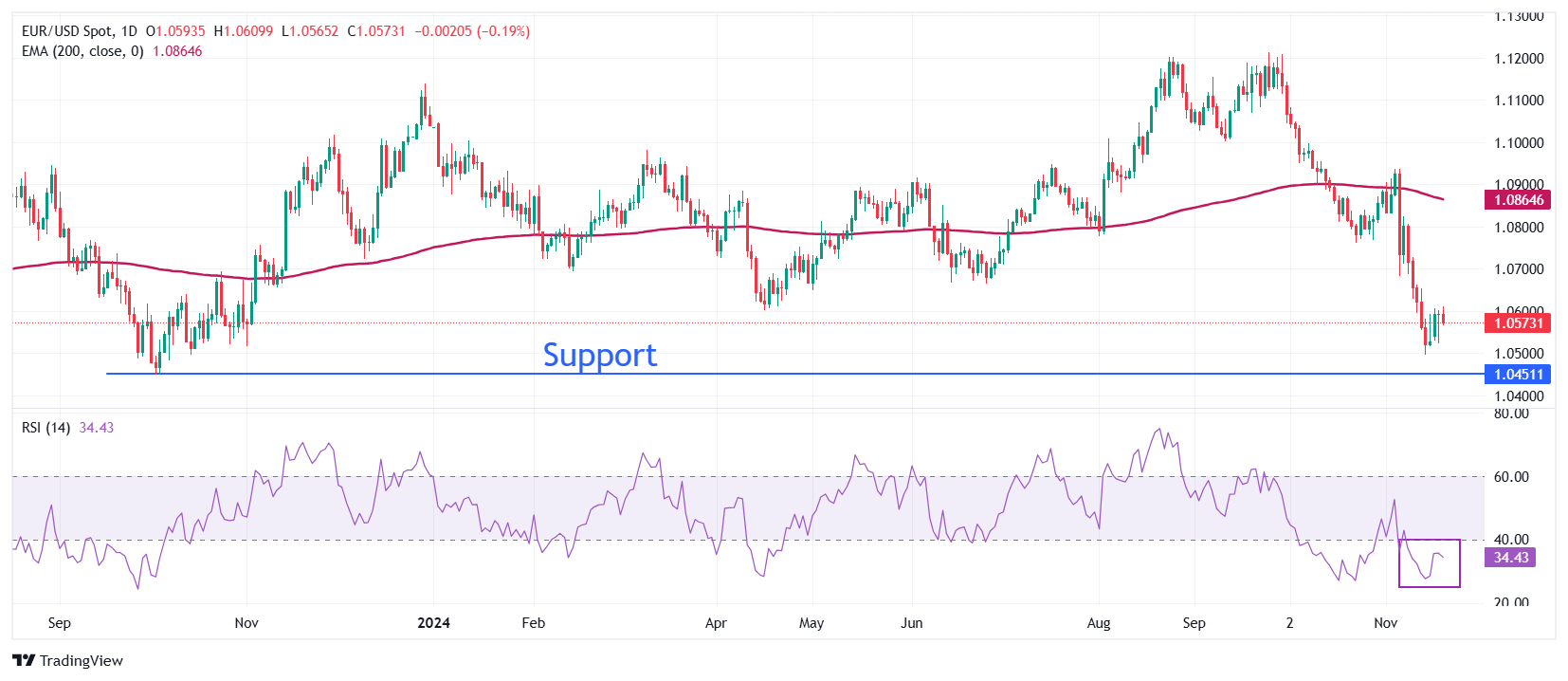
EUR/USD jumps above the psychological figure of 1.0500 in European trading hours on Wednesday. The major currency pair continues to hold the near-term low of 1.0330. However, the outlook remains bearish as all short-to-long-term day Exponential Moving Averages (EMAs) in the daily chart are declining, pointing to a downside trend.
The 14-day Relative Strength Index (RSI) rebounded after conditions turned oversold. However, the oscillator has cooled down, which could allow bears to take charge again.
Looking down, the November 22 low of 1.0330 will be a key support for Euro bulls. On the flip side, the November 20 high round 1.0600 will be the key barrier.





 Chat now!