GBP/USD: A strong surge in momentum

GBP/USD: A strong surge in momentum

Pound Sterling (GBP) is expected to trade in a 1.2710/1.2790 range. In the longer run, there has been a strong surge in momentum; GBP may rise to 1.2850, UOB Group’s FX analysts Quek Ser Leang and Lee Sue Ann note.

GBP may rise to 1.2850

24-HOUR VIEW: “We indicated yesterday that GBP ‘appears to have entered a consolidation and is likely to trade between 1.2705 and 1.2770.’ GBP traded in a wider and higher range than expected (1.2718/1.2799) before closing largely unchanged at 1.2752 (+0.09%). The price action provides no fresh clues, and we expect GBP to trade in a 1.2710/1.2790 range today.”

1-3 WEEKS VIEW: “Last Friday (06 Dec, spot at 1.2760), we indicated ‘there has been a strong surge in momentum,’ and it ‘may rise to 1.2850.’ Aside from a brief rise to 1.2811, GBP has not been able to make much headway on the downside. However, we will continue to hold the same view, provided that 1.2685 (no change in ‘strong support’ from last Friday) is not breached.”

EUR/USD drops back below 1.0550 as markets turn cautious

EUR/USD drops back below 1.0550 as markets turn cautious

EUR/USD returns to the red below 1.0550 in the European session on Tuesday. The pair eases due to fading market’s optimism over likely Chinese stimulus, allowing the US Dollar resume its upside. Increased dovish bets surrounding the ECB also add to the weight on the pair.

EUR/USD Technical Overview

The Relative Strength Index (RSI) indicator on the 4-hour chart moves sideways near 50 early Tuesday, reflecting EUR/USD’s indecisiveness.

On the upside, 1.0600 (Fibonacci 38.2% retracement of the latest downtrend) could be seen as first resistance before 1.0640 (200-period Simple Moving Average (SMA)), 1.0660 (Fibonacci 50% retracement) and 1.0730 (Fibonacci 61.8% retracement).

Looking south, supports are located at 1.0520-1.0530 (100-period SMA, Fibonacci 23.6% retracement), 1.0500 (psychological level, static level) and 1.0440 (static level).

AUD/USD Price Forecast: Bullish reversal move looks likely

AUD/USD Price Forecast: Bullish reversal move looks likely

The AUD/USD pair finds temporary support and advances to near 0.6420 in Monday’s European session after posting a fresh four-month low near 0.6370 on Friday. The Aussie pair rebounds slightly with investors focusing on the Reserve Bank of Australia’s (RBA) monetary policy decision, which will be announced on Tuesday.

Market experts expect the RBA to leave interest rates unchanged at 4.35% but would temper its hawkish tone as the Australian Q3 Gross Domestic Product (GDP) growth came in weaker-than-expected, a scenario that would be favorable for the Australian Dollar (AUD).

Analysts at ANZ and Westpac expect the RBA to start reducing interest rates from May 2025. They have pushed their forecasts from March 2025 amid concerns over sticky price pressures.

Meanwhile, the US Dollar (USD) ticks higher even though traders are confident that the Federal Reserve (Fed) will cut interest rates by 25 basis points (bps) to 4.25%-4.50% in the policy meeting on December 18. This week, investors will pay close attention to the United States (US) Consumer Price Index (CPI) data for November, which will release on Wednesday.

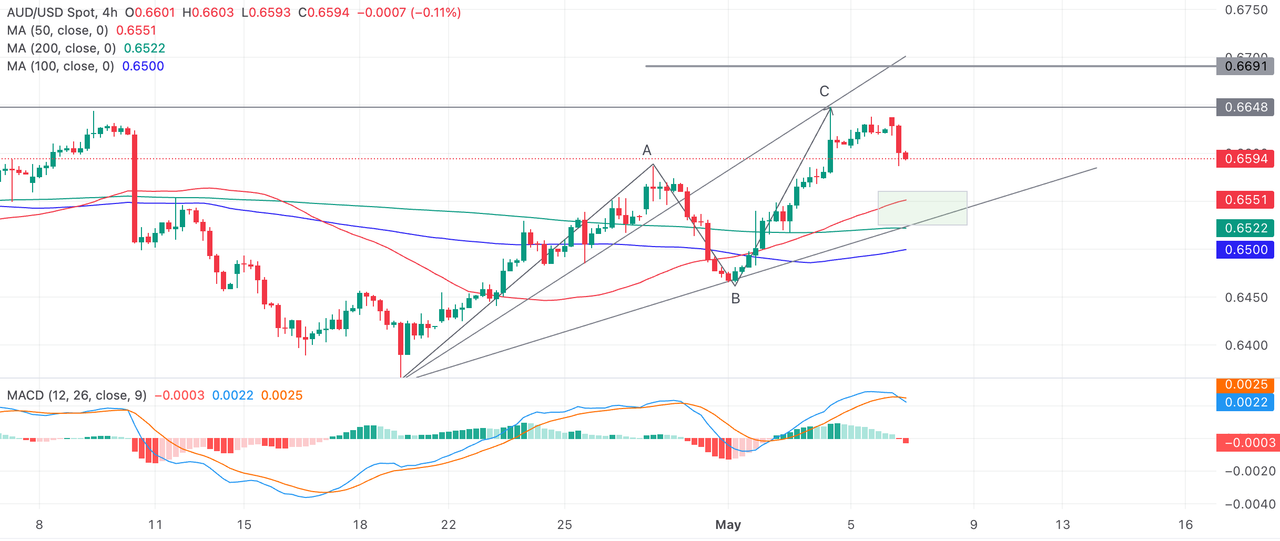
The near-term trend of the AUD/USD pair is bearish as all short-to-long-term Exponential Moving Averages (EMAs) are declining.

The 14-day Relative Strength Index (RSI) wobbles below 40.00, suggesting that a bearish momentum is intact.

More downside towards the August low of 0.6348 and the round-level support of 0.6300 would appear if the Aussie pair fails to hold recovery above the round-level support 0.6400.

On the flip side, a decisive recovery above the November 25 high of 0.6550 will drive the asset towards the round-level resistance of 0.6600, followed by September 11 low of 0.6622.

AUD/USD daily chart

China’s President Xi: We must be fully prepared to achieve next year’s economic targets

China’s President Xi: We must be fully prepared to achieve next year’s economic targets

China’s President Xi Jinping said on Monday, “we must be fully prepared to achieve next year’s economic targets.”

Additional comments

We must affirm the confidence to win while doing next year’s economic work.

Must maintain strategic focus and actively create an external environment that is favourable.

Current development faces many uncertainties and challenges, must be given high attention.

Market reaction

AUD/USD has caught a fresh bid wave on China’s stimulus optimism, rising 0.60% on the day to trade near 0.6430. The pair hit the lowest level in four months at 0.6373 on Friday.

Australian Dollar PRICE Today

The table below shows the percentage change of Australian Dollar (AUD) against listed major currencies today. Australian Dollar was the strongest against the Japanese Yen.

USD EUR GBP JPY CAD AUD NZD CHF
USD 0.10% -0.14% 0.36% 0.00% -0.62% -0.05% 0.13%
EUR -0.10% -0.22% 0.38% -0.00% -0.62% -0.06% 0.11%
GBP 0.14% 0.22% 0.44% 0.22% -0.40% 0.17% 0.34%
JPY -0.36% -0.38% -0.44% -0.39% -0.90% -0.54% -0.16%
CAD -0.01% 0.00% -0.22% 0.39% -0.58% -0.06% 0.12%
AUD 0.62% 0.62% 0.40% 0.90% 0.58% 0.56% 0.74%
NZD 0.05% 0.06% -0.17% 0.54% 0.06% -0.56% 0.16%
CHF -0.13% -0.11% -0.34% 0.16% -0.12% -0.74% -0.16%
Gold extends recovery on geopolitical concerns and China’s purchases

Gold extends recovery on geopolitical concerns and China’s purchases

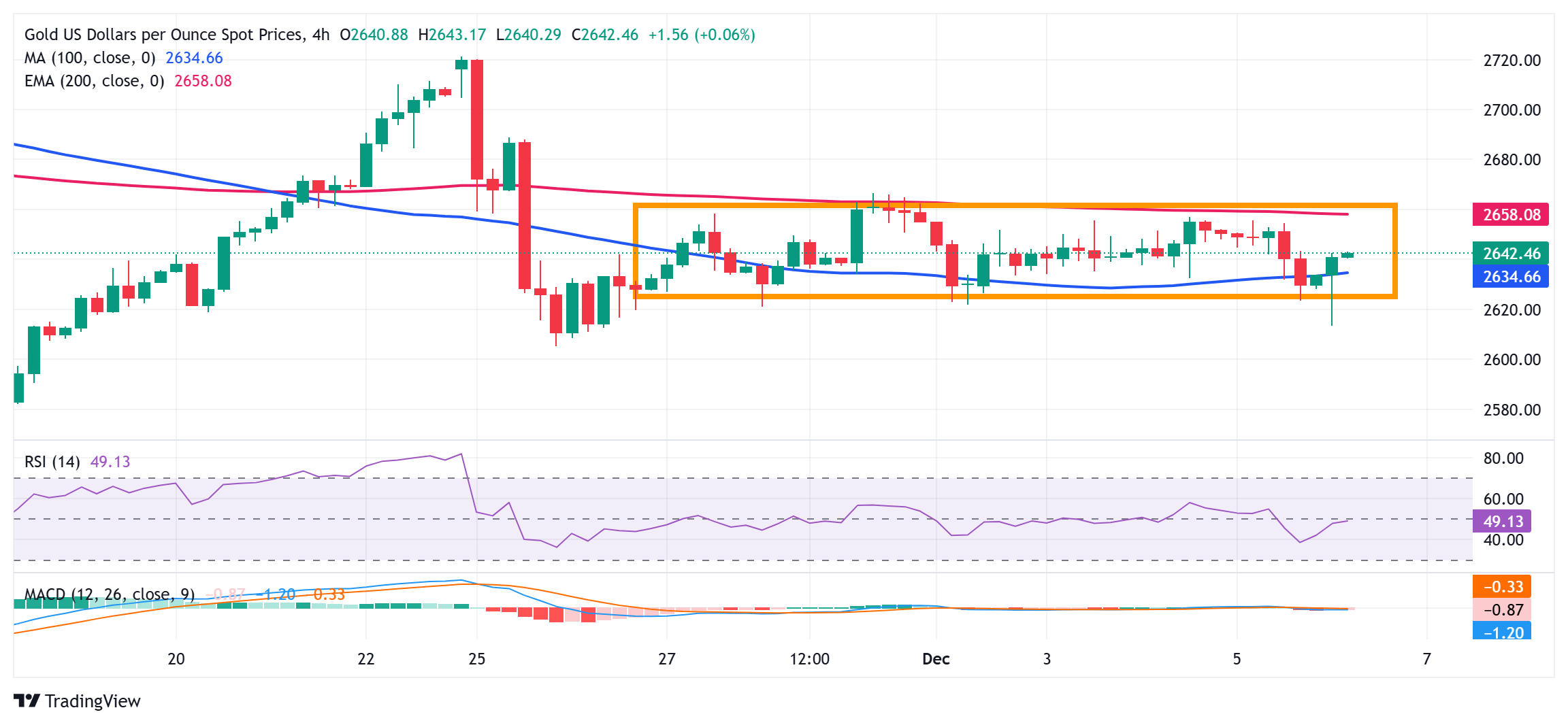
Gold price (XAU/USD) sticks to its positive bias through the first half of the European session, though it remains below the $2,650-2,655 supply zone and remains confined in a familiar range held over the past two weeks or so. The US Nonfarm Payrolls (NFP) report released on Friday reaffirmed bets that the Federal Reserve (Fed) will lower borrowing costs in December. This, in turn, keeps the US Treasury bond yields depressed and turns out to be a key factor acting as a tailwind for the non-yielding yellow metal.

Apart from this, political disruption in South Korea, geopolitical tensions and trade war fears offer some support to the safe-haven Gold price. However, a modest US Dollar (USD) strength, bolstered by bets that the Fed will adopt a less dovish stance on the back of speculations that US President-elect Donald Trump’s policies will boost inflation, caps gains for the XAU/USD. Traders also seem reluctant and might opt to wait on the sidelines ahead of the release of the US consumer inflation figures, due later this week.

Gold price bulls await breakout above short-term trading range hurdle near $2,650-2,655 area

From a technical perspective, any further strength above the $2,648-2,650 supply zone is likely to confront some resistance near the $2,666 region. Some follow-through buying beyond the $2,672 hurdle will be seen as a key trigger for bulls and allow the Gold price to aim to reclaim the $2,700 round figure. The momentum could extend further towards the next relevant hurdle near the $2,722 area.

On the flip side, weakness below the $2,630 immediate support could drag the Gold price back towards the $2,614-2,613 area. This is followed by the $2,605-2,600 support zone and the 100-day Simple Moving Average (SMA), around the $2,586-2,585 region. A convincing break below the latter should pave the way for deeper losses and expose the November swing low, around the $2,537-2,536 area.

EUR/USD recovers above 1.0550 on renewed US Dollar weakness

EUR/USD recovers above 1.0550 on renewed US Dollar weakness

EUR/USD rebounds above 1.0550 in the European trading hours on Monday. A positive shift in risk sentiment curbs the safe-haven demand for the US Dollar finds fresh haven, offering some comfort to the pair. amid a data-light calendar.

The Relative Strength Index (RSI) indicator on the 4-hour chart stays slightly above 50 and EUR/USD holds steady above the 100-period Simple Moving Average (SMA), reflecting sellers’ hesitancy.

On the upside, first resistance is located at 1.0600 (Fibonacci 38.2% retracement of the latest downtrend) ahead of 1.0650-1.0660 (200-period Simple Moving Average (SMA), Fibonacci 50% retracement) and 1.0730 (Fibonacci 61.8% retracement) and 1.0700 (round level).

Looking south, supports could be spotted at 1.0520-1.0530 (100-period SMA, 50-period SMA, 20-period SMA, Fibonacci 23.6% retracement), 1.0500 (psychological level, static level) and 1.0440 (static level).

EUR/USD touched its highest level since mid-November above 1.0600 on Friday but lost its traction to end the week virtually unchanged. The pair holds steady at around 1.0550 in the European morning on Friday.

The upbeat labor market data for November helped the US Dollar (USD) stay resilient against its rivals heading into the weekend and made it difficult for EUR/USD to hold its ground.

The US Bureau of Labor Statistics (BLS) announced on Friday that Nonfarm Payrolls (NFP) in the US rose by 227,000 in November. This reading followed the 36,000 increase reported in October (revised from 12,000) and surpassed the market expectation of 200,000. On a negative note, the Unemployment Rate edged higher to 4.2% from 4.1% in the same period. Finally, the annual wage inflation, as measured by the change in the Average Hourly Earnings, held steady at 4%, coming in above analysts’ estimate of 3.9%.

The economic calendar will not offer any high-impact data releases that could influence EUR/USD’s action on Monday. Later in the week, November Consumer Price Index (CPI) data from the US could trigger a big reaction in the pair. On Thursday, the European Central Bank (ECB) will announce its policy decisions after the last meeting of the year.

Gold extends recovery on geopolitical concerns and China’s purchases

Gold price stands firm near daily top, around $2,640 area ahead of US NFP report

Gold price (XAU/USD) struggles to capitalize on its goodish intraday bounce from a one-and-half-week low touched earlier this Friday, though it manages to stick to modest gains through the first half of the European session. The US Treasury bond yields remain suppressed amid bets that the Federal Reserve (Fed) will lower borrowing costs in December. This, in turn, keeps the US Dollar (USD) near a multi-week low and acts as a tailwind for the non-yielding yellow metal.

Apart from this, a slight deterioration in the global risk sentiment, geopolitical tensions and trade war fears turn out to be other factors underpinning the safe-haven Gold price. That said, expectations for a less dovish Fed, bolstered by hopes that US President-elect Donald Trump’s policies will boost inflation, keep a lid on any further gains for the XAU/USD. Traders also seem reluctant to place aggressive directional bets ahead of the release of the US Nonfarm Payrolls (NFP) report.

Gold price short-term technical setup seems tilted in favor of bears

fxsoriginal

From a technical perspective, an intraday breakdown below the 100-period Simple Moving Average (SMA) on the 4-hour chart and a short-term trading range support near the $2,633-2,632 area was seen as a key trigger for bearish traders. The subsequent swift recovery, however, warrants some caution before positioning for any further losses. Meanwhile, any further move up is likely to confront some resistance near the $2,649 region ahead of the $2,655 supply zone. Some follow-through buying beyond last Friday’s swing high, around the $2,666 area will shift the bias in favor of bulls and allow the Gold price to reclaim the $2,700 mark.

On the flip side, the Asian session low, around the $2,614-2,613 region, now seems to act as immediate strong support ahead of the $2,605-2,600 area. This is followed by the 100-day SMA, currently around the $2,583 zone, below which the Gold price could slide to the November monthly swing low, around the $2,537-2,536 area. The downward trajectory could extend further and eventually drag the XAU/USD to the $2,500 psychological mark.

GBP/USD eases from multi-week high, trades with negative bias below mid-1.2700s

GBP/USD eases from multi-week high, trades with negative bias below mid-1.2700s

The GBP/USD pair oscillates in a range below mid-1.2700s during the Asian session on Friday and consolidates its recent gains registered over the past three days, to over a three-week high touched the previous day. Traders now seem reluctant to place aggressive bets and opt to wait for the release of the crucial US monthly employment details later today.

The popularly known Nonfarm Payrolls (NFP) report will be looked upon for the interest rate outlook in the US and guide the Federal Reserve (Fed) policymakers on their next policy decision at the December meeting. This, in turn, will help determine the near-term trajectory for the US Dollar (USD) and provide some meaningful impetus to the GBP/USD pair. In the meantime, the recent decline in the US Treasury bond yields fails to assist the USD attract any meaningful buyers or recover from a multi-week low.

That said, expectations that the US central bank will adopt a cautious stance on cutting rates, amid hopes that US President-elect Donald Trump’s policies will boost inflation, act as a tailwind for the buck. Apart from this, a softer risk tone and persistent geopolitical tensions benefit the safe-haven USD. This, along with Bank of England (BoE) Governor Andrew Bailey’s signal for four interest rate cuts in 2025, holds back traders from placing bullish bets around the British Pound (GBP) and caps the GBP/USD pair.

Nevertheless, spot prices seem poised to register modest gains for the second straight week, though any further move up is more likely to confront stiff barrier near a technically significant 200-day Simple Moving Average S(AM), around the 1.2820 area. This further makes it prudent to wait for strong follow-through buying before confirming that the GBP/USD pair has formed a near-term bottom and positioning for an extension of the recent goodish recovery from sub-1.2500 levels, or a multi-month low touched in November.

Forex Today: US Dollar consolidates losses as attention turns to Nonfarm Payrolls data

Forex Today: US Dollar consolidates losses as attention turns to Nonfarm Payrolls data

Here is what you need to know on Friday, December 6:

The US Dollar (USD) holds its ground early Friday after weakening against its major rivals on Thursday. Investors await November jobs report, which will include Nonfarm Payrolls (NFP), Unemployment Rate and wage inflation figures. The US economic calendar will also feature the University of Michigan’s Consumer Sentiment Index. Finally, several Federal Reserve (Fed) policymakers will deliver speeches on the last day before the blackout period starts.

US Dollar PRICE This week

The table below shows the percentage change of US Dollar (USD) against listed major currencies this week. US Dollar was the weakest against the Swiss Franc.

USD EUR GBP JPY CAD AUD NZD CHF
USD 0.00% -0.09% 0.03% 0.32% 1.31% 1.07% -0.18%
EUR -0.00% -0.13% 0.03% 0.33% 1.40% 1.07% -0.16%
GBP 0.09% 0.13% 0.13% 0.46% 1.54% 1.20% -0.06%
JPY -0.03% -0.03% -0.13% 0.30% 1.32% 1.07% -0.26%
CAD -0.32% -0.33% -0.46% -0.30% 1.14% 0.75% -0.51%
AUD -1.31% -1.40% -1.54% -1.32% -1.14% -0.33% -1.57%
NZD -1.07% -1.07% -1.20% -1.07% -0.75% 0.33% -1.22%
CHF 0.18% 0.16% 0.06% 0.26% 0.51% 1.57% 1.22%

The heat map shows percentage changes of major currencies against each other. The base currency is picked from the left column, while the quote currency is picked from the top row. For example, if you pick the US Dollar from the left column and move along the horizontal line to the Japanese Yen, the percentage change displayed in the box will represent USD (base)/JPY (quote).

The USD Index came under bearish pressure and lost more than 0.5% on Thursday. In the European morning, the index stays in a consolidation phase below 106.00. Meanwhile, the benchmark 10-year US Treasury bond yield fluctuates below 4.2% and US stock index futures trade mixed. Following the 12,000 increase recorded in October, NFP is forecast to rise by 200,000 in November.

After climbing to a new record high above $100,000 on Thursday, Bitcoin reversed its direction and close the day in negative territory. Early Friday, BTC/USD trades at around $98,000.

EUR/USD benefited from the broad-based USD weakness on Thursday and came within a touching distance of 1.0600. The pair edges slightly lower in the European morning on Friday but holds comfortably above 1.0550. Eurostat will publish revisions to third quarter Gross Domestic Product data.

GBP/USD gathered bullish momentum and climbed to its highest level in three weeks above 1.2770 on Thursday. The pair trades marginally lower on the day slightly below 1.2750 to begin the European session.

After rising for three consecutive days, USD/CAD reversed its direction and fell more than 0.3% on Thursday. The pair holds steady above 1.4000 early Friday. Statistics Canada will publish labor market data for November later in the day.

USD/JPY edges lower and trades below 150.00 after posting small losses on Thursday. The data from Japan showed on Friday that Overall Household Spending declined by 1.3% on a yearly basis in October. This reading came in better than the market expectation for a decrease of 2.6%.

Gold failed to capitalize on the selling pressure surrounding the USD and ended the day in the red on Thursday. After falling to its weakest level in over a week below $2,620 in the Asian session, XAU/USD gained traction and was last seen trading near $2,640.


Japanese Yen bulls have the upper hand amid BoJ rate hike bets; US NFP report awaited

Japanese Yen bulls have the upper hand amid BoJ rate hike bets; US NFP report awaited

The Japanese Yen (JPY) struggles to capitalize on the previous day’s modest gains and oscillates in a narrow range against its American counterpart during the early European session on Friday. The near-term bias, meanwhile, seems tilted in favor of the JPY bulls amid the Bank of Japan’s (BoJ) more hawkish stance. In fact, the BoJ remains on track for more interest rate hikes, while other major central banks, including the US Federal Reserve (Fed), are seen lowering borrowing costs further.

Apart from this, the recent decline in the US Treasury bond yields and a slight deterioration in the global risk sentiment seem to underpin the safe-haven JPY. This, along with subdued US Dollar (USD) price action, keeps the USD/JPY pair on the defensive near the 150.00 psychological mark ahead of the US Nonfarm Payrolls (NFP) report. The crucial data could offer fresh cues about the Fed’s rate-cut path, which, in turn, will drive the USD and influence the currency pair in the near term.

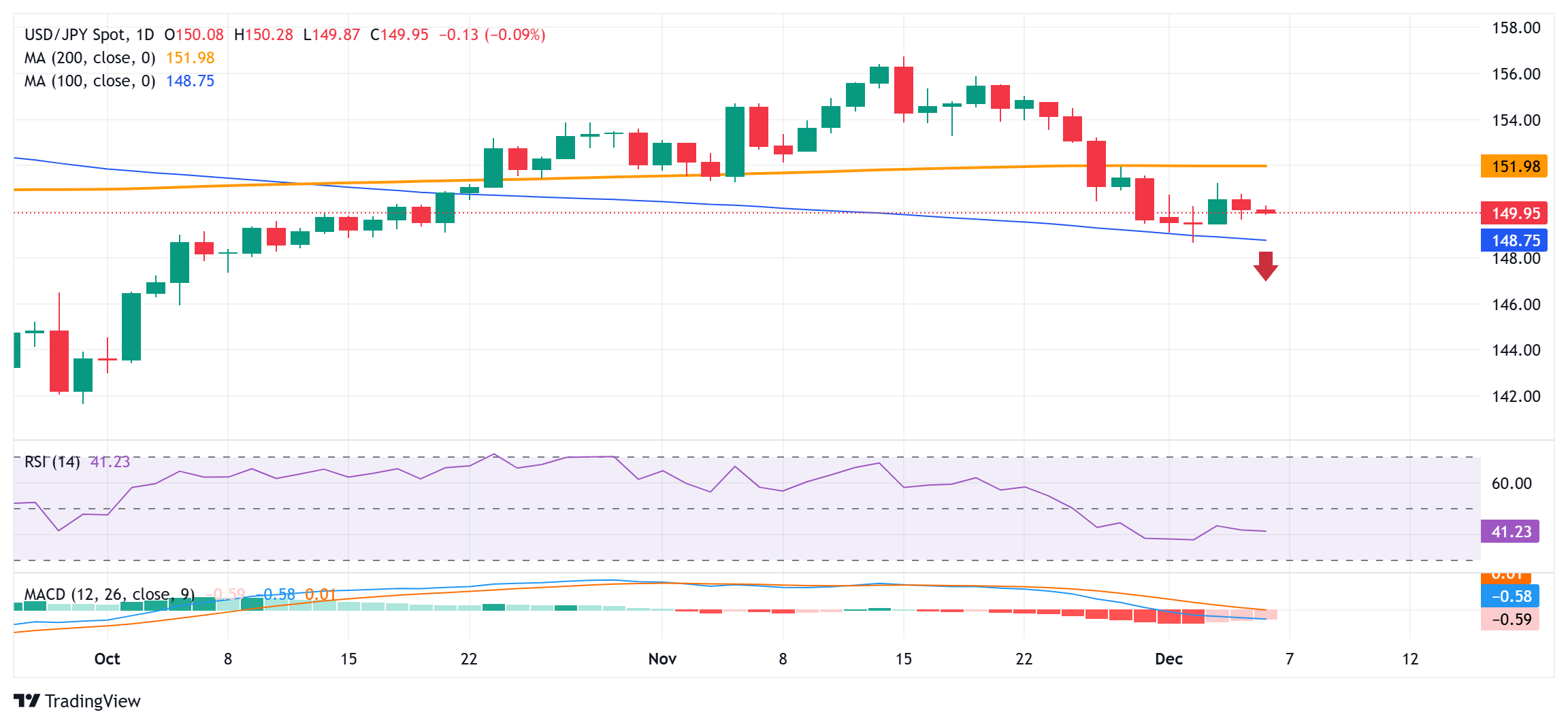
USD/JPY needs to break below the 100-day SMA pivotal support for bears to seize control

fxsoriginal

From a technical perspective, the overnight swing low, around the 148.65 region, now seems to protect the immediate downside ahead of the 149.00 mark and the 100-day SMA, currently around the 148.80 region. The latter should act as a key pivotal point, which if broken decisively will be seen as a fresh trigger for bearish traders. Given that oscillators on the daily chart are holding in negative territory, the USD/JPY pair might then slide to the 148.10-148.00 region en route to the 147.35-147.30 zone and the 147.00 round figure.

On the flip side, attempted recovery might now confront some resistance near the 150.55 region. This is followed by the 150.70 hurdle, the 151.00 round figure and the weekly high, around the 151.20-151.25 zone touched on Wednesday. A sustained move beyond the latter could lift the USD/JPY pair to the 152.00 mark, or the very important 200-day SMA. Some follow-through buying will suggest that the recent corrective decline from a multi-month high touched in November has run its course and shift the bias in favor of bullish traders.