blog-eurusd-14-01-25

Australian Dollar weakens amid uncertainty over the impact of Trump’s policies

The Australian Dollar (AUD) ends its three-day winning streak against the US Dollar (USD), with the AUD/USD pair trading subdued following the release of mixed Chinese Purchasing Managers’ Index (PMI) data on Monday. As close trade partners, China’s economic performance significantly impacts the Australian economy.

China’s NBS Manufacturing PMI fell to 49.1 in January, down from 50.1 in December, missing the market expectation of 50.1. Similarly, the NBS Non-Manufacturing PMI declined to 50.2 in January compared to December’s 52.2 reading.

The Australian Dollar also failed to gain support from China’s fresh stimulus measures to promote its development of index investment products, its latest effort to revive the ailing equity market. The China Securities Regulatory Commission (CSRC) has approved a second round of long-term stock investment pilot programs valued at 52 billion Yuan ($7.25 billion).

The risk-sensitive AUD faces challenges amid increased risk aversion due to news on growing momentum among US President Donald Trump’s advisers to place 25% tariffs on Mexico and Canada as soon as February 1. In a gated story, the Wall Street Journal (WSJ) reported on early Monday that Trump’s advisers do not want to wait for any negotiations or talks. An unnamed ‘Senior administration official’ in the report said Trump is willing to move quickly, citing the President’s imposition of tariffs on Colombia.

China’s Industrial Profits declined by 3.3% year-over-year to CNY 7,431.05 billion in 2024, easing from the 4.7% drop recorded in the first 11 months of the year. This marks the third consecutive year of contraction, following a 2.3% decline in 2023. The continued downturn reflects ongoing economic challenges, including weak demand, rising deflationary pressures, and a prolonged slump in the property sector.

Technical Analysis: Australian Dollar could retest ascending channel’s upper boundary at 0.6350

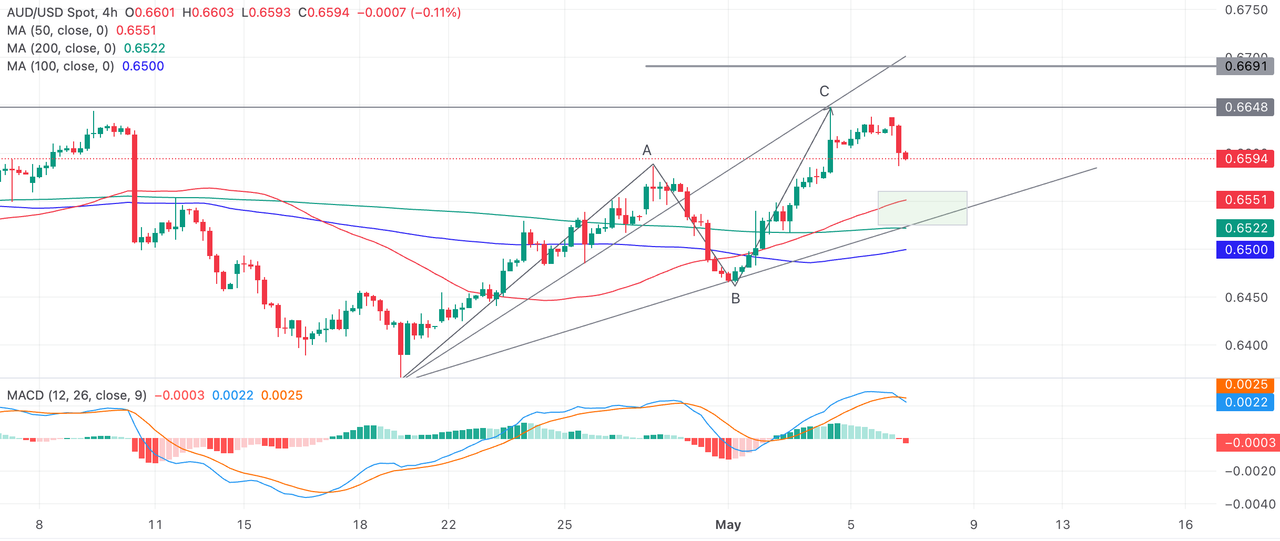
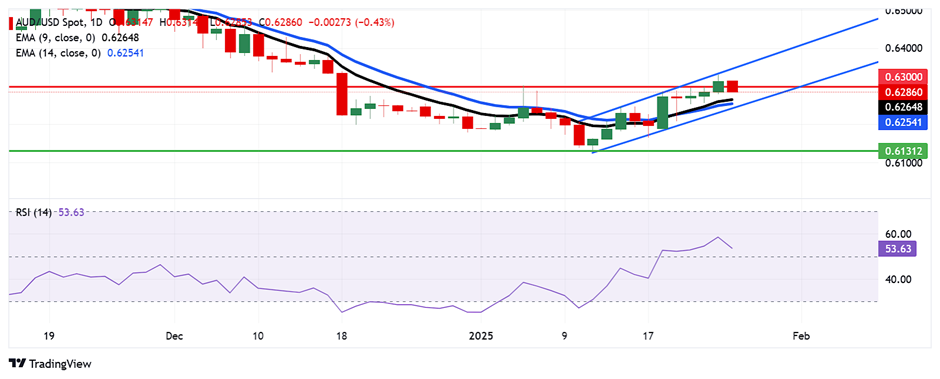
The AUD/USD pair trades near 0.6290 on Monday, showing upward movement within an ascending channel on the daily chart, hinting at a potential bullish bias. The 14-day Relative Strength Index (RSI) remains slightly above 50, supporting positive market sentiment.

On the upside, the AUD/USD pair could retest the key psychological resistance at 0.6300, with the next target near the channel’s upper boundary around 0.6350.

Initial support is located at the nine-day Exponential Moving Average (EMA) of 0.6265, followed by the 14-day EMA at 0.6254. A stronger support lies near the channel’s lower boundary around 0.6240.

AUD/USD: Daily Chart
dollar-jan27

USD/CHF drifts higher above 0.9050 on tariff worries after Trump’s Colombian threat

The USD/CHF pair trades in positive territory near 0.9065 during the early European session. The US Dollar (USD) edges higher as traders assess the impact of US President Donald Trump’s tariff plans at the start of a week. On Wednesday, the US Federal Reserve (Fed) interest rate decision will be in the spotlight.

US President Donald Trump on Sunday imposed sweeping retaliatory measures on Colombia, including tariffs and sanctions, after the South American country refused to allow two military planes carrying deported migrants to land. However, the White House said on Monday that Colombia had agreed to accept military aircraft carrying deported migrants. The prospect of high tariffs on goods from countries including China, Canada, Mexico, and the Eurozone has fueled concerns about inflation, boosting US Treasury bond yields and the Greenback.

On the Swiss front, the ultra-dovish monetary policy guidance from the Swiss National Bank (SNB) could weigh on the Swiss Franc (CHF) and act as a tailwind for USD/CHF. The SNB Chairman Martin Schlegel said at the World Economic Forum (WEF) in Davos that the SNB “doesn’t like negative interest rates” but if we have to do it, “we will.” Meanwhile, any signs of escalating geopolitical risks in the Middle East and Russia-Ukraine conflicts could boost the safe-haven flows, benefitting the CHF.

Untitled

Mood sours as investors gear up for big central bank week

Markets adopt a cautious stance to begin the week that will feature key central bank meetings and macroeconomic data releases. The European economic calendar will feature IFO sentiment data from Germany on Monday. Later in the day, Chicago Fed National Activity Index and New Home Sales data from the US will be looked upon for fresh impetus.

The US Dollar (USD) benefits from the risk-averse market atmosphere early Monday. After losing more than 1.5% in the previous week, the USD Index stays in positive territory above 107.50 in the European morning. The Wall Street Journal reported that US President Donald Trump’s advisers were not willing to negotiate or hold any talks with either Canada or Mexico and go ahead with 25% tariffs as soon as February 1.

US Dollar PRICE Last 7 days

The table below shows the percentage change of US Dollar (USD) against listed major currencies last 7 days. US Dollar was the weakest against the British Pound.

USD EUR GBP JPY CAD AUD NZD CHF
USD -1.80% -2.27% -0.23% -0.60% -1.51% -1.65% -0.67%
EUR 1.80% -0.54% 1.48% 1.11% 0.35% 0.04% 1.02%
GBP 2.27% 0.54% 1.98% 1.66% 0.91% 0.58% 1.57%
JPY 0.23% -1.48% -1.98% -0.36% -1.23% -1.52% -0.61%
CAD 0.60% -1.11% -1.66% 0.36% -0.86% -1.06% -0.09%
AUD 1.51% -0.35% -0.91% 1.23% 0.86% -0.40% 0.59%
NZD 1.65% -0.04% -0.58% 1.52% 1.06% 0.40% 0.80%
CHF 0.67% -1.02% -1.57% 0.61% 0.09% -0.59% -0.80%

The heat map shows percentage changes of major currencies against each other. The base currency is picked from the left column, while the quote currency is picked from the top row. For example, if you pick the US Dollar from the left column and move along the horizontal line to the Japanese Yen, the percentage change displayed in the box will represent USD (base)/JPY (quote).

Meanwhile, technology stocks remain under heavy pressure in premarket trading on Monday on reports of China’s DeepSeek AI model outperforming Meta’s Llama 3.1, OpenAI’s GPT-4o and Anthropic’s Claude Sonnet 3.5. At the time of press, Nasdaq Futures were down nearly 2.5% on the day and S&P Futures were losing 1.4%. On Wednesday, the Federal Reserve will announce monetary policy decisions.

EUR/USD rose more than 2% and closed in positive territory for the second consecutive time last week. The pair corrects lower early Monday and trades slightly above 1.0450.

GBP/USD registered impressive gains on Friday and rose about 2.5% in the previous week. The pair stays under modest bearish pressure in the European morning and fluctuates near 1.2450.

USD/JPY stays relatively quiet at around 156.00 on Monday. Following the Bank of Japan’s (BoJ) decision to raise the policy rate by 25 basis points, the Japanese Yen struggled to gather strength against its major rivals as BoJ Governor Kazuo Ueda refrained from committing to further policy tightening in the post-meeting press conference.

Gold climbed above $2,780 on Friday and came within a touching distance of a new record-high. XAU/USD edges lower to start the week but manages to hold above $2,750.

images

EUR/USD drops to 1.0450 ahead of German IFO

EUR/USD edges lower to near 1.0450 in the early European session on Monday. The US Dollar extends recovery amid risk aversion, weighing on the pair. ECB rate cut expectations also continue to undermine the Euro, adding to the pair’s downside ahead of Germany’s IFO survey.

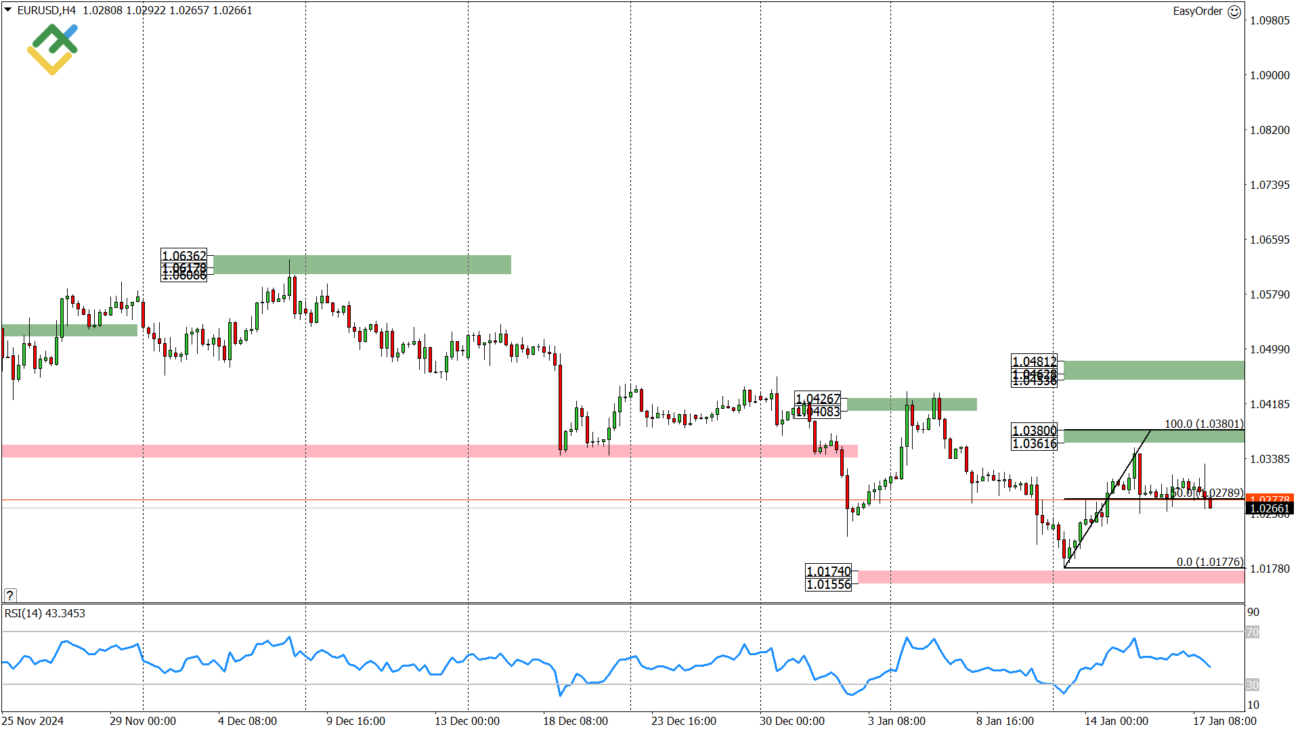
The Relative Strength Index (RSI) indicator on the 4-hour chart rises toward 70, suggesting that EUR/USD has more room on the upside before turning technically overbought in the near term.

On the upside, 1.0500-1.0510 (round level, Fibonacci 78.6% retracement of the latest uptrend) aligns as next resistance before 1.0540 (static level) and 1.0600 (beginning point of the downtrend).

In case EUR/USD retreats below 1.0440 (Fibonacci 61.8% retracement, 50-day SMA) and starts using this level as resistance, buyers could be discouraged. In this scenario, 1.0400-1.0390 (Fibonacci 50% retracement, 200-period SMA) and 1.0350 (Fibonacci 38.2% retracement) could be seen as next support levels.

Following Thursday’s indecisive action, EUR/USD gathered bullish momentum and touched its highest level since December 18 at 1.0470 in the early European session on Friday. Although the pair retreated to the 1.0450 area, the technical outlook suggests that the bullish bias remains intact.

In the early trading hours of the Asian session on Friday, US President Donald Trump said in an interview that he would rather not have to use tariffs on China. This comment allowed market mood to improve and made it difficult for the US Dollar (USD) to find demand.

While speaking at the World Economic Forum late Thursday, however, Trump said that he will do something about the trade deficit with the EU, adding that EU tariffs were making it very difficult for them to bring products into Europe. In case Trump hints at ramping up tariffs on European imports, the Euro could struggle to preserve its strength.

On Friday, preliminary January HCOB Manufacturing and Services PMI report for Germany and the Eurozone will be watched closely by market participants. The market reaction to these data is likely to be straightforward, with better-than-expected prints supporting the Euro and vice versa.

In the second half of the day, S&P Global PMI data will be featured in the US economic calendar. In case the Composite PMI unexpectedly drops below 50 and points to a contraction in the private sector’s economic activity, the USD could come under renewed selling pressure heading into the weekend.

EURUSD_analysis_20.01.25

EUR/USD moves below 1.0500 as US Dollar Index recovers from monthly lows

EUR/USD edges lower to near 1.0480 during the Asian session on Monday as the US Dollar Index, which measures the value of the US Dollar against its six major peers, recovers from its monthly low at 107.22, reached on Friday.

The Relative Strength Index (RSI) indicator on the 4-hour chart rises toward 70, suggesting that EUR/USD has more room on the upside before turning technically overbought in the near term.

On the upside, 1.0500-1.0510 (round level, Fibonacci 78.6% retracement of the latest uptrend) aligns as next resistance before 1.0540 (static level) and 1.0600 (beginning point of the downtrend).

In case EUR/USD retreats below 1.0440 (Fibonacci 61.8% retracement, 50-day SMA) and starts using this level as resistance, buyers could be discouraged. In this scenario, 1.0400-1.0390 (Fibonacci 50% retracement, 200-period SMA) and 1.0350 (Fibonacci 38.2% retracement) could be seen as next support levels.

Following Thursday’s indecisive action, EUR/USD gathered bullish momentum and touched its highest level since December 18 at 1.0470 in the early European session on Friday. Although the pair retreated to the 1.0450 area, the technical outlook suggests that the bullish bias remains intact.

In the early trading hours of the Asian session on Friday, US President Donald Trump said in an interview that he would rather not have to use tariffs on China. This comment allowed market mood to improve and made it difficult for the US Dollar (USD) to find demand.

While speaking at the World Economic Forum late Thursday, however, Trump said that he will do something about the trade deficit with the EU, adding that EU tariffs were making it very difficult for them to bring products into Europe. In case Trump hints at ramping up tariffs on European imports, the Euro could struggle to preserve its strength.

On Friday, preliminary January HCOB Manufacturing and Services PMI report for Germany and the Eurozone will be watched closely by market participants. The market reaction to these data is likely to be straightforward, with better-than-expected prints supporting the Euro and vice versa.

In the second half of the day, S&P Global PMI data will be featured in the US economic calendar. In case the Composite PMI unexpectedly drops below 50 and points to a contraction in the private sector’s economic activity, the USD could come under renewed selling pressure heading into the weekend.

Pound Sterling refreshes two-week high against USD as Trump endorses immediate rate cuts

Pound Sterling refreshes two-week high against USD as Trump endorses immediate rate cuts

The Pound Sterling (GBP) jumps to near 1.2400 against the US Dollar (USD) on Friday. The GBP/USD gains as the US Dollar is onset to end the week with the highest losses in almost two months. The US Dollar Index (DXY), which tracks the Greenback’s value against six major currencies, slumps to near 107.60, the lowest level in over a month after United States (US) President Donald Trump signaled the need for immediate interest rate cuts by the Federal Reserve (Fed) in his commentary at the World Economic Forum (WEF) on Thursday.

“With oil prices going down, I’ll demand that interest rates drop immediately, and likewise they should be dropping all over the world,” Trump said. His comments have come just a few days before the announcement of the Fed’s first monetary policy meeting on January 29, in which it is certain to announce a pause in the policy-easing cycle and keep interest rates unchanged in the range of 4.25%-4.50%, according to the CME FedWatch tool.

Trump’s call for reducing interest rates immediately is unlikely to impact the Fed, an independent body dedicated to achieving its agenda of maintaining full employment with price stability.

In Friday’s session, the US Dollar will be influenced by the preliminary S&P Global PMI data for January, which will be published at 14:45GMT. The PMI data is expected to show that overall US private business activity remained almost steady in the month.

Technical Analysis: Pound Sterling rises to near 1.2400

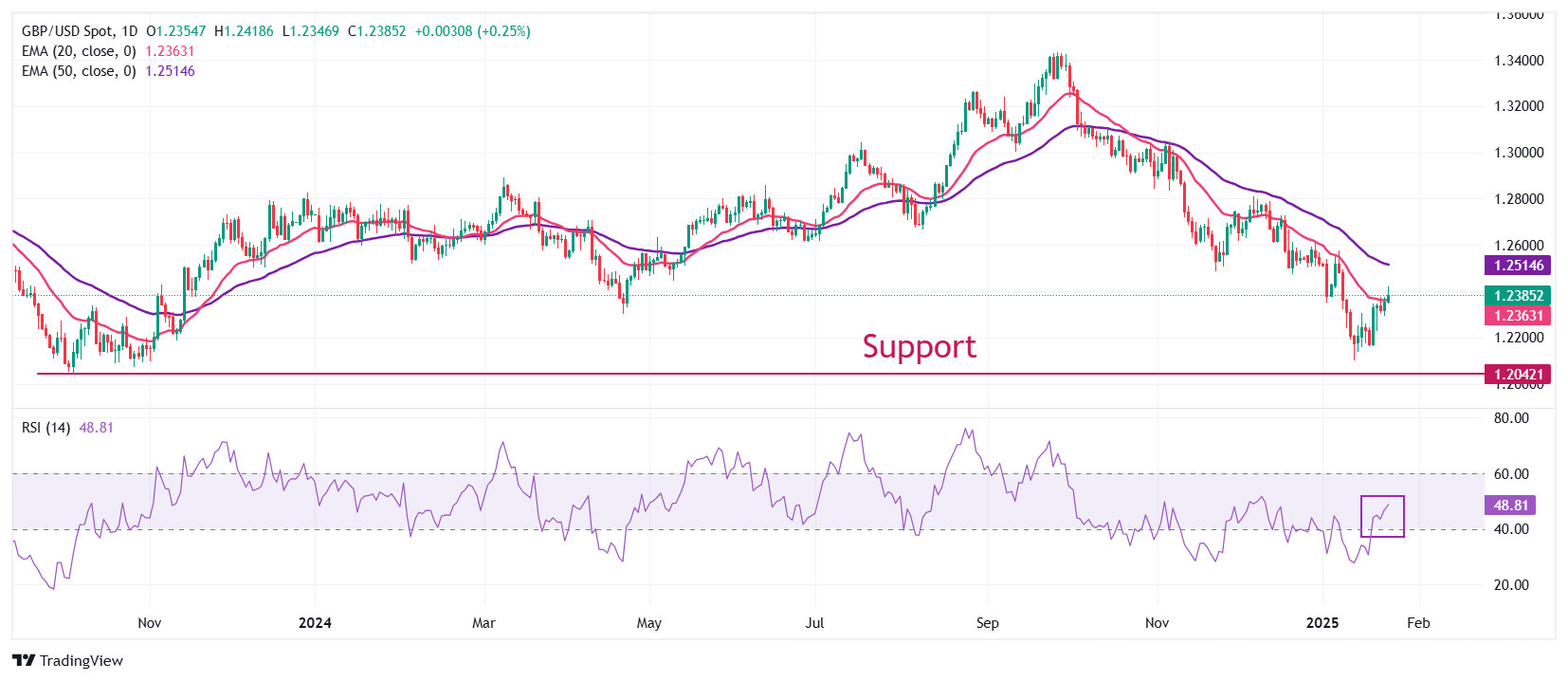
The Pound Sterling climbs to near 1.2400 against the US Dollar on Friday. The GBP/USD pair gains after breaking above the 20-day Exponential Moving Average (EMA), which trades around 1.2363.

The 14-day Relative Strength Index (RSI) rebounds to near 50.00 from the 20.00-40.00 range, suggesting that the bearish momentum has ended, at least for now.

Looking down, the January 13 low of 1.2100 and the October 2023 low of 1.2050 will act as key support zones. On the upside, the 50-day EMA near 1.2515 will act as key resistance.

USD/INR declines after mixed Indian PMI data

USD/INR declines after mixed Indian PMI data

The Indian Rupee (INR) trades in positive territory on Friday. The latest data released on Friday showed that the HSBC India Manufacturing Purchasing Managers Index (PMI) improved to 58.0 in January from 56.4 in December. Additionally, the Indian Services PMI eased to 56.8 in January versus 59.3 prior. The Composite PMI declined to 57.9 in January from 59.2 in December. The local currency remains strong in an immediate reaction to the mixed PMI data.

A fall in crude oil prices could provide some support to the INR as India is the world’s third-largest oil consumer. Additionally, the Reserve Bank of India (RBI) allowed the Indian Rupee to move both ways with minimal intervention. This, in turn, might help limit the INR’s losses.

However, increased US Dollar (USD) demand from foreign banks operating in India, foreign portfolio outflows from Indian equities and the uncertainty surrounding tariff announcements by US President Donald Trump weigh on the local currency.  Investors will keep an eye on the preliminary reading of US S&P PMI for January, which is due later on Friday.

USD/INR’s uptrend remains uninterrupted

The Indian Rupee trades on a softer note on the day. The positive view of the USD/INR pair remains in place, with the price holding above the ascending trend line and the key 100-day Exponential Moving Average (EMA) on the daily chart. The path of least resistance is to the upside as the 14-day Relative Strength Index (RSI) stands above the midline near 66.70.

The all-time high of 86.69 acts as an immediate resistance level for USD/INR. Any follow-through buying above the mentioned level could draw in some buyers to the 87.00 psychological mark.

On the bearish side, the initial support level is seen at 86.18, the low of January 20. A breach of this level could see the next downside target at 85.85, the low of January 10, followed by 85.65, the low of January 7.

Japanese Yen retreats slightly after BoJ Governor Ueda’s comments; bullish bias remains

Japanese Yen retreats slightly after BoJ Governor Ueda’s comments; bullish bias remains

The Japanese Yen (JPY) trims a part of strong intraday gains following the Bank of Japan (BoJ) Governor Kazuo Ueda’s opening remarks during the post-meeting press conference, lifting the USD/JPY pair back closer to mid-155.00s in the last hour. Any meaningful JPY pullback, however, seems elusive in the wake of the BoJ’s hawkish rate hike earlier this Friday. Moreover, hopes that spring wage negotiations will result in strong hikes again this year, and allow the BoJ to tighten its policy further, should continue to underpin the JPY.

In contrast, the markets have been pricing in the possibility that the Federal Reserve (Fed) will lower borrowing costs and the bets were lifted by US President Donald Trump’s call for lower interest rates. This, in turn, triggers a fresh leg down in the US Treasury bond yields, which, along with the BoJ’s hawkish outlook, support prospects for the narrowing of the US-Japan yield differential and should support the lower-yielding JPY. Apart from this, some follow-through US Dollar (USD) selling should cap the upside for the USD/JPY pair.

USD/JPY could accelerate the fall one the 155.00 mark is broken decisively

fxsoriginal

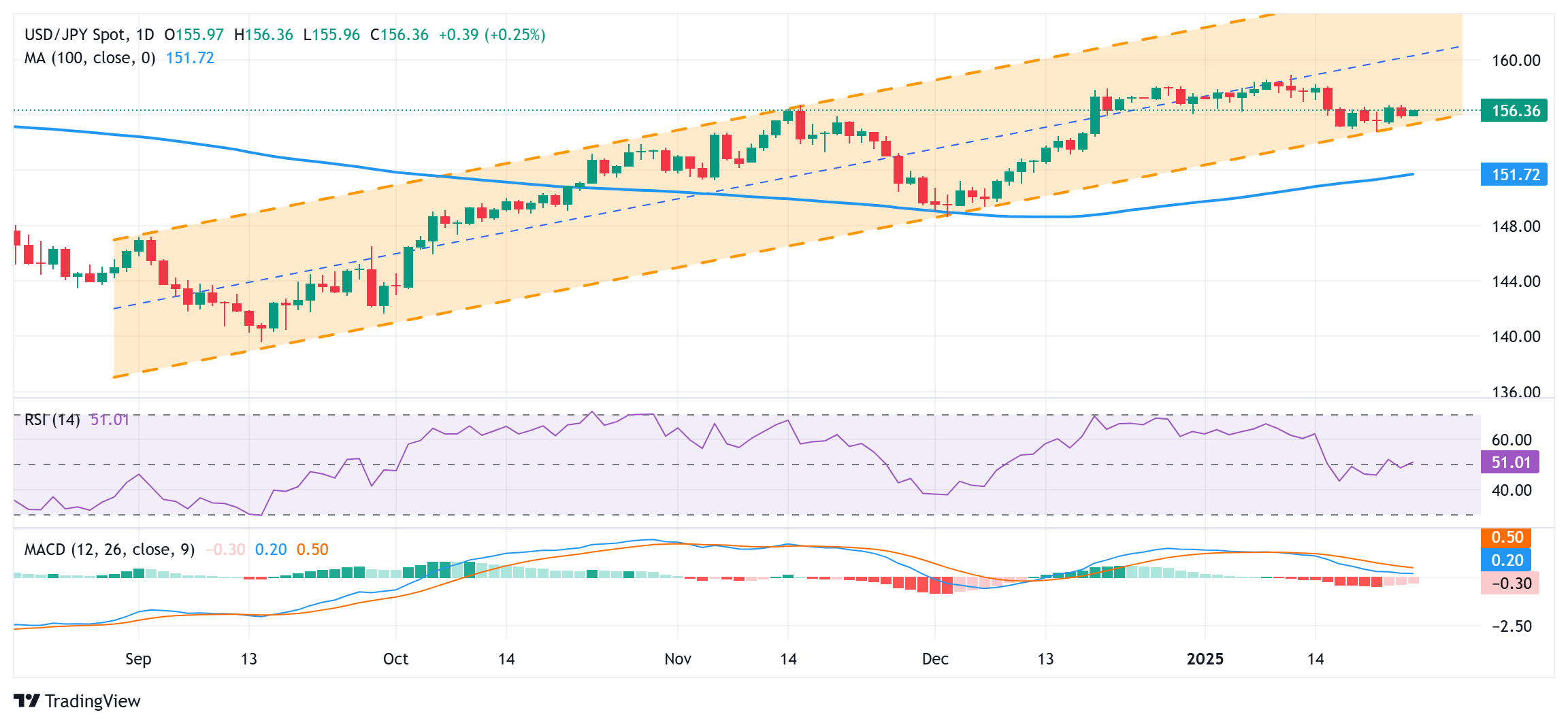
From a technical perspective, the USD/JPY pair, so far, has managed to defend support marked by the lower end of a multi-month-old ascending channel, currently pegged near the 155.35 area. This is closely followed by the 155.00 psychological mark and the 154.80-154.75 region, or over a one-month low touched on Tuesday. Some follow-through selling below the latter will be seen as a fresh trigger for bearish traders and drag spot prices to the 154.00 round figure en route to the mid-153.00s and the 153.00 mark.

On the flip side, the overnight swing high, around the 156.75 area, could offer some resistance ahead of the 157.00 round figure. A sustained strength beyond the latter should pave the way for a further move up towards the 157.55 area en route to the 158.00 mark. The momentum could extend further towards the 158.35-158.40 region, above which the USD/JPY pair could retest the multi-month peak, around the 159.00 neighborhood touched on January 10.

USD/CAD moves below 1.4350 as Trump asks Fed to cut interest rates

USD/CAD moves below 1.4350 as Trump asks Fed to cut interest rates

USD/CAD extends its losses for the second consecutive day, trading around 1.4330 during the early European hours on Friday. This downside of the USD/CAD pair is attributed to the weaker US Dollar amid risk-on sentiment following recent remarks from US President Donald Trump late Thursday.

Trump said he wants the US Federal Reserve (Fed) to cut interest rates immediately. “With oil prices going down, I’ll demand that interest rates drop immediately, and likewise they should be dropping all over the world,” said Trump at the World Economic Forum in Davos, Switzerland.

The US Dollar Index (DXY), which measures the US Dollar’s performance against six major currencies, continues to decline as US Treasury yields lose ground following Trump’s comments. The DXY has fallen below 107.00, with the 2-year and 10-year US Treasury yields standing at 4.26% and 4.63%, respectively, at the time of writing.

Traders will likely monitor the release of the preliminary US S&P Global Purchasing Managers Index (PMI) and the Michigan Consumer Sentiment Index for January.

The commodity-linked Canadian Dollar (CAD) receives upward support from improved crude Oil prices. West Texas Intermediate (WTI) Oil price halts its six-day losing streak, trading around $74.50 per barrel at the time of writing.

However, crude Oil prices are headed for a weekly decline after US President Donald Trump issued a sweeping plan to boost US production and demanded OPEC (Organization of the Petroleum Exporting Countries) lower crude prices.

EUR/USD tests 1.0450 on the road to recovery, PMIs eyed

EUR/USD tests 1.0450 on the road to recovery, PMIs eyed

EUR/USD holds higher ground near 1.0450 in the early European session on Friday, bolstered by renewed US Dollar weakness. The preliminary reading of the HCOB Purchasing Managers Index for January from the Eurozone and Germany now remains in focus.

The Relative Strength Index (RSI) indicator on the 4-hour chart rises toward 70, suggesting that EUR/USD has more room on the upside before turning technically overbought in the near term.

On the upside, 1.0500-1.0510 (round level, Fibonacci 78.6% retracement of the latest uptrend) aligns as next resistance before 1.0540 (static level) and 1.0600 (beginning point of the downtrend).

In case EUR/USD retreats below 1.0440 (Fibonacci 61.8% retracement, 50-day SMA) and starts using this level as resistance, buyers could be discouraged. In this scenario, 1.0400-1.0390 (Fibonacci 50% retracement, 200-period SMA) and 1.0350 (Fibonacci 38.2% retracement) could be seen as next support levels.

Following Thursday’s indecisive action, EUR/USD gathered bullish momentum and touched its highest level since December 18 at 1.0470 in the early European session on Friday. Although the pair retreated to the 1.0450 area, the technical outlook suggests that the bullish bias remains intact.

In the early trading hours of the Asian session on Friday, US President Donald Trump said in an interview that he would rather not have to use tariffs on China. This comment allowed market mood to improve and made it difficult for the US Dollar (USD) to find demand.

While speaking at the World Economic Forum late Thursday, however, Trump said that he will do something about the trade deficit with the EU, adding that EU tariffs were making it very difficult for them to bring products into Europe. In case Trump hints at ramping up tariffs on European imports, the Euro could struggle to preserve its strength.

On Friday, preliminary January HCOB Manufacturing and Services PMI report for Germany and the Eurozone will be watched closely by market participants. The market reaction to these data is likely to be straightforward, with better-than-expected prints supporting the Euro and vice versa.

In the second half of the day, S&P Global PMI data will be featured in the US economic calendar. In case the Composite PMI unexpectedly drops below 50 and points to a contraction in the private sector’s economic activity, the USD could come under renewed selling pressure heading into the weekend.